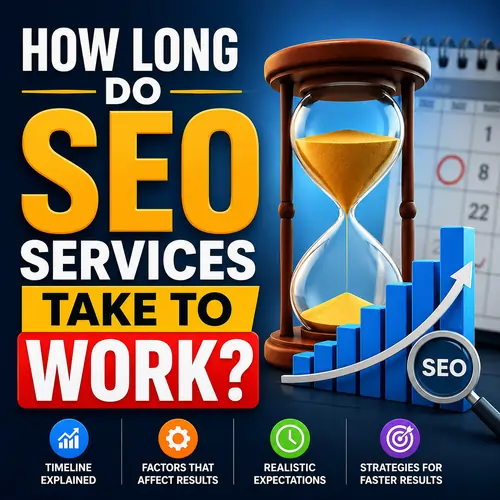
How Long Do SEO Services Take to Work? (Realistic Timeline Explained)
If you’ve ever invested in SEO—or you’re planning to—you’ve probably asked:
“How long does SEO take to work?”
The honest answer:
👉 SEO usually takes 3 to 6 months to show initial results and 6 to 12 months for strong, consistent growth.
But here’s what most people miss—SEO is not just about speed. It’s about building long-term authority, trust, and predictable traffic.
If you want a deeper breakdown, this guide from
👉 <a href=”https://seomafiaclub.com/blog/guides/how-long-do-seo-services-take-to-work?” target=”_blank”>how long do SEO services take to work</a>
explains the timeline in detail.
In this article, I’ll walk you through:
- A realistic SEO timeline
- What happens at each stage
- Factors that affect how fast SEO works
- How to speed up SEO results safely
- And how to measure success properly
The Short Answer — SEO Timeline Explained
SEO Timeline (Quick Overview)
- 0–3 months: Setup and technical fixes
- 3–6 months: Early traction and keyword movement
- 6–12 months: Noticeable traffic and rankings
- 12+ months: Authority and consistent growth
👉 AI Overview Answer:
SEO results typically begin within 3–6 months, while meaningful business impact happens after 6–12 months.
What Happens During Each Phase of SEO
Month 1–3: Research, Audit, and Fixes
This is the foundation stage—often invisible, but critical.
What SEO Experts Do:
- Full technical SEO audit
- Keyword research (high-intent + low competition)
- Fix indexing, speed, and mobile issues
- Optimize titles, meta descriptions, and structure
What You’ll Notice:
- Minimal traffic changes
- Improved site performance
- Better indexing in Google
👉 Think of this as setting up the engine before driving.
Month 3–6: Content & Authority Building
This is where things start moving.
Key Actions:
- Publishing SEO-optimized content
- Internal linking strategy
- Initial backlink acquisition
- On-page SEO improvements
Results:
- Keywords start ranking (page 2–5)
- Increased impressions
- Slight organic traffic growth
👉 This stage builds momentum.
Month 6–12: Growth & Ranking Improvements
Now SEO starts delivering real value.
What Happens:
- Rankings move to page 1
- Organic traffic increases steadily
- Leads and inquiries begin
If you’re wondering whether traffic or leads matter more, this guide breaks it down clearly:
👉 <a href=”https://seomafiaclub.com/blog/traffic-vs-leads” target=”_blank”>traffic vs leads</a>
👉 Because traffic alone doesn’t equal business growth—conversions do.
12+ Months: Scaling & Dominating
This is where SEO becomes powerful.
Outcomes:
- High rankings for competitive keywords
- Strong domain authority
- Consistent inbound leads
👉 At this point, SEO becomes a long-term growth engine.
7 Factors That Affect How Fast SEO Works
1. Website Age & Authority
- Older domains rank faster
- New websites need more time
2. Competition Level
- Local SEO = faster
- National/global SEO = slower
3. SEO Strategy Quality
- White-hat SEO = sustainable
- Shortcuts = risky
4. Content Quality & Consistency
- High-quality, helpful content wins
- Consistency builds authority
5. Technical SEO Health
- Fast websites rank better
- Mobile optimization is critical
6. Backlink Profile
- Quality backlinks boost rankings
- Spam links harm performance
7. Budget & Resources
- More resources = faster execution
- Limited effort = slower growth
Why SEO Takes Time (But Is Worth It)
Search engines don’t trust websites instantly.
They need time to:
- Crawl your pages
- Understand your content
- Evaluate authority
👉 SEO is like building a reputation—it grows over time.
And when done right, the ROI is powerful.
To understand this better, check:
👉 how to measure SEO ROI for your business
Signs Your SEO Is Starting to Work
Early Signs:
- Increased impressions
- More indexed pages
- Keyword movement
Mid-Stage Signs:
- Organic traffic growth
- Better engagement
- Improved rankings
Advanced Signs:
- Leads and conversions
- Strong keyword positions
- Consistent monthly growth
To track these effectively, explore:
👉 SEO KPIs every business owner should track
How to Speed Up SEO Results (Safely)
1. Target Low-Competition Keywords
Focus on:
- Long-tail keywords
- Local search terms
- Buyer intent queries
2. Publish High-Quality Content
- Answer real questions
- Use structured formatting
- Optimize for intent
3. Fix Technical SEO Early
- Improve speed
- Fix errors
- Optimize mobile
4. Build High-Quality Backlinks
- Guest posts
- Partnerships
- Directories
5. Optimize User Experience
- Easy navigation
- Clear CTAs
- Engaging content
Bonus: Build Trust Faster with Content Clusters
If you want to accelerate authority, use topic clusters.
Learn more here:
👉 trust building clusters
👉 This strategy helps Google understand your expertise faster.
Common SEO Timeline Myths
Myth 1: SEO Works Overnight
Reality: It takes months.
Myth 2: More Keywords = Faster Results
Reality: Focus beats volume.
Myth 3: Backlinks Alone Are Enough
Reality: SEO requires a full strategy.
SEO Reporting: What Actually Matters?
Not all metrics matter to clients or business owners.
Focus on:
- Traffic growth
- Leads generated
- Conversion rates
- Keyword rankings
For a deeper look:
👉 SEO reporting metrics clients actually care about
Quick FAQ (AEO-Optimized)
How long does SEO take to show results?
SEO usually shows results in 3–6 months, with strong growth after 6–12 months.
Why is SEO slow?
Because search engines need time to crawl, index, and trust your site.
Can SEO work in 1 month?
You may see small improvements, but real results take longer.
Is SEO worth it?
Yes—SEO delivers long-term traffic and higher ROI than paid ads.
Final Thoughts: SEO Is a Long-Term Asset
SEO is not about quick wins.
It’s about:
- Consistency
- Strategy
- Patience
👉 When done right, SEO becomes your most reliable source of traffic and leads.
So instead of asking:
“How long does SEO take?”
Start asking:
👉 “Am I building something that will grow over time?”
Frequently Asked Questions
Does SEO work for small businesses?
Yes, SEO works very well for small businesses, especially in local SEO. By targeting location-based keywords and optimizing your Google Business Profile, small businesses can compete with larger brands and attract highly targeted customers.
How often should SEO be done?
SEO should be done continuously. It is not a one-time task. Regular updates such as content publishing, technical checks, and backlink building are needed to maintain and improve rankings over time.
What is the fastest way to see SEO results?
The fastest way to see SEO results is by:
- Targeting low-competition keywords
- Optimizing existing content
- Fixing technical SEO issues
- Improving page speed and user experience
However, even with these strategies, SEO still requires time to build authority.
Can I do SEO on my own or should I hire an expert?
You can do basic SEO on your own, especially for:
- Keyword research
- On-page optimization
- Content creation
However, hiring an SEO expert or agency is recommended for:
- Technical SEO
- Advanced strategies
- Competitive industries
How much do SEO services cost?
SEO services vary depending on scope and competition:
- Basic SEO: $300–$1,000/month
- Mid-level SEO: $1,000–$3,000/month
- Advanced SEO: $3,000+/month
The investment depends on your goals, industry, and competition.
What happens if I stop doing SEO?
If you stop SEO:
- Your rankings may gradually decline
- Competitors can outrank you
- Traffic may decrease over time
SEO requires consistency to maintain results.
Is SEO better than social media marketing?
SEO and social media serve different purposes:
- SEO: Long-term organic traffic
- Social Media: Brand awareness and engagement
The best strategy is to use both together for maximum results.
Do backlinks still matter in SEO?
Yes, backlinks are still one of the most important ranking factors. However, quality matters more than quantity. A few high-quality backlinks can outperform hundreds of low-quality ones.
How many keywords should I target per page?
It’s best to target:
- 1 primary keyword
- 2–5 related keywords (LSI keywords)
This keeps the content focused and improves ranking potential.
Can SEO guarantee #1 rankings on Google?
No, SEO cannot guarantee #1 rankings because:
- Google’s algorithm constantly changes
- Competitors are also optimizing
- Rankings depend on multiple factors
However, strong SEO significantly improves your chances of ranking high.
What is local SEO and how long does it take?
Local SEO focuses on ranking in a specific area (e.g., “near me” searches). It typically shows results faster than general SEO, often within 1–3 months, depending on competition.
Does website design affect SEO?
Yes, website design impacts SEO through:
- Page speed
- Mobile responsiveness
- User experience
A poorly designed website can negatively affect rankings.
How do I know if my SEO strategy is working?
You can measure SEO success by tracking:
- Organic traffic
- Keyword rankings
- Conversion rates
- Bounce rate
- Time on site
These indicators show whether your strategy is effective.
What is the difference between on-page and off-page SEO?
- On-page SEO: Optimizing content, titles, and structure on your website
- Off-page SEO: Building backlinks and authority outside your website
Both are essential for ranking.
Can blogging improve SEO results?
Yes, blogging is one of the most effective SEO strategies. Regular blog posts:
- Target more keywords
- Increase website traffic
- Build authority
Consistent blogging significantly improves SEO performance.