Backlinks Matter Less as AI Search Reshapes User Behavior Key Takeaways
Understanding how is AI search changing ranking factors starts with recognizing that Google moved from a keyword-and-link matching system to a neural-network-based understanding of language.
- AI search engines now prioritize semantic understanding, entity recognition, and user intent over raw link counts.
- Topical relevance, content quality, brand trust, and engagement signals are becoming the new ranking pillars.
- SEO strategies must pivot from link-building tactics to building authority through expertise, user experience, and topic clusters.
What Readers Should Know About Why Backlinks Are Becoming Less Important in SEO
For years, the mantra was simple: more links, higher rankings. But the landscape has changed. Why are backlinks becoming less important in SEO? The answer lies in how modern search engines evaluate information. Today’s algorithms don’t just count links — they understand context, relationships between topics, and whether a page truly satisfies a user’s query. A single high-quality, contextually relevant link from a trusted source now carries more weight than dozens of low-quality links. Smart marketers are already shifting their focus.
How Is AI Search Changing Ranking Factors? The Core Shift
Understanding how is AI search changing ranking factors starts with recognizing that Google moved from a keyword-and-link matching system to a neural-network-based understanding of language. Instead of simply matching words, AI models understand synonyms, concepts, and even user emotions behind a query. For a related guide, see Google Updates Are Destroying Weak SEO Strategies in 2026.
From PageRank to Neural Matching
PageRank used links as votes. But now, Google’s RankBrain and MUM analyze whole documents and their relationship to entities. A page about “apple” could be about the fruit or the company — AI determines which based on context, not links.
User Behavior as a Ranking Signal
Click-through rates, dwell time, and bounce rates now inform rankings. If users click a result and quickly return, the algorithm learns that page didn’t satisfy the query — regardless of its backlink profile. This is a direct reason why backlinks are becoming less important in SEO compared to actual user satisfaction.
What Replaces Backlinks in Modern SEO Strategies? The New Pillars
So what replaces backlinks in modern SEO strategies? The answer is a multi-faceted approach centered on authority signals that AI can detect without relying on link popularity.
Entity-Based SEO: The Foundation of Modern Authority
Entity based SEO importance cannot be overstated. Instead of optimizing for keywords, you optimize for real-world entities — people, places, brands, concepts — and their relationships. Google builds a knowledge graph of these entities. When your content clearly connects “Stephen King” to “horror novels” and “Maine,” you signal authority without needing a link.
Start by mapping out entities relevant to your niche. Use schema markup to define them explicitly (Person, Organization, Product). This helps how do AI search engines evaluate content authority — they can see you’re discussing recognized entities with proper context.
Topical Relevance Over Link Volume
Consider topical relevance vs backlinks. A website with 100 articles on “vegan recipes” but zero external links may outrank a site with 10,000 links but only one recipe page. Why? Because the first site establishes exhaustive topical coverage. Google’s AI sees it as the definitive resource on that topic.
Build topic clusters: create a pillar page covering a broad topic, then link internally to multiple in-depth articles on subtopics. This shows AI you own the space.
Content Quality as the New Link Magnet
Why does content quality matter more than links? Because quality is now a direct ranking signal. AI can assess readability, comprehensiveness, factual accuracy, and freshness. Long-form, well-researched, and original content earns position zero (featured snippets) and passes AI-generated answer filters.
Focus on E-E-A-T (Experience, Expertise, Authoritativeness, Trustworthiness). Include author bios, cite primary sources, and update content regularly. This builds trust with both users and algorithms.
How Does User Intent Affect Search Rankings Today?
Understanding how does user intent affect search rankings today is non-negotiable. AI categorizes queries into four intent types: informational, navigational, transactional, and commercial investigation. If your page targets “buy running shoes” but delivers informational content, it will rank poorly — no matter how many backlinks it has.
Map each page to a specific intent. For transactional pages, include clear calls to action, pricing, and reviews. For informational pages, provide comprehensive answers, step-by-step guides, and supporting visuals. Aligning content with intent is one of the most powerful SEO strategies without strong backlinks.
How Does Engagement Influence Modern SEO Performance?
You may wonder how does engagement influence modern SEO performance. The answer is direct. Metrics like scroll depth, comments, shares, and returning visitors signal to AI that your content is valuable. Search engines increasingly use these as proxy authority signals, especially when evaluating newer sites with few backlinks.
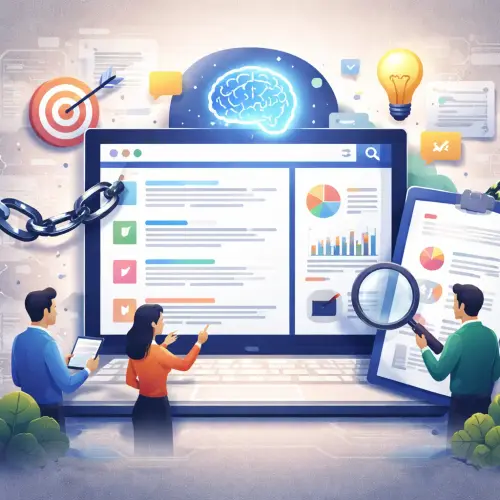
To boost engagement: use compelling headings, break text with images (like the one above), ask questions within paragraphs, and add interactive elements like polls or quizzes. Every second a user stays on your page strengthens your ranking case.
What Role Does Brand Trust Play in Rankings?
Ask yourself: what role does brand trust play in rankings? Brand trust is now a quantifiable factor. Google measures brand searches, mentions, and sentiment across the web. If users search for your brand directly, it indicates trust. If your brand is mentioned in news or reputable publications without a link, that mention still boosts your authority.
Build brand trust offline and online: invest in PR, customer reviews, and consistent thought leadership. Over time, this intangible asset becomes one of the strongest ranking factors.
How Are Search Engines Using Semantic Understanding?
The question how are search engines using semantic understanding unveils the core of modern ranking. Instead of keywords, they look at concepts. A search for “best laptop for video editing” triggers understanding of the “video editing” entity, “laptop” entity, and the relationship between them. The top result is the page that best covers all aspects of that concept, not the one with the most links.
Write naturally. Use synonyms, related terms, and long-tail variations. Don’t repeat the exact phrase 20 times — cover the topic holistically. This approach is exactly how Backlinks Matter Less as AI Search Reshapes User Behavior becomes actionable.
Is Link Building Dead? What Is the Future of Link Building in SEO?
What is the future of link building in SEO? It’s not dead, but it’s transformed. Gone are the days of mass directory submissions and paid links. The future is about strategic, high-quality acquisitions.
Link building now focuses on relationships, not transactions. Publish original research or data that journalists will naturally cite. Create resource pages that other sites reference. Collaborate with industry experts for co-authored content. These “earned” links carry far more weight than built ones.
But even without links, you can win. The SEO strategies without strong backlinks discussed above — entity SEO, topical clusters, intent alignment, and engagement optimization — can propel you to the top of AI-driven search results.
If you’re struggling to acquire links, don’t panic. Focus on becoming the best answer for your audience’s questions. That’s what AI rewards.
Actionable Strategy: 5 Steps to Adapt When Backlinks Matter Less
Here is a practical checklist to implement immediately:
- Audit Your Topic Coverage: Use a tool like Semrush or Ahrefs to find content gaps. Create cluster content to own a topic from all angles.
- Implement Entity Schema: Add structured data for your brand, people, products, and FAQs. This directly helps how do AI search engines evaluate content authority.
- Optimize for User Intent: Review your top pages. Are they aligned with the searcher’s goal? Rewrite where needed.
- Monitor Engagement Metrics: Track dwell time and bounce rate in Google Analytics. Identify which pages need better formatting or deeper answers.
- Build Brand Signals: Encourage reviews, citations, and brand searches. Every brand mention is a trust signal.
This shift — from link-focused to user-focused — is exactly why Backlinks Matter Less as AI Search Reshapes User Behavior and why early adopters will lead.
Useful Resources
For deeper insights, explore these authoritative sources:
- Google Search Central: SEO Starter Guide — Official guidance on search fundamentals.
- Search Engine Journal: How AI Is Changing Ranking Factors — Analysis of modern ranking signals.
The evidence is clear: Backlinks Matter Less as AI Search Reshapes User Behavior. The smartest SEO professionals and content strategists are already pivoting to entity-based optimization, topical clusters, user intent alignment, and brand trust building. The question isn’t whether you should adapt — it’s how fast. Start by auditing your current strategy. Are you still chasing links at the expense of everything else? If so, it’s time to change. Focus on being the best answer, and the AI will reward you. For a related guide, see SEO Agencies Overusing AI Content Are Losing User Trust.
Frequently Asked Questions About Backlinks Matter Less as AI Search Reshapes User Behavior
Why are backlinks becoming less important in SEO ?
Backlinks are declining in importance because modern AI search engines like Google’s BERT and MUM now prioritize semantic understanding, user intent, topical authority, and content quality over raw link counts. A well-researched, contextually relevant page can outrank a link-heavy but shallow competitor.
How is AI search changing ranking factors ?
AI search introduces neural matching, entity recognition, and user behavior signals as primary ranking factors. Instead of just counting keywords and links, algorithms now understand the meaning behind queries and evaluate content based on how well it satisfies intent.
What replaces backlinks in modern SEO strategies ?
Topical relevance, entity-based optimization, content quality, brand trust, and engagement signals replace backlinks. These factors build authority in ways that AI can detect without requiring external link popularity.
Why does content quality matter more than links?
AI can now assess content quality directly through readability, comprehensiveness, accuracy, and freshness. High-quality content earns featured snippets, passes AI-generated answer filters, and keeps users engaged—all of which boost rankings more than low-quality links.
How does user intent affect search rankings today?
User intent is a primary ranking factor. Search engines categorize queries as informational, navigational, transactional, or commercial. Pages that align with the dominant intent of a query rank higher, regardless of their backlink profile.
What is entity based SEO and why is it important?
Entity based SEO optimizes for real-world entities (people, places, brands) and their relationships, rather than just keywords. It is important because Google’s Knowledge Graph uses entities to understand content conceptually, which directly improves visibility in AI search results.
How do AI search engines evaluate content authority?
AI search engines evaluate authority through a combination of entity recognition, schema markup, topical coverage clarity, author expertise signals (E-E-A-T), and brand mentions across trusted sources—without requiring traditional backlinks.
Why is topical relevance more important than backlinks?
Topical relevance proves you comprehensively cover a subject. AI prioritizes sites that demonstrate deep expertise on a topic through interconnected content clusters, making link volume secondary to subject authority.
How does engagement influence modern SEO performance?
Engagement metrics like dwell time, low bounce rate, comments, and shares signal to AI that users find value in your content. These signals can compensate for a lack of backlinks and directly improve search rankings.
What role does brand trust play in rankings?
Brand trust is measurable through brand searches, reviews, and mentions. Google treats high brand trust as an authority signal, often boosting rankings for trusted brands even without strong backlink profiles.
How are search engines using semantic understanding?
Search engines use natural language processing (NLP) to understand context, synonyms, and conceptual relationships. This allows them to match search queries to content that genuinely covers the topic, not just the exact keywords.
Why is link building less effective in AI search era?
Link building is less effective because AI algorithms devalue low-quality or spammy links and can evaluate authority independently via entity analysis and user signals. A few high-quality, contextually relevant links now outperform hundreds of generic ones.
What SEO strategies work without strong backlinks?
Effective strategies include building topic clusters, implementing entity schema, optimizing for user intent, creating high-quality multimedia content, encouraging engagement, and monitoring brand signals. These build authority without relying on external links.
How can websites improve visibility in AI search results?
Improve visibility by structuring content for featured snippets, adding structured data, aligning pages with user intent, earning brand mentions, and building a network of internally linked, comprehensive topic clusters.
What is the future of link building in SEO?
The future of link building is about earning links through original research, co-authored content, and genuine relationships. Strategic, high-quality acquisitions will remain valuable, but they will no longer be the dominant ranking factor.
Does Google still use PageRank?
Google still uses a version of PageRank, but it is now one of hundreds of signals. Modern algorithms lean more heavily on neural matching and user engagement than on raw link counts.
Can a new website rank without any backlinks?
Yes. A new website can rank for informational or long-tail queries by publishing high-quality, intent-aligned content, using entity schema, and building topical authority. Many niche blogs achieve top rankings without any external backlinks.
How does Google Discover relate to this shift?
Google Discover relies heavily on user interest and real-time relevance, not backlinks. Topics that trend or match a user’s interests get surfaced, making entity-based optimization critical for visibility in Discover.
Should I stop building backlinks entirely?
No. High-quality backlinks still carry value, but you should prioritize content quality, user intent, and brand trust first. Backlink acquisition should be a secondary effort focused on earned links from authoritative, relevant sources.
What is the single most important ranking factor today?
Content relevance to user intent is arguably the most important. If your content perfectly answers what the user is looking for, and does so in a comprehensive, trustworthy way, no other factor matters more.