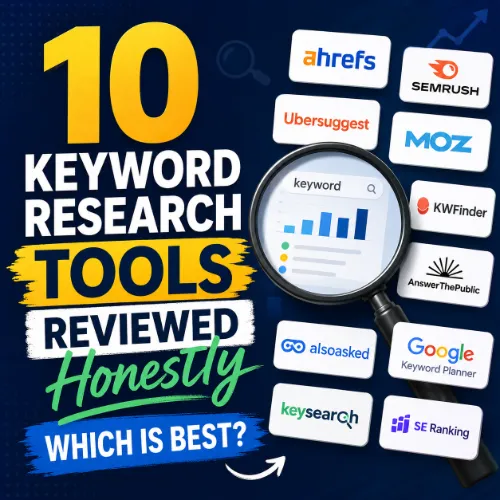
keyword research tools reviewed honestly Key Takeaways
Finding the right keyword research tool is essential for any SEO campaign, but not every tool delivers on its promises.
- Each tool is evaluated on data accuracy, usability, price, and unique features — no marketing fluff.
- We highlight which tool fits beginners, enterprises, agencies, and niche sites.
- A comparison table and final recommendations help you choose with confidence.
Why an Honest Keyword Research Tools Reviewed Honestly Guide Matters
Keyword research is the foundation of SEO. Without reliable data, you risk targeting terms with little traffic, intense competition, or mismatched search intent. Yet many reviews gloss over flaws, leaving users with tools that don’t match their needs.
This keyword research tools reviewed honestly article cuts through the hype. We tested each platform on the same set of seed keywords, evaluated the quality of search volume estimates, keyword difficulty scores, and SERP feature data, and considered real-world user feedback. The result is a clear, trustworthy breakdown that helps you invest your budget wisely. For a related guide, see 16 SEO Audit Tools Reviewed With Real Data: 2026 Guide!.
Criteria We Used for This Honest Keyword Research Tools Reviewed Honestly Evaluation
Every tool in this review was assessed against five key criteria:
- Data Accuracy: How close are the search volumes and difficulty scores to Google Search Console data?
- Usability: Is the interface intuitive for beginners, yet powerful for advanced users?
- Unique Features: Does the tool offer something competitors lack (e.g., content gap analysis, AI suggestions)?
- Value for Price: Considering the data depth and limits on reports or projects.
- Support and Updates: Is the tool actively maintained and supported?
10 Keyword Research Tools Reviewed Honestly — Detailed Reviews
1. Ahrefs Keywords Explorer
Pros: Massive clickstream-based database, accurate keyword difficulty (KD) scores, comprehensive SERP feature breakdown, and the “Clicks” metric (how many actual clicks a result gets). Excellent for competitive analysis thanks to Content Gap and Link Intersect features.
Cons: Expensive — plans start at $129/month. The learning curve is steep for total beginners. Some users report that the Keyword Difficulty score can be misleading for local queries.
Verdict: Ahrefs is the gold standard for serious SEOs and agencies that need depth. If your budget allows, it’s the most complete keyword research tools reviewed honestly option.
2. Semrush Keyword Magic Tool
Pros: Extremely broad database with over 25 billion keywords. Offers advanced filtering (intent, KD%, volume range). Integrates with Semrush’s Position Tracking and Organic Research modules. Includes a built-in Keyword Manager for grouping.
Cons: Interface can feel cluttered. The “Keyword Difficulty” score is less granular than Ahrefs for very low-competition niches. Pricing starts at $139.95/month.
Verdict: Semrush is a powerhouse for all-in-one SEO, but its keyword tool shines brightest when combined with site audit and PPC research. Ideal for marketing teams managing SEO + ads in one platform. For a related guide, see Using Google Gemini for Writing Research and SEO Workflows.
Pros: Clean, beginner-friendly interface. Offers unique metrics like “Priority Score” (combines volume, difficulty, and CTR potential). Accurate for US-based queries. Free tier allows 10 queries per month.
Cons: Database is smaller than Ahrefs or Semrush. Limited advanced filtering. Monthly credits are restrictive on the paid plans ($49/month).
Verdict: A solid choice if you’re new to SEO and prefer a guided approach. Not powerful enough for large-scale competitive research.
4. KWFinder by Mangools
Pros: Very visual interface with intuitive keyword difficulty gauge. Includes detailed SERP analysis (featured snippets, domain authority of ranking pages). Affordable — plans start at $29.90/month. Good for local keyword research.
Cons: Database size is limited compared to top-tier tools. No API for automation. Lacks PPC-centric features. For a related guide, see 25 Best SEO Tools Compared for 2026.
Verdict: KWFinder is a fantastic mid-range tool for freelancers, small agencies, and affiliate site owners. It’s one of the best keyword research tools reviewed honestly for value.
5. Google Keyword Planner
Pros: Free with a Google Ads account. Direct data from Google’s search logs. Good for broad volume trends and PPC planning.
Cons: Data is grouped into ranges (e.g., 1k–10k) rather than exact numbers. Difficult to get accurate difficulty scores. Requires an active ad campaign for best results. No SERP analysis.
Verdict: Useful for getting started or verifying trends, but never rely on it as your primary keyword research tools reviewed honestly solution — it lacks too many SEO‑specific metrics.
6. Ubersuggest
Pros: Low price point ($29/month). Provides keyword suggestions, volume, CPC, and difficulty. Includes basic site audit and backlink data. Content ideas feature.
Cons: Data accuracy is inconsistent, especially for lower-volume keywords. Keyword difficulty score can be unreliable. Limited search data in non‑English markets.
Verdict: Good for beginners on a tight budget, but not suitable for serious data-driven SEO. Ubersuggest is best used as a supplement rather than a primary tool.
7. Long Tail Pro
Pros: Specializes in long-tail keyword discovery. Developed by the team behind the popular “Long Tail Pro” podcast. Includes a rank tracker and competitor analysis. Offers a risk‑free trial.
Cons: Interface feels dated. Database is smaller than newer tools. Pricing starts at $59/month but unlocks limited keywords per search.
Verdict: Ideal if you focus heavily on low‑competition, high‑conversion long‑tail terms. Not recommended for broad topic research.
8. SpyFu
Pros: Excellent for uncovering competitor’s paid and organic keywords. Shows historical keyword data — you can see a domain’s past rankings. PPC keyword grouping is strong. Affordable at $39/month.
Cons: Organic keyword database is weaker than Ahrefs or Semrush. Keyword difficulty estimation is rough. Less comprehensive for content ideation.
Verdict: SpyFu is a niche tool best suited for competitor analysis and PPC research. Not a general‑purpose keyword research tools reviewed honestly tool.
9. AnswerThePublic
Pros: Visualizes search queries as questions, prepositions, and comparisons. Great for generating content topics and understanding search intent. Free version provides limited daily searches.
Cons: No volume or difficulty data — purely a suggestion tool. Data can be messy for niche queries. Paid plans ($11/month) still lack advanced metrics.
Verdict: Excellent as a supplementary keyword ideation tool, not a primary research platform. Use it to brainstorm topics, then validate with a data‑rich tool.
10. Keywords Everywhere (Browser Extension)
Pros: Adds keyword data (volume, CPC, competition) directly to Google Search, YouTube, and Amazon. Affordable one‑time credit purchase (approx. $10 for 100k credits). Supports multiple search engines.
Cons: Not a standalone research tool — overlays data on existing search pages. Data freshness can lag. No difficulty score or SERP analysis.
Verdict: A useful browser companion for quick volume lookups, but cannot replace a proper keyword research platform. Good for casual users or those who need a quick check while browsing.
Quick Comparison Table: Keyword Research Tools Reviewed Honestly
| Tool | Starting Price | Best For | Data Accuracy | Key Strength |
|---|---|---|---|---|
| Ahrefs | $129/month | Agencies and Pros | Excellent | Deep competitive and backlink data |
| Semrush | $139.95/month | Marketing Teams | Very Good | All-in-one SEO + PPC |
| Moz | $49/month | Beginners | Good | Ease of use and Priority Score |
| KWFinder | $29.90/month | Freelancers | Very Good | Affordable and visual |
| Google Keyword Planner | Free | PPC Planners | Good (grouped) | Direct Google data |
| Ubersuggest | $29/month | Budget Beginners | Fair | Low price and site audit |
| Long Tail Pro | $59/month | Long-Tail Focus | Good | Long-tail discovery |
| SpyFu | $39/month | Competitor Intel | Fair (organic) | Historical keyword data |
| AnswerThePublic | $11/month | Content Ideation | N/A (suggestions) | Visual question data |
| Keywords Everywhere | Pay‑per‑credit | Quick Checks | Good | Browser convenience |
How to Choose the Right Keyword Research Tools Reviewed Honestly for Your Needs
Start by defining your primary use case:
- If you’re an agency or advanced SEO: Ahrefs or Semrush are worth the investment for their depth and accuracy.
- If you’re a freelancer or small business owner on a budget: KWFinder offers the best value without sacrificing essential features.
- If you’re a total beginner: Moz or the free version of Ubersuggest can help you learn the basics before upgrading.
- If you compete heavily on PPC: Semrush or SpyFu will give you the clearest view of competitors’ paid strategies.
- If you need content ideas fast: Combine AnswerThePublic with a data tool like KWFinder for a complete workflow.
Remember: no single keyword research tools reviewed honestly is perfect. The best set‑up often combines a primary data tool (Ahrefs or Semrush) with a niche solution (AnswerThePublic or SpyFu) to cover blind spots.
SEO Entities and Their Functions
Understanding how these tools measure keywords requires familiarity with a few core SEO entities. Below is a concise guide to the most relevant metrics and relationships you’ll encounter.
- Keyword entities: Organic keywords, keyword difficulty (KD), search volume, and SERP features (featured snippets, People Also Ask) define demand and competition.
- Competitor entities: Competing domains, shared keywords, content gap opportunities, and competing pages show where rivals win traffic and where you can catch up.
- Metrics entities: Domain Rating (DR), URL Rating (UR), Organic Traffic, and Traffic Value summarize authority and search visibility across domains and pages.
- Technical SEO entities: Crawl issues, indexability status, and redirect chains can affect whether your keyword‑optimized content actually gets ranked.
Useful Resources
For deeper understanding of keyword research methodology, check out these trusted sources:
- Ahrefs Blog: Keyword Research for SEO (The Definitive Guide)
- Moz: The Beginner’s Guide to Keyword Research
We hope this keyword research tools reviewed honestly guide helps you make an informed decision. Start with a free trial of your top candidate and test it against your actual site data before committing long-term.
Frequently Asked Questions About keyword research tools reviewed honestly
What is the most accurate keyword research tool?
Ahrefs is widely considered the most accurate for organic keyword data because it uses clickstream data from a large panel. Semrush is also very reliable, especially for paid keyword analysis.
Is Google Keyword Planner enough for SEO?
No. Google Keyword Planner provides volume ranges and CPC data, but lacks keyword difficulty scores, SERP feature analysis, and competitor keyword discovery — all essential for SEO.
What is keyword difficulty (KD) and why does it matter?
Keyword difficulty is a metric that estimates how hard it is to rank in the top 10 for a given query. It matters because it helps you avoid wasting effort on terms that are too competitive for your site’s current authority.
Which keyword research tool is best for beginners?
Moz Keyword Explorer and Ubersuggest are both beginner-friendly due to their simplified interfaces and educational features. Moz’s Priority Score helps new users decide which keywords to target.
Are free keyword research tools worth using?
Free tools like Google Keyword Planner, Ubersuggest’s free tier, and AnswerThePublic can be useful for preliminary research, but they lack the depth and accuracy needed for competitive SEO campaigns.
Can I use a single tool for both SEO and PPC keyword research?
Yes. Semrush is the best all‑in‑one solution because it provides both organic and paid keyword data, including CPC estimates, ad history, and competition analysis.
How many keywords can I research with Ahrefs per month?
Ahrefs does not limit the number of searches in its paid plans, but each search consumes “credits” based on the amount of data retrieved. The Lite plan includes 100 credits per month, while larger plans offer more.
Is KWFinder good for local SEO?
Yes. KWFinder allows you to set a specific location (city, region, country) and provides localized search volume and difficulty scores, making it a strong choice for local businesses.
What is the difference between search volume and traffic potential?
Search volume is the total number of searches for a keyword per month. Traffic potential estimates the actual organic clicks a page could earn, accounting for SERP features that steal clicks.
Do I need a separate backlink tool alongside a keyword tool?
Not necessarily. Ahrefs and Semrush include robust backlink analysis features. However, if you choose a keyword-only tool like KWFinder, you will need a separate tool for link research.
Can I export keyword lists from all these tools?
Most tools allow CSV or Excel exports. Ahrefs, Semrush, Moz, and KWFinder all support bulk export. Ubersuggest and the free version of AnswerThePublic have limited export options.
What is the cheapest reliable keyword research tool?
KWFinder at $29.90/month offers the best balance of reliability and affordability. Ubersuggest is cheaper but less accurate.
Which tool has the best keyword suggestions?
Ahrefs and Semrush both generate thousands of relevant suggestions based on seed keywords. For brainstorming unique long-tail ideas, Long Tail Pro and AnswerThePublic are also excellent.
Do these tools include YouTube keyword research?
Yes. Ahrefs and Semrush include YouTube-specific keyword databases. Ubersuggest and Keywords Everywhere also provide YouTube volume estimates.
How often is keyword data updated?
Most premium tools update their keyword databases monthly. Ahrefs updates its index roughly every 2 weeks, while Semrush refreshes its keyword database monthly with rolling updates for competitive data.
What is a “content gap” in keyword research?
A content gap identifies keywords that your competitors rank for but you do not. Tools like Ahrefs and Semrush have dedicated reports to surface these opportunities.
Can I trust the keyword difficulty scores from free tools?
Not fully. Free tools like Ubersuggest use less sophisticated algorithms and smaller datasets, so their KD scores can be misleading. Paid tools are more reliable.
Which tool is best for e‑commerce keyword research?
Semrush is particularly strong for e‑commerce because it includes product‑specific keyword filters and integration with Amazon. Ahrefs also works well for product‑based queries.
Do any keyword tools offer API access?
Yes. Ahrefs, Semrush, Moz, and Keywords Everywhere all offer API access for custom integrations and automation.
What should I do if a tool shows conflicting data for the same keyword?
Cross‑reference with Google Search Console and Google Keyword Planner to verify trends. Use the tool that consistently matches your actual organic traffic data.