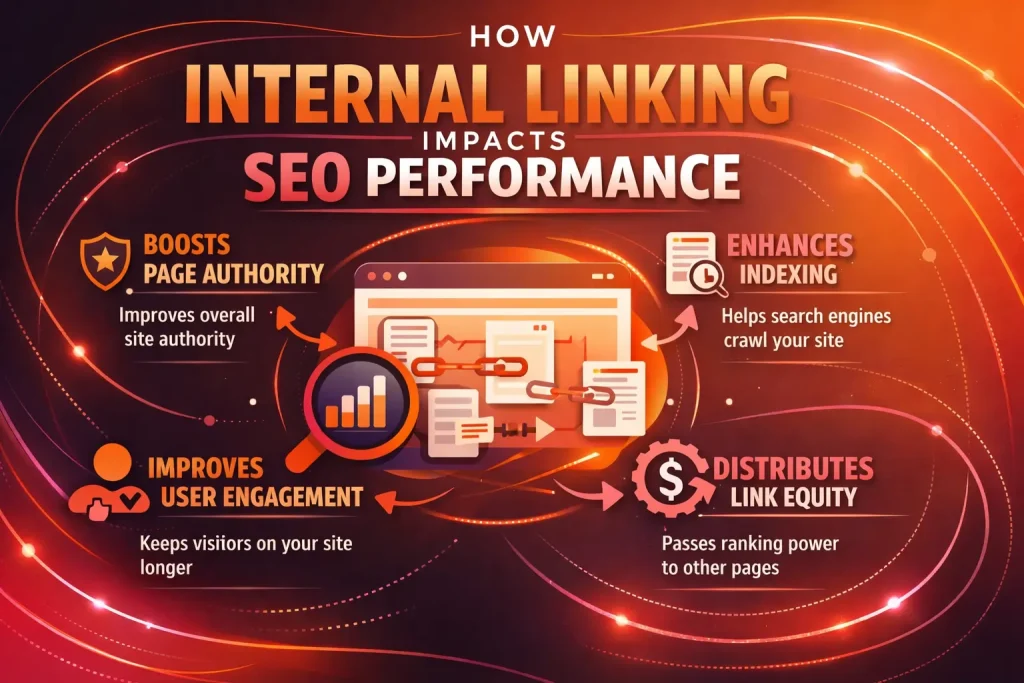
Table of Contents
Introduction: Why Internal Linking Still Matters for SEO Performance
Internal linking is one of the most misunderstood aspects of SEO. Many site owners obsess over backlinks, keywords, and content length while ignoring the structure that connects everything together. Yet internal linking is the framework that allows search engines to crawl, understand, and rank content efficiently.
Internal links determine how authority flows across your website, how quickly pages are discovered, and how clearly your content’s topical relevance is understood. At the same time, they guide users through your site, shaping navigation, engagement, and trust.
In 2026, internal linking has taken on even more importance. Search engines are no longer just keyword matchers. They analyze semantic relationships, content hierarchy, and topic depth. AI-powered search systems use internal links to understand how pieces of content relate to one another before generating answers. For a deeper overview of modern practices, see this updated internal linking strategy guide for 2026.
This guide explains how internal linking impacts SEO performance, covering crawlability, rankings, topical authority, user experience, and modern AI search visibility — with practical examples you can apply immediately.
What Is Internal Linking in SEO?

Internal linking refers to hyperlinks that connect one page of a website to another page on the same domain. These links create a navigational and contextual structure that both users and search engines rely on. You can see a standard definition in Moz’s guide on internal links SEO best practices.
Internal Links vs External Links
- Internal links help distribute authority, define relevance, and improve crawl paths within your site.
- External links signal trust and authority from other domains.
While backlinks bring authority into a website, internal links decide where that authority goes. For a broader view of internal links and strategy, check Ahrefs’ guide on internal links for SEO.
Types of Internal Links That Matter for SEO
- Contextual internal links
Placed naturally within content, these links are the most valuable because they signal relevance and support topic clusters - Navigation links
Found in menus, breadcrumbs, and category pages. - Footer links
Useful for structure but less powerful than contextual links.
Among these, contextual internal links have the strongest influence on internal linking SEO performance because they provide semantic context and help create topic clusters and pillar pages.
How Internal Linking Affects Crawlability & Indexing
Search engines discover content by following links. Internal linking directly determines how efficiently your website is crawled and indexed.
Website Crawlability Explained
When search engine bots land on your homepage, they follow internal links to find deeper pages. Pages that are poorly linked—or not linked at all—may never be crawled properly.
Strong internal linking:
- Improves website crawlability
- Reduces crawl depth
- Prevents orphan pages
- Speeds up indexation
Google confirms that discoverable pages must be reachable through links in its SEO link best practices.
Crawl Depth and Indexing Speed
Crawl depth refers to how many clicks it takes to reach a page from the homepage. Pages buried deep in the site structure often receive less crawl attention and rank poorly. Guides on crawl budget optimization show that shallow, well-linked structures improve index consistency and crawl efficiency.
Internal linking helps:
- Bring important pages closer to the homepage
- Signal page priority
- Improve index consistency
Crawl Budget Optimization for Large Sites
For large websites, crawl budget is finite. Internal links guide bots toward your most valuable pages and away from low-priority URLs, making internal linking essential for technical SEO performance, especially on eCommerce and content-heavy sites. You can also review broader crawl budget advice that emphasizes improving internal linking for key pages in this crawl budget optimization guide.
How Internal Linking Impacts SEO Rankings
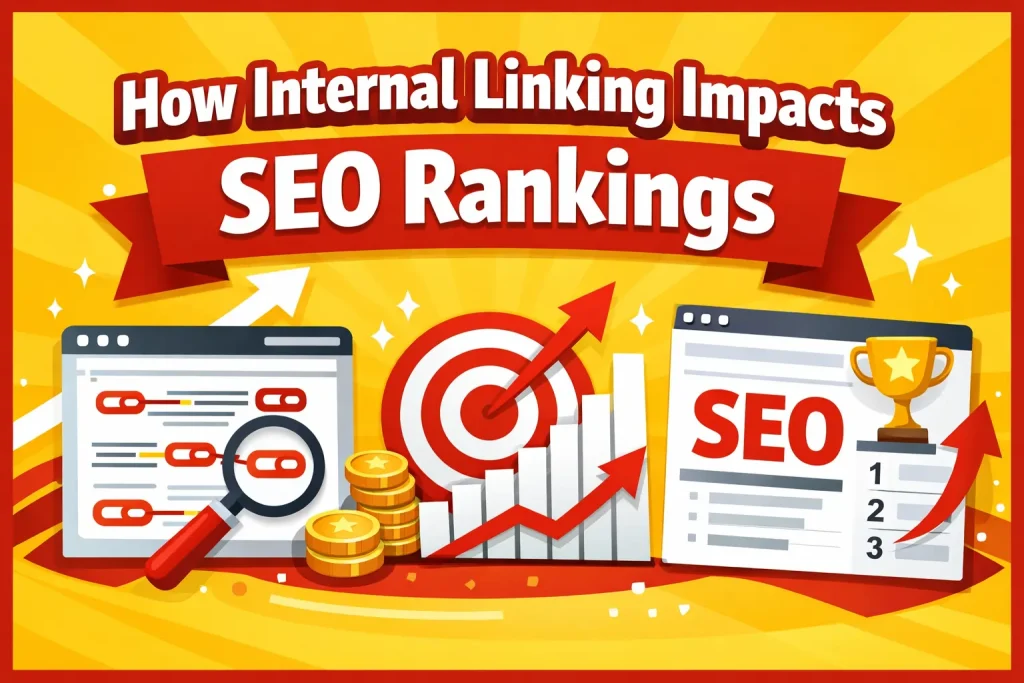
Internal linking plays a major role in how rankings are distributed across your site.
Link Equity and Authority Distribution
When a page earns backlinks, it gains authority. Internal links pass that authority to other pages.
Strategic internal linking:
- Strengthens underperforming pages
- Boosts new content
- Reinforces priority URLs
This process is often referred to as PageRank flow or link equity distribution. Ahrefs provides practical tactics for using internal links to spread link equity in its actionable internal links guide.
Internal Links as Relevance Signals
Internal links help search engines understand:
- Which pages are most important
- How topics relate
- What keywords pages should rank for
A page receiving multiple relevant internal links is often treated as more authoritative within the site, especially when used in structured topic clusters.
Internal Linking and Topical Authority
Topical authority is achieved when a website demonstrates deep, structured coverage of a subject. Internal linking is the mechanism that proves this coverage.
Content Clusters and Topic Silos
A common internal linking model is the hub-and-spoke structure:
- A cornerstone page targets a broad topic
- Supporting articles cover subtopics
- Internal links connect them logically
This helps search engines identify topical depth and relevance. Both Moz and Semrush describe this as building topic clusters and pillar pages.
Semantic SEO and Content Relationships
Modern search engines analyze meaning, not just keywords. Internal links reinforce semantic relationships by showing how content fits together. This is crucial for AI-driven search systems, which rely heavily on contextual understanding and site architecture.
User Experience Benefits of Internal Linking
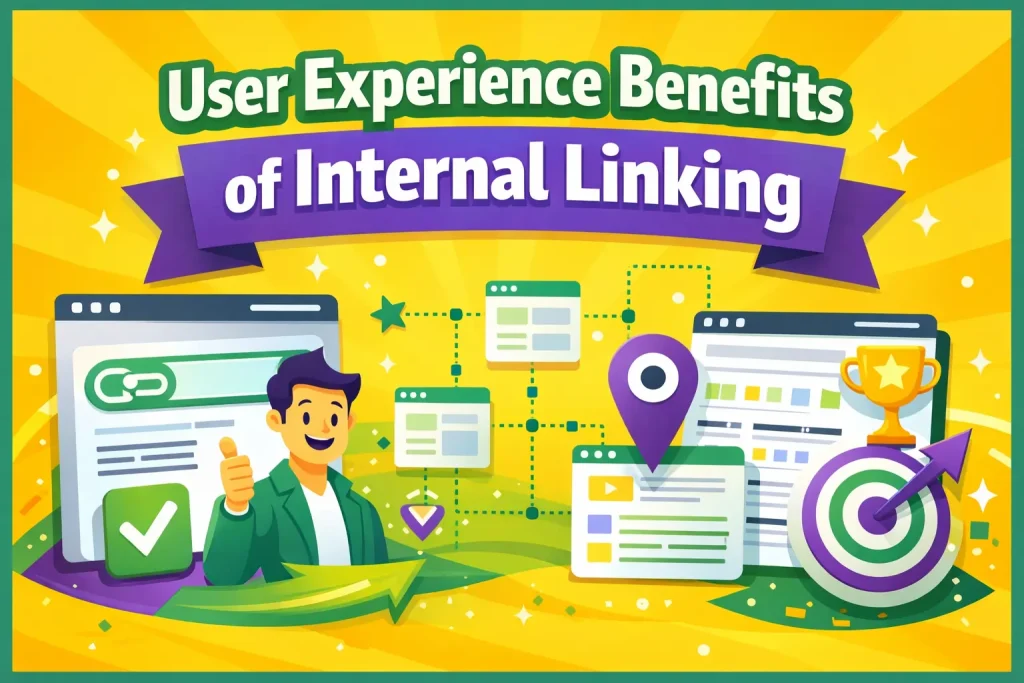
Internal linking improves SEO indirectly by enhancing user experience.
Better Navigation and Content Flow
Well-placed internal links help users:
- Find related content easily
- Understand topic progression
- Stay engaged longer
Guides on internal linking for conversions show how smart internal links can also support user journeys and conversion paths.
Engagement Signals and SEO Performance
Strong internal linking often leads to:
- Higher time on site
- Lower bounce rates
- Increased page views per session
While engagement metrics are not direct ranking factors, they strongly correlate with higher-performing pages, which is why many internal linking guides emphasize user-focused links first.
Internal Linking Best Practices for Better SEO Performance
Use Descriptive, Natural Anchor Text
Anchor text should clearly describe the destination page.
Good example:
- internal linking best practices for SEO
Bad example:
- click here
Google’s own documentation on SEO link best practices and Moz’s guide on internal links SEO best practices both emphasize descriptive anchor text.
Link From High-Authority Pages
Pages with backlinks and traffic pass more value. Use them strategically to support other content. You can identify these high-authority pages with tools like Ahrefs or Search Console, as suggested in this article on internal linking strategies for SEO and conversions.
Maintain Contextual Relevance
Links should fit naturally within the content. Forced links dilute both SEO and user value. Semrush recommends linking to relevant, related content naturally and building topic clusters.
Control Link Quantity
Too many internal links:
- Dilute link equity
- Confuse users
- Look spammy
Auditing your pages for excessive internal links is a key recommendation in this guide to common internal linking mistakes. Focus on relevance, not volume.
Common Internal Linking Mistakes That Hurt SEO
Orphan Pages
Pages without internal links are difficult to crawl and rarely rank. Many site audit tools (e.g., Semrush Site Audit or Ahrefs Site Audit) surface orphan pages so you can connect them.
Over-Optimized Anchors
Repeating exact-match anchors excessively looks unnatural and can weaken trust signals. Moz specifically advises using variations of anchor text in its internal links best practices.
Broken Internal Links
Broken links waste crawl budget and damage user experience. Regular audits are essential, and most SEO platforms include internal link error reports as part of site audits.
Internal Linking Strategy for New vs Established Websites
Internal Linking for New Websites
New sites should:
- Build content clusters early
- Link all new pages to cornerstone content
- Avoid deep orphan pages
Following a structured internal linking SEO strategy from the start helps new sites build authority faster.
Internal Linking for Established Websites
Older sites should:
- Add links from high-traffic pages to newer content
- Refresh outdated internal links
- Strengthen topical clusters
Internal linking allows older content to continuously support new growth, a tactic widely recommended in advanced internal linking strategy guides.
Mini Case Study: How Internal Linking Improved SEO Performance
The Scenario
A content site published 80+ articles over two years but struggled with indexing and rankings. Many posts had zero traffic despite quality content.
The Fix
The site implemented:
- Content clusters
- Contextual internal links
- Reduced crawl depth
The Results (90 Days)
- Indexed pages increased by 34%
- Average position improved by 18%
- Organic traffic increased by 41%
These kinds of improvements are consistent with case studies showing how better internal linking and crawl budget optimization can unlock existing content performance without new backlinks.
No new backlinks were built. The improvement came solely from internal linking optimization.
Visual & Internal Linking Scenarios (Text-Based)
Scenario 1: Blog Post Linking
A post about internal linking best practices links to:
- internal links and crawlability
- internal linking strategy for new websites
This creates semantic reinforcement similar to the topic cluster approach outlined in internal links: ultimate guide + strategies.
Scenario 2: Cornerstone Page Flow
A cornerstone page links out to:
- Supporting guides
- Case studies
- FAQs
Each supporting page links back to the cornerstone, reinforcing authority — a classic hub-and-spoke model discussed in Moz’s hub-and-spoke structure.
How to Audit and Improve Your Internal Linking
Finding Orphan Pages
Use:
- Google Search Console
- Screaming Frog
- Ahrefs
Google Search Console helps visualize internal link distribution and important pages via its internal links reports, as introduced on the Search Console overview page.
Ahrefs also offers an internal linking report as part of its Site Audit, helping you quickly find internal linking opportunities.
Simple Optimization Checklist
- Add contextual links to top pages
- Fix broken internal links
- Reduce crawl depth
- Strengthen content clusters
You can cross-check these steps with Semrush’s guide to common internal linking mistakes and fixes.
Frequently Asked Questions About Internal Linking & SEO
Does internal linking help SEO?
Yes. It improves crawlability, authority flow, relevance, and engagement, which are all highlighted in modern internal linking SEO guides.
How many internal links should a page have?
There’s no fixed number. Focus on usefulness and context, and avoid excessive links as outlined in internal linking mistakes to avoid.
Are internal links a ranking factor?
Internal links influence ranking signals like authority and relevance, and Google explicitly encourages crawlable links and good anchor text in its link best practices.
Can internal linking help AI search visibility?
Yes. AI systems rely on semantic structure and content relationships, both reinforced by internal links, as discussed in this 2026 internal linking strategy guide.
Internal Linking and AI Search (GEO & AEO Optimization)
AI-driven search engines generate answers by understanding relationships between content. Internal links help define:
- Topic hierarchy
- Entity connections
- Content importance
Strong internal linking improves:
- AI-generated summaries
- Featured snippets
- Answer engine visibility
This makes internal linking a core GEO and AEO strategy, especially in the context of more advanced internal linking approaches in 2026-focused guides.
Internal Anchor Text Examples You Can Use
Use these naturally within your site, ideally pointing to relevant resources or cluster pages:
- internal linking SEO strategy
- internal links for SEO performance
- how internal linking affects rankings
- internal links and crawlability
- internal linking best practices
For more examples of natural, descriptive anchors, see Moz’s section on using descriptive anchor text for internal links.
Final Thoughts: Why Internal Linking Is a Long-Term SEO Advantage
Internal linking compounds over time. Every new page strengthens your site when connected correctly. In a search landscape driven by AI, semantics, and topical authority, internal linking is no longer optional — it is foundational.If you want sustainable SEO growth, start by optimizing the links you already control, using the best practices in resources like Ahrefs’ internal links for SEO guide and Semrush’s internal links strategies.
Expand Your SEO Knowledge
- The Best Affordable SEO Tools I Trust in 2026 Stop overpaying for data. This guide highlights the lean, AI-powered tools that deliver professional-grade keyword research and site audits at a fraction of the cost of the “Big Three.”
- H1 Optimization Test: Keyword-Rich vs Branded Is your header helping your rank or your brand? We share the results of a split-test comparing search engine visibility against user trust to determine the ultimate H1 strategy for 2026.
- Old SEO vs. New SEO: What Changed? The era of keyword stuffing is dead. Discover how the shift toward Generative Engine Optimization (GEO) and “Answer Capsules” has redefined what it takes to get cited by AI and ranked by Google.