

Table of Contents
Foundations of GEO
Introduction: Why GEO Matters in the Age of AI Search
Search engines no longer work the way they used to. Instead of showing only blue links, Google now displays AI-generated summaries, conversational answers, and cited responses through features like Google AI Overviews. These systems decide which content gets summarized, quoted, and trusted.
This shift has introduced Generative Engine Optimization (GEO) — a strategy focused on helping content appear inside AI-generated answers, not just rankings. Google confirms this shift toward AI-powered search experiences in its official documentation on AI-generated content SEO results and overviews.
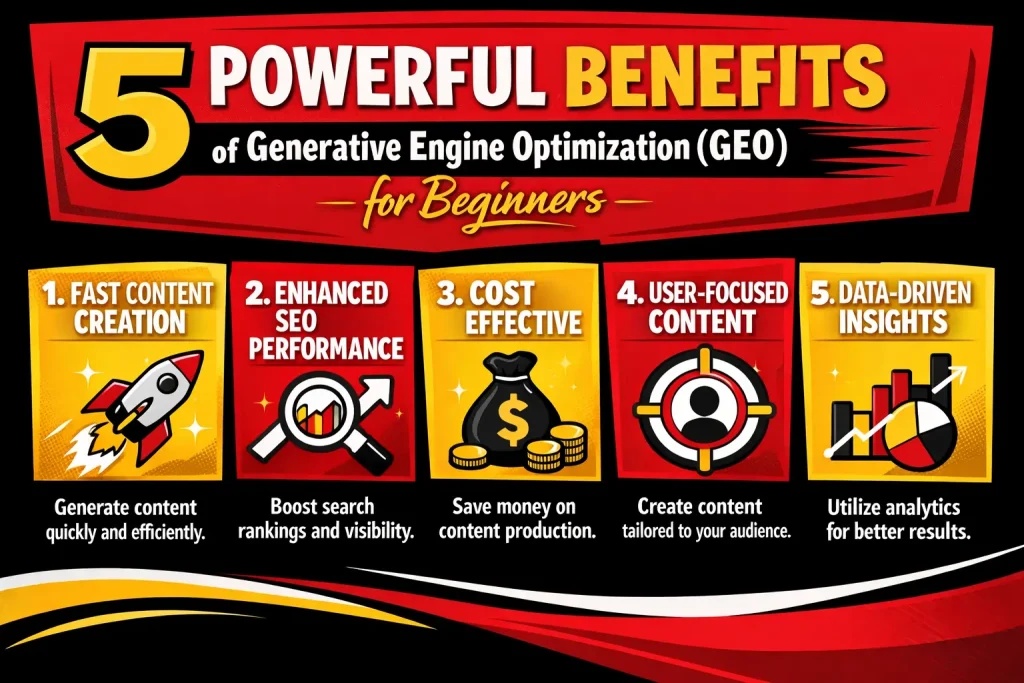
For beginners, GEO is not about advanced tools or hacks. It’s about clarity, structure, and factual accuracy — the exact things AI systems rely on. If traditional SEO is about ranking pages, GEO is about being chosen as the answer.
What Is Generative Engine Optimization (GEO)?
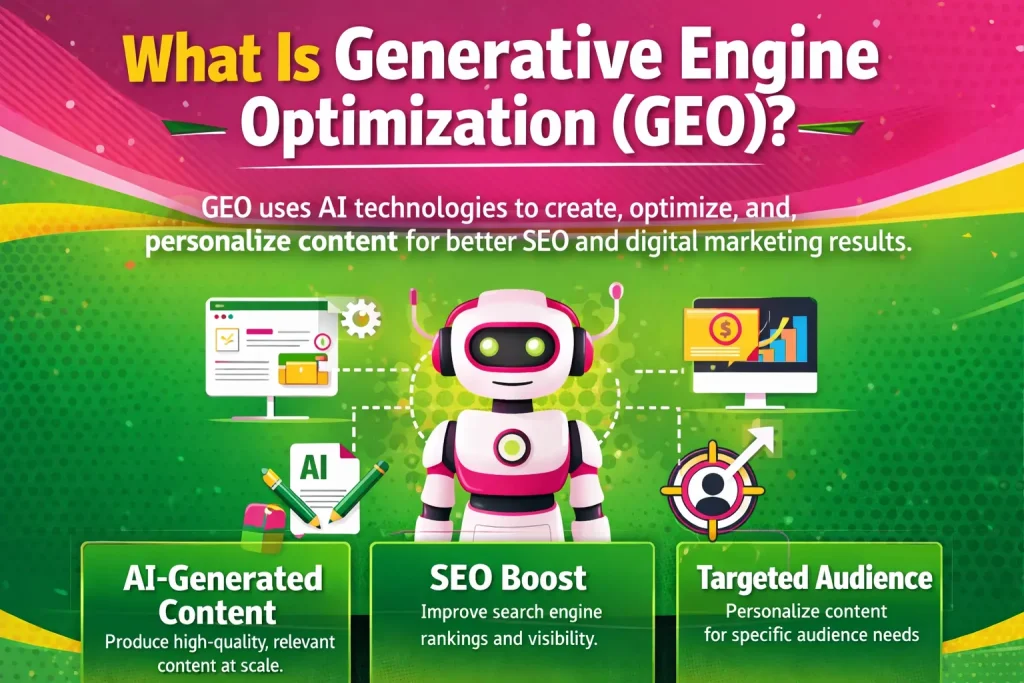
Generative Engine Optimization (GEO) is the practice of optimizing content so AI-powered search engines can easily understand, extract, and generate answers from it. Modern search engines now:
- Interpret meaning using natural language processing (NLP)
- Identify entities and attributes
- Extract short, direct answers
- Cite reliable sources inside AI responses
IBM explains how natural language processing allows machines to understand human language rather than just keywords.
GEO focuses on:
- Clear definitions
- Question-and-answer formatting
- Structured content
- Entity-based explanations
- High factual density
In short, GEO helps your content become AI-readable and AI-citable.
GEO vs Traditional SEO: What’s the Difference?
Beginners often ask: Is GEO replacing SEO? No — but it changes what matters most.
| Traditional SEO | GEO |
| Keyword rankings | AI answer selection |
| Backlinks-first | Authority + clarity |
| Page-level focus | Topic-level understanding |
| Blue links | AI-generated summaries |
Google has confirmed that helpful, people-first content is now the foundation of search quality. The best approach today is SEO + GEO working together.
Why GEO Is Important for Beginners
GEO is especially powerful for beginners because:
- AI prefers clear explanations, not just high authority.
- Smaller websites can still be cited in AI answers.
- GEO competition is lower than traditional SEO.
- Content quality matters more than backlinks.
This allows beginners to build visibility earlier and faster. For another beginner-friendly overview, you can also study this generative engine optimization guide.
Proof & Performance
Proof of Concept: GEO in Action
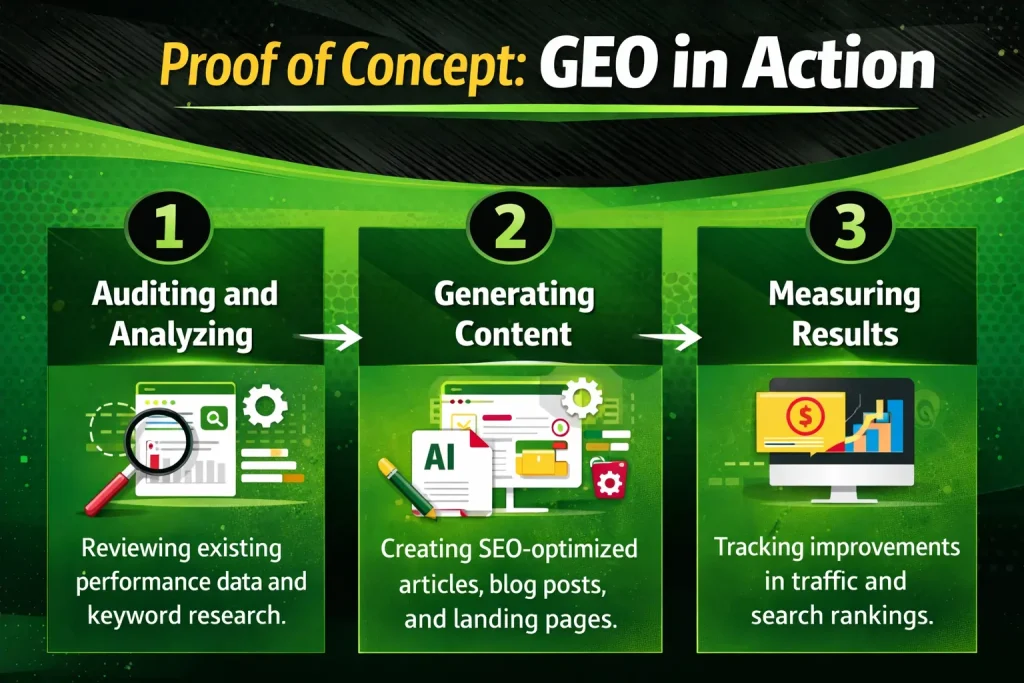
Understanding theory is easy. Applying GEO is where beginners struggle.
❌ Before: Traditional SEO Writing
“Our gluten-free bread is made with almond flour. It is healthy and tastes great. We have been baking since 1995 in Brooklyn.”
This version:
- Is generic
- Has no structure
- Gives AI nothing clear to extract
✅ After: GEO-Optimized Writing
Why choose our gluten-free bread?
- It uses almond flour, giving it a high-protein nutritional profile.
- It is certified celiac-safe, addressing a major dietary concern.
- It maintains a traditional sourdough texture, a common pain point in gluten-free baking.
Why the GEO Version Works
- Starts with a direct question
- Uses entity–attribute pairing
- Breaks content into quotable nuggets
- Matches AI answer formatting
👉 If AI can summarize your content without guessing, GEO is working.
The Hidden Technical Bridge: Schema Markup (Beginner-Friendly)
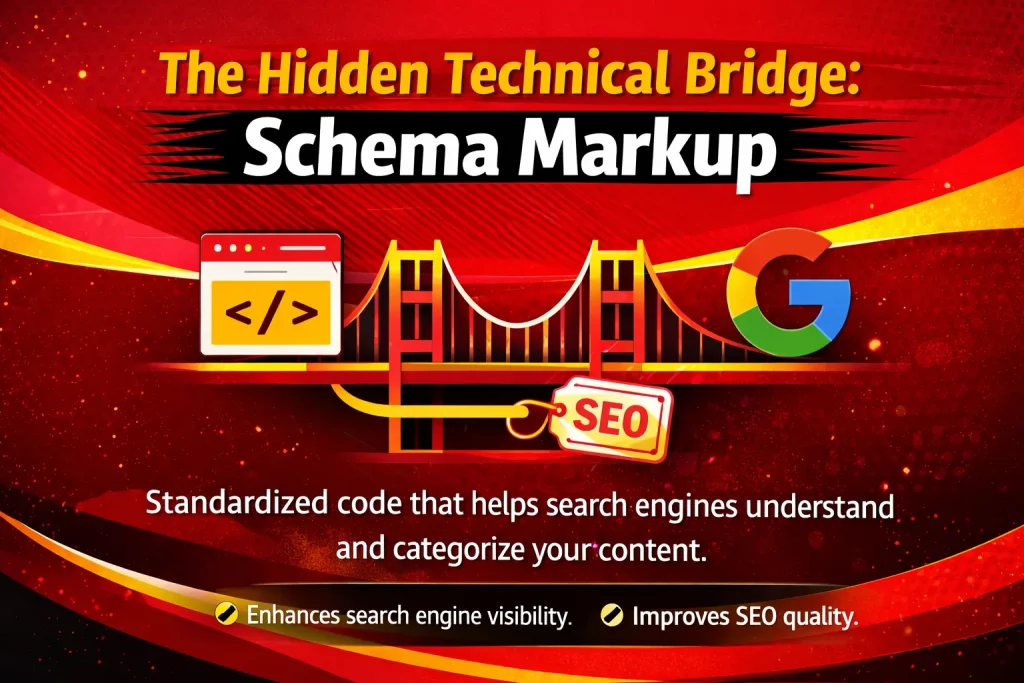
You don’t need advanced tools — but you do need to understand Schema.org structured data.
Think of schema like this:
- Schema is subtitles for AI.
- Schema markup tells AI:
- This is a question
- This is an answer
- This is an article
- This content is structured and trustworthy.
Google officially recommends structured data to help search systems understand content better. Beginners can use free schema generators to add:
- FAQ schema
- Article schema
These tools allow copy-paste implementation and dramatically improve AI extraction accuracy. For example, you can use a freeFAQ schema generator or a no-code FAQ schema markup tool.
👉 This is one of the most underrated GEO advantages. b
The GEO Search Intent Framework (How AI Chooses You)
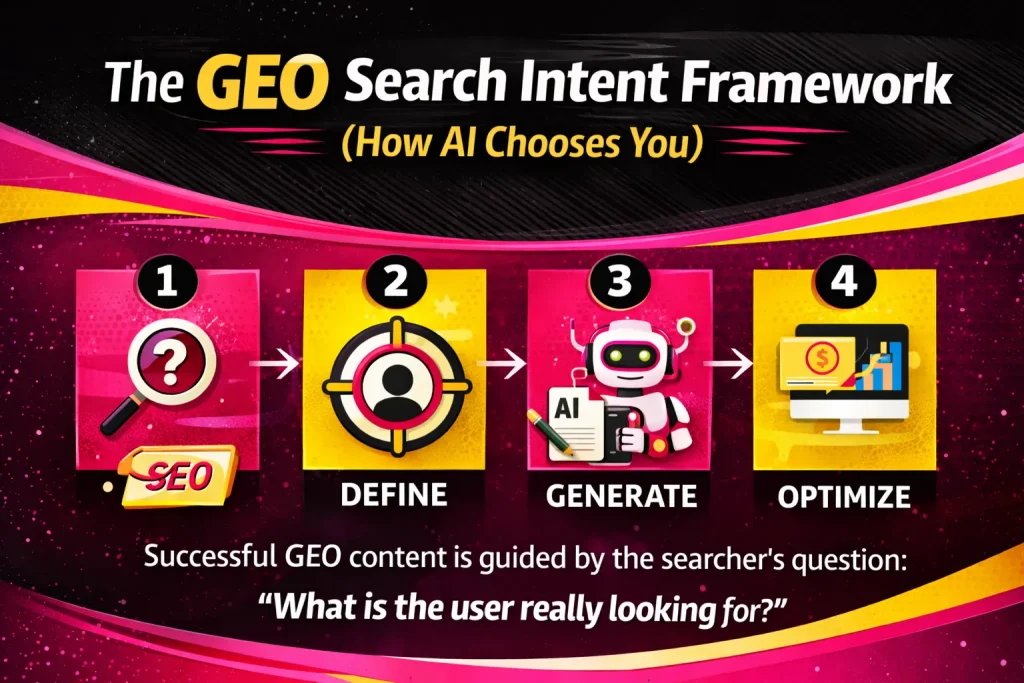
GEO isn’t just about what you write — it’s about when AI selects your content. AI selection relies on three core pillars:
1️⃣ Directness
Does the first sentence answer the question immediately? AI systems strongly favor direct answers, especially for conversational queries and voice search.
2️⃣ Citation Potential
Is there something easy to quote? AI prefers:
- Lists
- Definitions
- Frameworks
- Clear explanations
This aligns with how Google extracts featured snippets and AI summaries, as outlined in its documentation on featured snippets.
3️⃣ Entity Connection
Does your content clearly connect:
- Topic + audience
- Concept + use case
Example:
- “GEO” + “Beginners”
- “AI Search” + “Small Websites”
This helps AI understand context, not just keywords.
Visual Evidence: What GEO Success Looks Like
When GEO works, your content gets pulled into:
- Short AI summaries
- Bullet-style answers
- Citation boxes with your site as a source
Those citation boxes are the real goal of GEO. Your content should already look like the answer before AI generates it.
Human-in-the-Loop Warning: Prevent AI Hallucinations
AI systems summarize what they read. If your content is vague, AI may guess. This is known as AI hallucination, a documented risk in generative systems.
GEO Best Practice: Write factually dense, specific content so AI never has to guess. That means:
- Clear attributes
- Concrete explanations
- Minimal fluff
- Human review of AI-assisted content
GEO is not “let AI write everything.” It’s humans guiding AI with better content.
Common GEO Mistakes Beginners Should Avoid
Avoid these common mistakes:
- Keyword stuffing
- Long, unfocused paragraphs
- Ignoring search intent
- Publishing raw AI content
- Covering multiple topics on one page
GEO rewards precision and clarity, not volume.
Best Practices & Implementation
How Beginners Can Start Using GEO Today
You can apply for GEO immediately by:
- Writing clear definitions
- Using direct questions as headings
- Adding bullet points for lists
- Including FAQs
- Structuring content logically
No paid tools are required. Simple, human-friendly formatting already aligns with how AI systems extract answers.
GEO vs SEO: Do You Still Need Both?
Yes.
Use SEO for:
- Technical optimization
- Page speed
- Internal linking
- Mobile usability
Use GEO for:
- AI visibility
- Answer selection
- Entity recognition
- Conversational search experiences
Together, they form a future-proof optimization strategy.
Frequently Asked Questions About GEO
What is GEO in simple terms?
GEO helps content appear inside AI-generated answers instead of only rankings
Is GEO important for beginners?
Yes. GEO rewards clarity and usefulness over authority, which benefits smaller or newer sites.
Does GEO replace SEO?
No. GEO complements traditional SEO rather than replacing it.
Can beginners do GEO without tools?
Yes. Structure, clarity, and basic schema markup are enough to start.
Final Takeaway
SEO helps pages rank.
GEO helps content get chosen.
That difference is no longer subtle — it defines visibility in AI-driven search.
As search engines evolve into answer engines, the winners are not the loudest websites or the ones with the most backlinks. The winners are the sites that provide clear, structured, factual, and easily reusable information.
For beginners, this is a rare advantage.
GEO allows you to:
- Compete without heavy link building
- Gain visibility even as a small or new website
- Build authority through clarity, not complexity
- Reduce reliance on volatile ranking positions
- Future-proof your content for AI-driven search experiences
Most importantly, GEO encourages better content habits. When you optimize for AI understanding, you naturally create content that is more helpful, more precise, and more trustworthy for users as well.
If you start learning GEO now, you’re not just adapting to a trend — You’re aligning your content with the actual direction of search.
And in a search landscape powered by AI, being the best answer matters more than being the highest result.







