Most websites stay invisible in search results not because their content is bad, but because they lack a clear, consistent SEO strategy that works across every page. With a simple, structured plan focused on real search intent, helpful content, and a healthy website, any site can move from buried on page three to visible for the right audience.

From Invisible to Visible: Why Your Website Needs an SEO Strategy That Works
If your website feels invisible on Google, you are not alone. Many site owners publish blog posts and landing pages, but they do not follow a clear SEO strategy that works, so their content never reaches the people who need it. A practical SEO strategy that works for any website focuses on three things: understanding your audience, organizing your site, and publishing genuinely useful content.
Instead of chasing hacks, you build a long‑term SEO strategy piece by piece. You move from random content to a clear search engine optimization plan that targets the right keywords, supports organic traffic growth, and helps increase website rankings in a sustainable way. Whether you run a small business in your city, an eCommerce store, or a content site, this approach can take you from invisible to visible.
Know Your Starting Point: Simple SEO Audit Process
Before you change anything, you need to know where you stand. A quick SEO audit process gives you a clear picture of what is working and what is holding you back. Think of it as a health check for your website and your current SEO strategy.
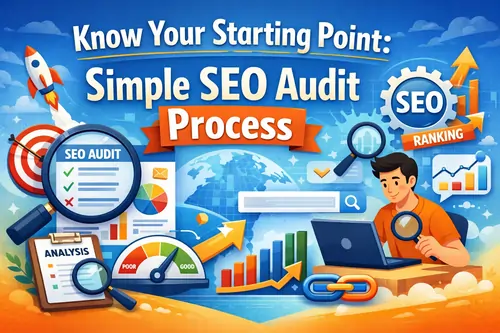
Start with three simple checks:
- Analytics and search data: Look at your current organic traffic, top pages, and main search queries.
- Technical health: Check for broken links, slow pages, and mobile‑friendliness so your technical SEO strategy has a solid base.
- On‑page basics: Review title tags, meta descriptions, and headings on your important pages.
For example, you might discover that you are getting a few visitors from branded searches, but none from broader phrases related to “SEO strategy” or your main services. You might also find duplicate content or missing meta descriptions on key pages. Fixing these basic issues and cleaning up internal links is often the fastest way to see early improvements in a new SEO strategy that works.
Clarify Goals, Audience, and GEO Focus
An effective SEO strategy starts with clear goals and a defined audience. Without this, your keyword choices and content topics feel random. You want your SEO strategy checklist to align with what your business actually needs.
Ask yourself:
- What is the main goal of my SEO roadmap? More traffic, more leads, more sales, or better brand awareness?
- Who is my ideal visitor, and what problems are they trying to solve when they search?
- Where are they located, and does GEO or local SEO strategy matter for my website?
If you run a local service business in a specific area (for example, a consultant in Imus, Calabarzon), you will combine SEO with GEO optimization. You will use phrases like “SEO strategy for small business in [city]” and build a local SEO strategy that helps you get discovered by nearby customers. If you run a global eCommerce store, you may focus more on category‑level keywords, product‑driven content marketing for SEO, and an SEO strategy for eCommerce that targets different countries or languages.
By connecting your goals, your audience, and where they live, you create a digital marketing strategy for SEO that is relevant and realistic.
Keyword and Topic Research: The Core of an SEO Strategy That Works
Keyword research is the heart of any SEO strategy that works. It helps you understand what your audience is actually searching for so you can create content that matches their intent. Instead of guessing, you build a keyword research strategy that guides all of your content decisions.

Start with your core ideas:
- Broad terms: SEO strategy, effective SEO strategy, SEO content strategy, SEO strategy for beginners, SEO strategy for small business, SEO strategy for any website.
- Supportive topics: technical SEO strategy, local SEO strategy, link building strategy, keyword research strategy, content marketing for SEO.
- Outcome‑focused phrases: organic traffic growth, increase website rankings, SEO best practices, SEO optimization tips, long‑term SEO strategy, data‑driven SEO strategy.
Then, expand into long‑tail keywords that are more specific and easier to rank for. These might include questions and phrases like:
- “simple SEO strategy that works for new websites”
- “SEO strategy for eCommerce stores”
- “SEO strategy checklist for bloggers”
- “SEO roadmap for service businesses”
Group your keywords into topics and map each group to a page or cluster of pages. For example:
- Pillar guide: “From Invisible to Visible: An SEO Strategy That Works for Any Website” (covers the full framework).
- Supporting article: “Keyword Research Strategy for an SEO Strategy That Works”.
- Supporting article: “Technical SEO Strategy: Essentials for Any Website”.
- Supporting article: “Local SEO Strategy for Small Businesses”.
This turns your site into a structured library of content instead of a random collection of posts.
Build a Site Structure Google Understands
Even the best content will underperform if your site is confusing or messy. A clear, logical site structure is a key part of a long‑term SEO strategy because it helps both users and search engines find and understand your pages.
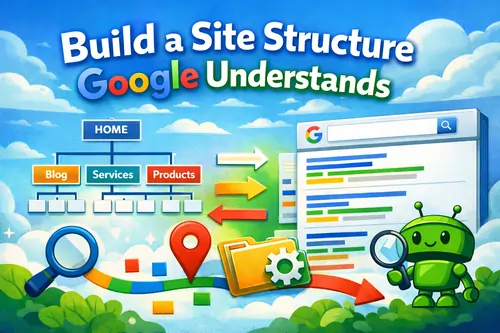
A simple approach:
- Create pillar pages for your main topics: SEO strategy, technical SEO strategy, local SEO strategy, and link building strategy.
- Under each pillar, publish supporting articles that go into detail and link back to the main page.
- Use descriptive URLs, helpful navigation menus, and relevant internal links.
For example, your SEO content strategy might include one main guide about “SEO strategy that works” and several related guides about on‑page SEO techniques, off‑page SEO techniques, SEO audit process, and SEO campaign plan. Internal links between these pages help search engines see how your topics connect and make it easier for visitors to move through your content.
A clear site structure is also good for GEO and local content. If you serve multiple locations, you can create location‑specific landing pages that combine your core terms with city or region names, building a local SEO strategy that matches how people search in your area.
On‑Page SEO: Make Every Page Work Harder
On‑page SEO is where you apply your keyword research and make each page as useful and understandable as possible. You are not just sprinkling terms like “SEO strategy that works” into your content; you are helping search engines and users see what each page is about.
Focus on these on‑page SEO techniques:
- Page titles: Include your main keyword once in a natural way, for example “From Invisible to Visible: An SEO Strategy That Works for Any Website”.
- Meta descriptions: Use benefit‑focused copy, and include related phrases such as “SEO strategy for any website,” “organic traffic growth,” or “increase website rankings.”
- Headings: Use H2 and H3 tags to introduce topics like SEO best practices, technical SEO strategy, local SEO strategy, and content marketing for SEO.
- Body content: Write for humans first, then add your keywords where they fit naturally, including semantic variations that support NLP and semantic SEO.
- Images: Use descriptive file names and alt text that describe the image and occasionally contain a key phrase when it makes sense.
Modern search engines use NLP (natural language processing) to understand context, so you do not need to repeat “SEO strategy” in every sentence. Instead, use related terms like SEO roadmap, SEO strategy checklist, data‑driven SEO strategy, and SEO optimization tips to show the full picture. This helps your content feel natural while still being well optimized.
If you are new to these concepts, guides like the Beginner’s Guide to SEO or SEO Basics are helpful references.
Content That Earns Attention, Links, and Trust
Content is where your SEO strategy that works becomes visible to your audience. If your articles are thin, generic, or vague, they will not rank well or attract links, no matter how good your keywords are.
Aim to create content that:
- Solves real problems: Offer step‑by‑step instructions, checklists, and examples that match your readers’ search intent.
- Shows your experience: Include short stories, mini‑case studies, or lessons learned that prove you have actually applied these SEO best practices.
- Supports your bigger plan: Every article should fit into your SEO content strategy and SEO roadmap rather than being a random piece.
For instance, a guide on “SEO strategy for beginners” might walk a new site owner through basic keyword research strategy, simple on‑page SEO techniques, and how to set up a simple SEO audit process. A post on “SEO strategy for small business” might focus more on local SEO strategy, Google Business Profile optimization, and review generation.
By giving practical advice instead of theory, your content naturally earns more time on page, more shares, and more organic links, all of which support a long‑term SEO strategy.
Technical SEO Strategy: Make Your Website Easy to Use and Crawl
Technical SEO is often seen as complex, but at its core, a technical SEO strategy is about making sure your site is fast, accessible, and easy for search engines to crawl and understand. Without this, even a strong SEO content strategy will struggle.
Key technical priorities:
- Speed and performance: Use basic optimization techniques so pages load quickly on both desktop and mobile.
- Mobile‑friendliness: Ensure your website works well on phones and tablets, since many users search on mobile devices.
- Clean URLs and internal links: Avoid long, messy URLs, and fix broken links so users and crawlers do not hit dead ends.
- Indexing: Make sure important pages are indexable and that duplicate or low‑value pages are handled properly.
Technical work supports AEO (answer engine optimization) too. When your pages are fast, structured, and clearly marked up, they are more likely to be used as answers in search features, snippets, and AI‑driven results. Treat technical SEO strategy as a key part of your SEO strategy checklist, not as an afterthought.
To dive deeper, you can use resources like this in‑depth technical SEO guide or this article on technical SEO strategies.
Authority, Link Building Strategy, and Trust Signals
To move from invisible to visible, you need authority as well as relevance. Authority is built through real‑world signals, especially quality backlinks, brand mentions, and visible trust factors on your site.
A simple link building strategy can include:
- Guest content: Share valuable articles on other relevant sites and link back to your best resources, such as your pillar guide on an SEO strategy that works.
- Partnerships: Collaborate with complementary businesses on content, tools, or webinars that naturally attract links.
- Reference‑worthy content: Publish data, templates, and in‑depth guides that others want to cite in their own digital marketing strategy for SEO.
Trust signals also matter. Include a clear About page, contact information, social proof, and updated content so visitors feel safe taking action. These details support your SEO strategy that works by making it easier for both users and search engines to trust your site.
If you want a deeper understanding of link building, check out this beginner’s guide to link building or this link building overview.
Local SEO Strategy and GEO Optimization
If your business serves a specific region, your SEO strategy should include a strong local SEO strategy and GEO elements. This helps your website appear for searches that include city names, “near me” queries, and local intent.
To strengthen your GEO and local SEO:
- Use location‑specific phrases on relevant pages, such as “SEO strategy for small business in [your city]” or “local SEO strategy for [region].”
- Create separate location pages if you serve multiple areas, each with unique content that combines your core terms with local details.
- Optimize your Google Business Profile and other local listings, keep your name, address, and phone number consistent, and encourage customer reviews.
By aligning your search engine optimization plan with your physical service area, you make it easier for nearby customers to find you when they are actively looking for help.
AEO and Simple Answer‑Focused Content
Answer engine optimization (AEO) is about making your content easy to use as a direct answer in search features, snippets, and AI‑powered tools. It fits naturally into a modern SEO strategy that works because it forces you to write clearly and directly.
To support AEO:
- Add short, clear answers near the top of key articles, summarizing “what,” “how,” or “why” in two or three sentences.
- Include a small FAQ section at the end of important pages, with questions and answers related to your topic.
- Use natural language and common question phrases so your content works well with NLP‑based systems.
For example, in a FAQ you might answer:
- “What is an SEO strategy that works?”
- “How long does it take for an SEO strategy to work?”
- “What is the difference between technical SEO strategy and content marketing for SEO?”
These simple answers help search engines and assistants understand your content and improve your chances of appearing in answer boxes and voice search.
Data‑Driven SEO Strategy: Measure, Learn, and Improve
A data‑driven SEO strategy means you do not just publish once and hope for the best. You regularly measure your results, learn from what works, and adjust your plan. This is how you turn a one‑time effort into a long‑term SEO strategy.
Track key metrics such as:
- Organic traffic to your main SEO strategy pages and supporting content.
- Rankings for important terms like SEO strategy, SEO strategy that works, SEO strategy for beginners, and SEO strategy for small business.
- Conversions and leads from organic search, especially on pages that include strong calls to action.
Use what you learn to refine your SEO campaign plan. If a guide on technical SEO strategy performs well, you might expand it with more examples or create a follow‑up piece. If a page is getting impressions but few clicks, you can improve its title and meta description. Over time, these small, data‑driven updates help you maintain a search engine optimization plan that stays aligned with your audience and with search behavior.
Simple 30–60 Day Action Plan
To put all of this into practice, you can follow a short action plan:
- Week 1: Run a basic SEO audit process, clarify your goals, and list your main topics for your SEO roadmap.
- Week 2: Build your keyword research strategy and design your SEO content strategy for the next few months.
- Week 3: Publish or update one main pillar guide focused on an SEO strategy that works for any website, and optimize it with on‑page SEO techniques.
- Week 4: Improve your technical SEO strategy, fix errors, strengthen internal links, and start a simple link building strategy.
If you keep following this pattern, you will move from random activity to an SEO strategy that works in the real world. You will support organic traffic growth, increase website rankings, and build a strong, long‑term SEO strategy that fits your audience, your goals, and your location.