Why Vibe Coding Might Replace Entry Level Developers Key Takeaways
Vibe coding refers to the growing use of AI-powered tools that can generate, debug, and refactor code from natural-language prompts, making it possible to build applications with minimal human keystrokes.
- Why vibe coding might replace entry level developers is not about elimination but evolution: routine tasks now go to AI while junior roles shift toward higher-level problem solving and system thinking.
- Companies increasingly rely on experienced engineers augmented by AI programming tools , reducing the need for large teams of junior coders.
- Adaptable beginners who master AI assisted coding jobs and architecture skills will thrive in the transformed landscape.
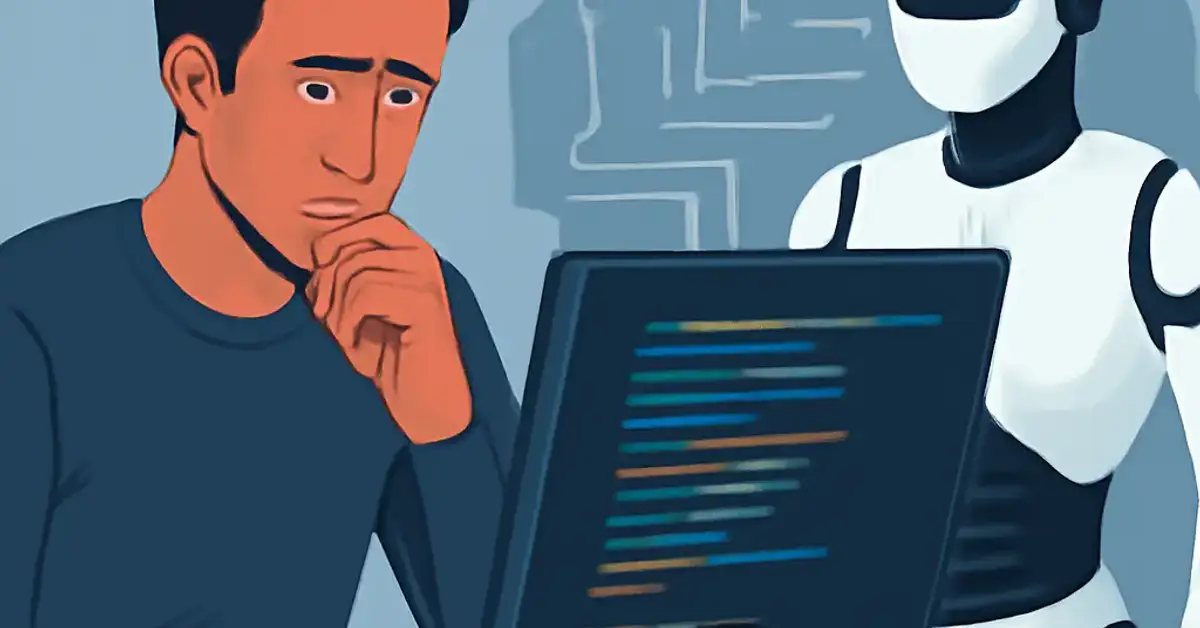
Understanding Why Vibe Coding Might Replace Entry Level Developers in 2025
If you are an aspiring developer or a hiring manager sensing a shift in the air, you have come to the right place. The term “vibe coding” has emerged from the trenches of AI-assisted development to describe a workflow where you describe what you want in plain English, and an AI model produces the corresponding code. Tools like GitHub Copilot, Cursor, and Claude are now so capable that they can scaffold entire features, fix common bugs, and write boilerplate logic in seconds. For a related guide, see 12 Ways Vibe Coding Is Changing the Future of AI Development.
This is not a distant future scenario. It is happening right now, and it is sending ripples through the job market for junior programmers. To understand the magnitude of the change, we need to look at what entry-level work used to entail and how much of that work is now being handled by machines.
The Old Bargain for Junior Developers
Historically, companies hired junior developers to handle the grunt work: writing repetitive CRUD endpoints, fixing lint errors, writing unit tests for well-understood functions, and maintaining legacy UI components. These tasks were cheap, plentiful, and perfect for learning. In return, juniors got mentorship and a path toward seniority.
Today, AI software development impact has made that bargain obsolete. AI models can produce the same CRUD endpoints faster and with fewer defects. The so-called “busy work” that once justified a junior’s salary is now automated. This is the core reason why vibe coding might replace entry level developers — or rather, replace the tasks those developers used to perform.
How AI Programming Tools Automate Routine Development Tasks
Let’s get specific about what automation looks like in practice. When we talk about entry level developer AI scenarios, we are describing a world where the machine handles the following:
- Boilerplate generation: Creating standard project scaffolding, API routes, form handlers, and data models from a simple sentence.
- Simple function debugging: Identifying off-by-one errors, null pointer exceptions, and incorrect return types without human stack-trace analysis.
- Basic component creation: Generating React, Vue, or Angular components with standard CSS, state management, and prop validation.
- Test writing: Producing unit tests and integration tests for existing functions with correct edge-case handling.
- Refactoring: Renaming variables, splitting large functions, and converting between patterns (e.g., class to functional components).
These are precisely the tasks that used to fill a junior developer’s daily standup. Now they can be done in moments by an AI model. The result is a sharp reduction in demand for human labor that only performs these repetitive coding tasks.
Why This Changes the Hiring Equation for Companies
Consider the economics. A company previously needed five junior developers to maintain a product’s growing codebase. With vibe coding jobs becoming reality, one senior developer plus an AI tool can outproduce that entire group. The senior sets the architecture, reviews AI-generated code, and handles complex logic, while the AI does the heavy lifting of implementation.
This is not speculation. Startups and mid-sized companies are already reporting they can ship features faster with smaller teams augmented by AI programming tools. The junior developer automation trend means that the entry-level hiring funnel is narrowing. Companies are less willing to invest in long ramp-up times for juniors when they can rent AI assistance on a per-seat basis.
Comparing Traditional Learning Paths with AI-Driven Development Environments
To fully grasp why vibe coding might replace entry level developers as a career starting point, we have to examine how learning is changing. The traditional path was built on manual repetition:
| Aspect | Traditional Path | AI-Driven Path |
|---|---|---|
| Core skill | Syntax memorization and manual coding | Prompt engineering and code review |
| First job tasks | Bug fixes, small features, boilerplate | System design support, AI output curation |
| Learning style | Read documentation, write code from scratch | Iterate with AI, understand generated outputs |
| Value proposition | Speed of manual output | Quality of architecture decisions |
| Mentorship model | Senior reviews junior code | Senior reviews AI code + junior adaptations |
The bottom line: software engineering entry level roles now demand a different toolbox. A beginner who spent six months memorizing React hooks but cannot debug an AI-generated component will struggle. Conversely, a beginner who understands component architecture and can collaborate with AI will be invaluable.
How Entry Level Developers Can Adapt to the AI Shift
If you are reading this as a student or bootcamp graduate, you may feel a knot in your stomach. Do not despair. The developer role evolution is not about erasing human developers; it is about raising the baseline. Here is a practical adaptation plan.
Focus on Architecture and System Design
AI can write a function, but it struggles to design a microservices architecture, choose the right database pattern, or enforce cross-cutting concerns like security and observability. Junior programmer future success lies in understanding system trade-offs. Study cloud architecture patterns, data modeling, and API design principles. These are the skills that AI cannot yet own.
Become an Expert in AI Collaboration
The most valuable skill in AI assisted coding jobs is learning how to steer the AI effectively. This means writing clear prompts, breaking complex tasks into steps, verifying AI outputs for correctness, and knowing when to override the machine. Treat AI as a pair programmer who never sleeps — but who also needs careful supervision.
Build a Portfolio of AI-Enhanced Projects
Do not hide your use of AI. Show it off. Build an application where you used AI programming tools to accelerate development, and then document the architecture decisions you made. Hiring managers care more about your ability to ship quality work than whether you typed every character yourself. Highlight that you can manage programming automation trends rather than fight them.
Develop Critical Thinking and Problem Decomposition
Rote coding is dead. What remains is the ability to take a business problem, decompose it into solvable units, and then use AI to execute each unit. This is a higher-order skill that requires practice. Engage in coding challenges that emphasize design trade-offs, not just algorithm speed. Learn to ask “why this approach?” rather than “how do I write this loop?”
Why the Role Is Evolving, Not Disappearing
Let’s address the fear head-on: why vibe coding might replace entry level developers is a real conversation, but the conclusion is not doom. The role of the entry-level developer is evolving into something more akin to a “software architect in training.” The survival skills are learning speed and adaptability.
History shows us that each wave of automation eventually creates more jobs than it destroys, but the new jobs demand new skills. The coding careers future belongs to those who can combine deep technical understanding with fluency in AI tools. The tech job transformation is already underway — and it favors the prepared.
Useful Resources
To dive deeper into the impact of AI on developer roles, explore these resources:
- Stanford University: AI and the Future of Software Engineering — a research paper examining how large language models are changing developer productivity and hiring patterns.
- Martin Fowler: AI-Assisted Code Generation — a practical guide for professional developers on integrating AI tools into modern workflows while maintaining code quality.
Frequently Asked Questions About Why Vibe Coding Might Replace Entry Level Developers
Will vibe coding completely replace entry-level developers?
No, but it will replace the routine coding tasks that traditionally occupied entry-level roles. The job will shift toward architecture, AI supervision, and complex problem decomposition rather than manual keystroke work.
What is vibe coding in simple terms?
Vibe coding is a development approach where you describe what you want in natural language, and an AI tool generates the corresponding code. It shifts the developer’s role from writing every line to directing and reviewing AI-generated outputs. For a related guide, see How Vibe Coding Improves AI Content and Automation Workflows.
How does AI software development impact the job market for juniors?
AI reduces demand for juniors whose primary value is manual coding speed. However, it increases demand for juniors who can design systems, write effective prompts, and verify AI outputs — roles that require higher-level thinking.
What skills should entry-level developers learn in 2025?
Focus on system design, cloud architecture, prompt engineering, code review, API design, and data modeling. These skills enable you to guide AI tools effectively rather than compete with them on manual output.
Are vibe coding jobs real, or just hype?
Vibe coding jobs are real. Companies are hiring developers specifically to work with AI coding assistants, and job titles like “AI-Assisted Developer” or “Prompt Engineer” are appearing on job boards across the tech industry.
How can a bootcamp graduate compete with AI programming tools ?
By building a portfolio that demonstrates architectural thinking. Show how you used AI to accelerate development while making key decisions on database choice, security, and performance. Employers need humans who can make those decisions.
Will software engineering entry level roles pay less now?
Early evidence suggests compensation may shift toward value-based pay rather than time-based. Juniors who can deliver system-level value may command higher salaries than those who only write code, because they are harder to find.
What programming automation trends should I watch?
Watch for AI code review tools, autonomous bug-fixing agents, AI-generated documentation, and automated refactoring systems. These tools will continue to eat away at manual coding tasks across all experience levels.
Is it still worth learning to code manually?
Yes, because understanding the code that AI produces is essential for debugging and optimization. Manual coding practice builds the mental model needed to evaluate AI outputs critically. You cannot review what you do not understand.
How does developer role evolution affect senior engineers?
Senior engineers become even more valuable because they oversee AI-generated code, set architectural standards, and solve the truly hard problems. The senior-to-junior ratio in teams may increase.
What is the future of coding careers for beginners without a degree?
The barrier to entry may actually lower for self-taught coders who master AI tools quickly. Companies care more about output than credentials. A strong portfolio of AI-enhanced projects can outweigh a missing degree.
How do junior programmer future trends differ by industry?
Startups and fintech are adopting AI tools fastest. Regulated industries like healthcare and defense move slower, preserving traditional junior roles longer. Geographic markets also vary — tech hubs are further ahead in this transition.
Can AI replace the creativity required in software development?
AI can generate creative variations of existing patterns, but it cannot solve novel business problems from scratch. Human creativity in problem framing, user experience, and trade-off analysis remains irreplaceable.
What is AI assisted coding job salary range in 2025?
Salaries vary widely by region and skill level. Entry-level roles that combine coding with AI expertise typically range from $70,000 to $120,000 in the United States, with top candidates commanding even higher pay.
How do I transition from manual coding to AI-assisted workflows?
Start by using AI tools (like Copilot or Claude) in your current projects. Focus on learning how to break tasks into small units, write effective prompts, and review code critically. The transition takes about 3-6 months of deliberate practice.
Will AI eliminate the need for code reviews?
No. AI-generated code still contains subtle bugs, security vulnerabilities, and performance issues. Human code reviews become even more important as the volume of code produced increases with AI assistance.
What does tech job transformation look like for non-developers?
Product managers, designers, and QA engineers will also need to understand AI capabilities. The transformation affects everyone in the tech ecosystem, not just coders. Cross-functional AI literacy becomes essential.
How should computer science programs adapt to AI tools?
Curricula should shift from syntax-heavy assignments to projects that emphasize system design, prompt engineering, and AI output evaluation. Teaching students to solve problems with AI is more practical than banning it.
Is there still a path to seniority for juniors starting today?
Absolutely. Juniors who focus on architectural thinking, business domain knowledge, and AI collaboration will reach senior levels faster than previous generations because they will be freed from mundane coding earlier in their careers.
What is the biggest mistake entry-level developers make with AI?
Trusting AI outputs without verification. Blindly copying AI-generated code leads to integration problems, security flaws, and technical debt. The best juniors treat AI as a draft — not a final product.