Ranking Factors Inside Your Pages You Should Fix Key Takeaways
On-page SEO is the foundation of search visibility, and understanding the ranking factors inside your pages you should fix can dramatically improve your organic traffic.
- The ranking factors inside your pages you should fix include title tags, meta descriptions, heading structure, keyword placement, and internal linking.
- Fixing common on-page SEO mistakes like slow load times, poor mobile responsiveness, and thin content can lead to immediate ranking improvements.
- Search engines evaluate on-page ranking signals such as content readability, image optimization, and user engagement—each fix moves your page closer to page one.
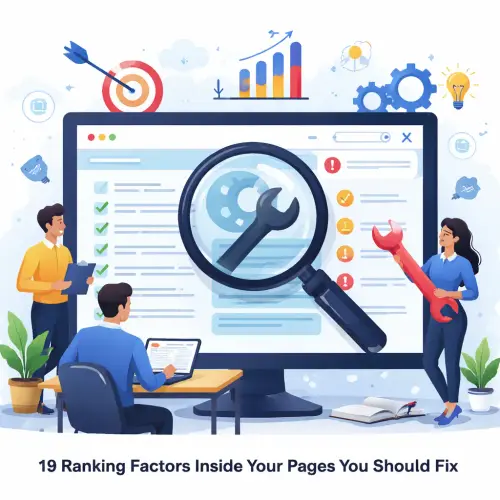
What Are the 19 Ranking Factors Inside Your Pages You Should Fix Now?
Search engines like Google rely on hundreds of signals to rank pages, but the most actionable ones live directly on your site. These ranking factors inside your pages you should fix cover everything from technical performance to content quality. Whether you are a blogger, small business owner, or digital marketer, addressing these elements gives you a direct path to higher rankings and more targeted traffic. Below we explore each factor, why it matters, and how to fix it.
What On-Page SEO Factors Affect Rankings the Most?
Not all on-page factors carry equal weight. Studies and Google’s own guidelines consistently point to content relevance, user experience, and technical health as the top-tier signals. Among these, the most impactful ranking factors inside your pages you should fix are your title tags, meta descriptions, heading structure, and keyword placement. These directly tell search engines what your page is about and whether it answers a user’s query. For a related guide, see On-Page SEO Content Optimization Made Easy (2026 Guide).
Title Tags Impact on Search Visibility
Your title tag is the first thing users and search engines see. It appears as the clickable headline in search results and heavily influences click-through rates. To optimize, place your primary keyword near the front, keep it under 60 characters, and make it compelling. A well-crafted title tag can increase organic traffic by 20% or more.
Meta Descriptions Improve Click-Through Rates
While meta descriptions are not a direct ranking factor, they directly affect click-through rates (CTR). A strong meta description includes the focus keyword, a clear benefit, and a call to action. Keep it between 150-160 characters. Higher CTR signals to Google that your page is valuable, indirectly boosting rankings.
How to Improve Page Rankings Quickly
If you need fast results, focus on the low-hanging fruit. Start by fixing common on-page SEO mistakes like missing or duplicate title tags, broken internal links, and slow-loading images. Then, improve your best heading structure for SEO—use one H1, relevant H2s, and supporting H3s. These quick wins often show ranking improvements within weeks.
Internal Linking Improves Rankings
Internal links distribute page authority throughout your site and help search engines understand content hierarchy. Link from high-authority pages to newer or less visible pages using descriptive anchor text. This is one of the most overlooked website elements to fix to rank better.
Content Issues Hurt Page Rankings
Thin, duplicate, or poorly structured content is a major barrier to visibility. Google rewards pages that fully answer a user’s intent. Audit your pages for depth, originality, and value. Remove or rewrite content that does not meet these standards.
How to Optimize Pages for Higher Organic Traffic
Optimizing for organic traffic means aligning every on-page element with user intent and search engine expectations. The ranking factors inside your pages you should fix include image optimization, mobile responsiveness, and page speed—each directly affects user experience and crawl efficiency.
Image Optimization Important for SEO
Images slow down pages if not compressed. Use descriptive file names and alt text containing relevant keywords. Compress images to under 100 KB when possible. Proper image optimization also helps your pages appear in Google Image Search, an often-overlooked traffic source.
Mobile Responsiveness Affects SEO Performance
With Google’s mobile-first indexing, your site must perform flawlessly on smartphones. Test your pages using Google’s Mobile-Friendly Test. Ensure text is readable without zooming, buttons are tappable, and content fits the screen. Poor mobile responsiveness is a top technical SEO problem lower page visibility.
Page Speed Important for Search Engines
Page speed is a confirmed ranking factor. Aim for a load time under 2.5 seconds. Use tools like Google PageSpeed Insights to identify issues—compress images, enable browser caching, and minify CSS/JavaScript. Faster pages reduce bounce rates and improve user satisfaction.
How Can User Experience Influence Rankings?
Google increasingly uses user engagement signals like dwell time, bounce rate, and click-through rate to assess page quality. A page with a strong user experience influences rankings positively because it keeps visitors engaged. Improve readability, use clear calls to action, and structure content for easy scanning.
Content Readability Affects SEO
Readability is about how easily users can consume your content. Use short paragraphs, bullet points, and simple language. Break up long sections with headings. Pages that are easy to read keep users on the page longer, which sends positive signals to search engines.
How Search Engines Evaluate On-Page Ranking Signals
Search engines use crawlers to scan your page’s HTML, assess content relevance, and measure user interaction. The ranking factors inside your pages you should fix are evaluated collectively—no single element guarantees a top spot. Instead, search engines look for a balanced combination of technical health, content quality, and user experience.
Keyword Placement Importance for SEO
Where you place keywords matters. Include your primary keyword in the title tag, first 100 words of content, at least one H2, and the meta description. But avoid overuse—keyword stuffing hurts readability and can trigger penalties. Natural integration is the goal.
Technical SEO Problems Lower Page Visibility
Broken links, missing alt tags, improper redirects, and orphan pages are common issues. Regularly run a site audit using tools like Screaming Frog or Ahrefs. Fixing these technical gaps ensures search engines can crawl and index your pages properly.
Useful Resources
Learn more about on-page SEO best practices from trusted sources:
- Google SEO Starter Guide – Official documentation covering key on-page ranking factors.
- Moz Beginner’s Guide to SEO – Comprehensive overview of how to optimize pages for search engines.
Frequently Asked Questions About Ranking Factors Inside Your Pages You Should Fix
What are the 19 ranking factors inside your pages you should fix now?
The 19 factors include title tags, meta descriptions, heading structure, keyword placement, internal linking, page speed, mobile responsiveness, image optimization, content quality, readability, meta descriptions, user engagement, URL structure, alt text, schema markup, content freshness, external links, anchor text, and site architecture.
What on-page SEO factors affect rankings the most ?
The most impactful factors are title tags, content relevance, heading structure, keyword placement, and page speed. These directly communicate topic authority and user value to search engines.
How can I improve my page rankings quickly?
Fix title tags and meta descriptions first, then optimize images and internal links. These changes often yield visible improvements within a few weeks.
Why is keyword placement important for SEO?
Keyword placement tells search engines what your page is about. Including your target keyword in the title, first paragraph, and headings helps search engines match your content to user queries.
How do title tags impact search visibility?
Title tags appear as the clickable headline in search results and heavily influence click-through rates. A strong title tag improves both CTR and relevance signals.
What heading structure is best for SEO?
Use one H1 per page, several H2s for main sections, and H3s for subsections. This hierarchy helps search engines understand content structure and importance.
How does internal linking improve rankings?
Internal links pass authority between pages, help search engines discover new content, and improve user navigation. Linking strategically boosts rankings for targeted pages.
Why is page speed important for search engines ?
Page speed is a confirmed ranking factor. Slow pages frustrate users and increase bounce rates, signaling poor quality to search engines.
How does mobile responsiveness affect SEO performance?
Google uses mobile-first indexing, so a non-mobile-friendly site can lose rankings. Responsive design ensures your page performs well on all devices.
What content issues hurt page rankings ?
Thin content, duplicate content, keyword stuffing, and low readability all hurt rankings. Focus on creating in-depth, original content that fully answers user intent.
How do meta descriptions improve click-through rates ?
Meta descriptions act as ad copy in search results. A compelling description with the keyword and a clear value proposition increases the chance a user clicks your link.
Why is image optimization important for SEO ?
Optimized images load faster, improve user experience, and can drive traffic from Google Image Search. Use descriptive file names and alt text.
How can user experience influence rankings?
Positive user experience signals like low bounce rate, high dwell time, and repeat visits tell Google your page is valuable. UX improvements directly support ranking gains.
What technical SEO problems lower page visibility ?
Broken links, slow load times, missing alt tags, improper redirects, and poor crawlability all reduce visibility. Regular technical audits help identify and fix these issues.
How does content readability affect SEO?
Readable content keeps users engaged and on the page longer. Use short paragraphs, clear headings, and plain language to improve readability scores.
What are common on-page SEO mistakes ?
Common mistakes include duplicate title tags, missing meta descriptions, poor heading structure, slow page speed, and unoptimized images. These are easy to fix and often yield quick wins.
How can I optimize pages for higher organic traffic ?
Focus on user intent, improve title tags and meta descriptions, fix technical issues, build internal links, and create comprehensive content. Each optimization compounds traffic growth.
What website elements should I fix to rank better?
Start with title tags, meta descriptions, heading structure, internal links, page speed, and mobile responsiveness. These are the most critical on-page elements.
How do search engines evaluate on-page ranking signals ?
Search engines crawl your page’s HTML, analyze content relevance and structure, and measure user behavior. They combine technical, content, and user signals to determine rankings.
What is the most important takeaway from the 19 ranking factors?
The biggest takeaway is that on-page SEO is a holistic system. Fixing just one factor helps, but addressing all 19 ranking factors inside your pages you should fix gives you the best chance of sustainable, long-term ranking success. For a related guide, see 7 Key On-Page SEO Factors You Must Optimize for Success.