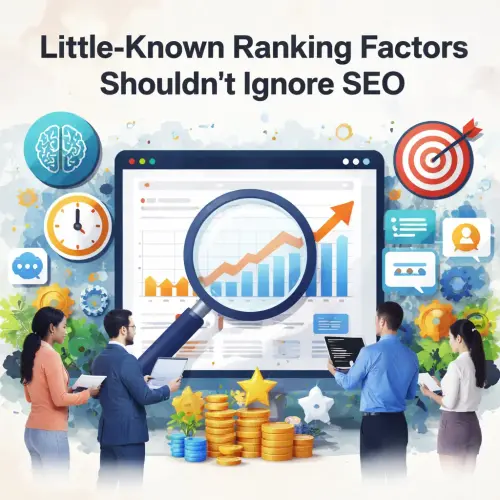
Little Known Ranking Factors Shouldnt Ignore Key Takeaways
Large language models (LLMs) extract information from your pages to power featured snippets, AI overviews, and direct answers.
- The Little Known Ranking Factors Shouldnt Ignore include user engagement metrics, content depth, and page experience—not just traditional SEO levers.
- AI systems like ChatGPT and Gemini evaluate content for clarity, entity relationships, and freshness, making semantic structure a hidden ranking signal.
- Internal SEO factors such as topical clustering and content hub architecture amplify authority without needing new backlinks.
Why Little Known Ranking Factors Shouldnt Ignore Matter in 2026
The search landscape has shifted. Google’s Helpful Content System, combined with AI overviews from sources like Perplexity and Microsoft Copilot, now evaluates content through a lens of user behavior affect google rankings more than ever. If your content doesn’t hold attention or answer intent clearly, even a perfect backlink profile won’t save it. Understanding these hidden seo signals impact search rankings is the difference between plateauing and climbing.
How AI Systems Changed the Rules
Large language models (LLMs) extract information from your pages to power featured snippets, AI overviews, and direct answers. This means ai systems influence ranking signals by prioritizing content that is structured, factual, and context-rich. If your page lacks clear entity relationships or logical flow, it gets ignored by these extractors—and human readers feel the same way. For a related guide, see 10 Common SEO Mistakes Beginners Still Make.
User Behavior Affect Google Rankings: The Engagement Metrics That Matter
Most SEOs track bounce rate, but few dig into the specific engagement metrics affect google seo at a granular level. Google’s NavBoost system (an internal ranking tool) watches how users interact with search results. If people click your link and quickly return to the SERP, that signals low satisfaction. If they stay, scroll, and click deeper, you earn ranking credit.
Is Dwell Time Important for Seo Ranking?
Yes—and it’s one of the most seo ranking factors often ignored. Dwell time measures how long a visitor stays on your page before returning to search results. Aim for at least 2-3 minutes per page by embedding engaging media, breaking up text with subheadings, and answering the query immediately in the first 100 words. Longer dwell time correlates strongly with higher rankings for informational queries.
Other Engagement Signals to Watch
Click-through rate (CTR) from search results, scroll depth, and direct click-backs (like opening a second page from your content) all feed into hidden seo signals impact search rankings. Use heatmaps or analytics scroll tracking to identify where users drop off and improve those sections. For a related guide, see SEO Tips for Affiliate Sites: How to Prevent Thin Content and Boost Rankings.
Content Depth Influence Ranking: Beyond Word Count
Thin content is a known killer, but content depth influence ranking goes beyond hitting 1,500 words. True depth means covering a topic comprehensively—answering related questions, linking to authoritative sources, and providing original insights. This builds topical authority, which in turn signals to Google that your page is a definitive resource.
How Topical Authority Affects Rankings
Topical authority is the perception that your site is an expert on a subject. It’s built by creating clusters of interlinked content around a core theme. For example, a site about digital marketing should have not just one post on SEO but a cluster covering keyword research, technical SEO, content strategy, and analytics. When Google sees these connections, it boosts your entire site’s relevance for related queries.
The Role of Semantic Seo in Ranking
Semantic SEO means using related concepts, synonyms, and entities to help search engines understand the context of your content. The role of semantic seo in ranking is critical because Google’s BERT and MUM models understand language similarly to humans. Instead of stuffing “coffee brewing,” you also mention “pour-over methods,” “grind size,” and “water temperature.” This natural inclusion of terminology strengthens how does content depth influence ranking from an AI perspective.
Internal Seo Factors Improve Visibility Through Topical Links
Strategic internal linking is one of the most internal seo factors improve visibility yet is often underutilized. Link from your pillar page to supporting articles using descriptive anchor text that includes your target keywords. This passes authority and helps search engines map your site’s structure, making it easier for AI systems to extract and rank your content.
Does Page Experience Affect Google Rankings in 2026?
Absolutely. Page experience encompasses Core Web Vitals (loading speed, interactivity, visual stability), mobile-friendliness, and safe browsing. While Google has downplayed it as a tiebreaker, competitive SERPs often hinge on these factors. A slow page that takes 4 seconds to load will see lower dwell time and higher bounce rates, amplifying negative user behavior affect google rankings signals.
Technical Seo Factors Overlooked by Most Sites
Many sites ignore crawl efficiency—XML sitemaps with proper priority tags, log file analysis to find crawl budget waste, and rendering issues that block JavaScript-dependent content. These technical seo factors overlooked can leave entire pages out of the index. Run a technical audit quarterly to catch hidden problems.
Content Freshness Impacts Rankings: A Simple Update Strategy
Google’s freshness algorithm favors recently updated content for time-sensitive queries. But even evergreen topics benefit from periodic refreshes. Update statistics, add new examples, and re-optimize for current search intent. This signals that your page is still relevant, which content freshness impacts rankings positively across all queries.
How to Refresh without Losing Authority
Change the publish date to the current year, update the meta description, and add a new section addressing a recent development in your niche. Keep the original URL to preserve backlinks and ranking history.
Little Known Google Ranking Factors 2026: The AI Overview Effect
AI systems like ChatGPT, Gemini, and Claude now directly influence search visibility by extracting content for their responses. If your content is clearly structured with H2s, lists, and tables, it is more likely to be pulled into AI overviews. This is one of the little known google ranking factors 2026 that forward-thinking strategists are already leveraging.
Create an “answer box” within your content—a few sentences that directly and concisely answer the core question. Place it near the top of the page. This increases the chance of being extracted and featured, driving referral traffic even if users don’t click through immediately.
Useful Resources
For a deeper dive into engagement metrics and AI’s role in SEO, explore Google’s Helpful Content System guidelines. To understand how user behavior signals are measured, check out Moz’s guide to user behavior and SEO.
Frequently Asked Questions About Little Known Ranking Factors Shouldnt Ignore
What are the most little known google ranking factors 2026 ?
Top factors include dwell time, content depth, semantic relevance, topical authority, page experience, and structure for AI extraction. These go beyond basic keywords and backlinks.
What seo ranking factors are often ignored by most site owners?
Internal linking strategy, crawl budget optimization, scroll depth tracking, and content freshness updates are frequently overlooked but have a measurable impact.
How does user behavior affect google rankings ?
Google uses engagement metrics like click-through rate, dwell time, and bounce rate to assess content quality. Positive behavior signals boost rankings.
What hidden seo signals impact search rankings ?
Signals include entity relationships in content, semantic context, page rendering speed, and how well content is structured for LLM extraction.
How important is dwell time important for seo ranking ?
Dwell time is critical—longer stays signal relevance. Aim for 2-3 minutes by matching search intent and keeping readers engaged with clear formatting.
Does page experience affect google rankings ?
Yes, page experience (Core Web Vitals, mobile usability) is a ranking factor, especially in competitive SERPs where other signals are equal.
How does content depth influence ranking ?
Comprehensive content that covers a topic thoroughly and links to related resources signals deeper expertise, which Google rewards with higher positions.
What technical seo factors overlooked can harm rankings?
Factors like crawl budget waste, JavaScript rendering issues, and missing structured data are often missed but can significantly reduce indexed pages.
How does topical authority affects rankings ?
Websites with strong topical authority—shown through interconnected content clusters—rank higher for all related queries because Google trusts their expertise.
What is the role of semantic seo in ranking ?
Semantic SEO helps search engines understand context through related terms and entities, improving relevance signals and match to user intent.
How do ai systems influence ranking signals ?
AI models like Google’s MUM and third-party LLMs extract and prioritize content that is clearly structured, factual, and entity-rich, affecting direct visibility.
What internal seo factors improve visibility the most?
Strategic internal linking using descriptive anchor text, combined with topic clusters, improves crawlability and distributes authority across your site.
How does content freshness impacts rankings ?
Regularly updating pages with new statistics, examples, and refreshed meta data signals timeliness, which boosts rankings for both fresh and evergreen queries.
What engagement metrics affect google seo directly?
Metrics like click-through rate, dwell time, scroll depth, and page views per session are direct indicators of user satisfaction that influence rankings.
Can I optimize for AI overviews without losing human readability?
Yes—structure your content with clear headings, concise answer boxes, and natural language. This helps both LLMs and human readers understand the page.
How often should I update content to maintain freshness?
For competitive topics, review and refresh every 3-6 months. For evergreen content, an annual update with current data is usually sufficient.
Does backlink quality still outweigh engagement signals?
Both matter, but engagement signals are increasingly influential. A page with strong user behavior can outrank a heavily linked but poorly engaging page.
What tools can I use to measure dwell time?
Google Analytics 4 offers average engagement time per session. For deeper insight, tools like Hotjar or Crazy Egg provide scroll and click heatmaps.
How do I build topical authority from scratch?
Start by creating a pillar page on your core topic, then publish 5-10 supporting articles that link back to it. Gradually expand the cluster with more depth.
What is the biggest mistake when ignoring these factors?
Relying solely on keywords and backlinks while ignoring user experience leads to stagnant rankings, especially as AI systems reward engagement and depth.