AI powered SEO strategies Key Takeaways
Artificial intelligence is reshaping search engine optimization, making it faster and more data-driven.
- AI tools automate keyword research and content optimization, saving hours of manual work.
- Machine learning models analyze competitor gaps and user intent with unprecedented accuracy.
- Real examples show how AI-driven technical audits and link building boost organic performance.
Why Modern SEO Demands AI-Powered SEO Strategies
Search engines now use AI to understand content context and user satisfaction. Marketers who adopt AI-powered SEO strategies gain a competitive edge by aligning with the way Google evaluates relevance. From predictive keyword analysis to automated content scoring, AI helps you work smarter, not harder. For a related guide, see 15 AI Link Building Strategies That Actually Work in 2026.
What This Guide Covers
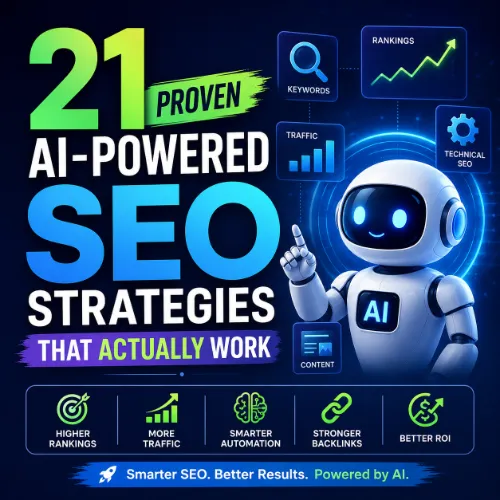
We have organized these 21 proven AI-powered SEO techniques into three categories: technical, on-page, and off-page. Each strategy includes a clear explanation of how it works and why it delivers results. Whether you are a seasoned SEO professional or a business owner managing your own site, these methods are actionable today.
Technical AI-Powered SEO Strategies
Technical SEO forms the foundation for all other efforts. AI excels at identifying issues that manual audits might miss.
1. Automated Crawl Analysis with Machine Learning
Tools like DeepCrawl and Sitebulb use AI to prioritize crawl errors by impact. Instead of listing 500 broken links, they highlight the ones that hurt ranking the most. This saves hours and fixes the biggest issues first.
2. Intelligent Log File Analysis
AI-powered log analyzers detect patterns in how Googlebot crawls your site. They spot wasted crawl budget on low-value pages and suggest redirects for dead ends. The result is faster indexation of your most important content.
3. Predictive Core Web Vitals Monitoring
Machine learning models can forecast LCP, FID, and CLS scores based on code changes. This lets you fix performance regressions before they impact users or rankings.
4. AI-Generated Structured Data Suggestions
Natural language processing (NLP) reads your content and recommends relevant schema types. For example, an article about a recipe might automatically get Recipe schema suggested, increasing your chances of earning rich results.
5. Duplicate Content Detection at Scale
AI compares page content across thousands of URLs and flags near-duplicates with high precision. It distinguishes between intentional templates and accidental duplication, reducing manual review time.
On-Page AI-Powered SEO Strategies
On-page optimization is where AI truly shines, especially in content creation and keyword targeting.
6. Semantic Keyword Clustering
AI tools like Ahrefs and Surfer SEO group keywords by search intent and topic relevance. Instead of targeting single keywords, you cover entire topic clusters with one well-optimized piece.
7. AI-Driven Content Briefs
Using NLP, tools analyze top-ranking pages and extract common headings, entities, and word counts. They generate briefs that guide writers to cover everything Google expects for a given query.
8. Real-Time Content Optimization
Platforms like Clearscope and MarketMuse score your draft against SERP leaders. They suggest adding missing related terms and adjusting keyword density, all in real time.
9. Automated Title Tag and Meta Description Testing
AI runs multivariate tests on title and meta variations across similar pages. It learns which formats drive higher CTR and applies those patterns site-wide.
10. Intent-Based URL Structuring
Machine learning models classify your pages by user intent (informational, transactional, navigational) and suggest URL paths that match searcher expectations. This improves click-through from search snippets.
11. AI-Powered Internal Linking Recommendations
Tools analyze your content graph and suggest internal links from high-authority pages to newer posts. This distributes link equity and helps search engines discover fresh content faster. For a related guide, see How Google Cloud Helps Scale AI Content Systems for SEO Growth.
12. Dynamic Content Personalization for SEO
AI serves different content variations based on user location, device, or past behavior. This improves engagement signals, which indirectly boost rankings.
13. Image Alt Text Generation
Computer vision models describe images automatically and generate SEO-friendly alt text. This ensures every visual element contributes to keyword relevance.
Off-Page and Link Building AI-Powered SEO Strategies
Building authority remains a challenge, but AI makes outreach and analysis more efficient.
14. Competitor Backlink Gap Analysis
AI compares your backlink profile with top competitors and identifies domains linking to them but not to you. This creates a prioritized outreach list based on domain rating and relevance.
15. Broken Link Building Automation
Tools scan relevant websites for broken outbound links and match them to your existing content. They generate personalized email templates that increase response rates.
16. Unlinked Mention Discovery
AI monitors brand mentions across the web and flags those missing a hyperlink. It drafts outreach emails requesting a link, turning passive mentions into backlinks.
17. Predictive Link Value Scoring
Machine learning models estimate the likely traffic and authority boost from each potential link. This helps you focus on prospects that offer the highest ROI.
18. Guest Post Topic Suggestion
AI analyzes a target publication’s content history and suggests topics that align with their audience while serving your link-building goals. It even generates an outline.
Hybrid AI-Powered SEO Strategies
Some effective approaches blend technical, on-page, and off-page tactics.
19. AI-Powered Site Audits with Action Plans
Platforms like Semrush and Ahrefs now use AI to generate prioritized audit reports. They sort issues by effort and impact, telling you exactly what to fix first.
20. Predictive Search Volume Forecasting
AI models analyze historical trends, seasonality, and external signals to forecast future search volume. This guides content calendars and budget allocation.
21. Continuous SERP Feature Monitoring
AI tools track changes in featured snippets, People Also Ask boxes, and AI Overviews for your target keywords. They alert you when a new opportunity arises or when you lose a snippet.
SEO Entities and Their Functions
Understanding key entities helps you apply AI-powered SEO strategies more effectively. Below are the most relevant ones for the strategies discussed.
- Root domain, subdomain, and URL-level analysis identify whether performance belongs to the whole site, a section like blog.example.com, or a single page such as example.com/page.
- Organic keywords, keyword difficulty (KD), search volume, and SERP features show demand, competition, ranking opportunity, and result-type requirements.
- Referring domains, dofollow/nofollow links, and broken backlinks explain authority, link quality, and outreach priorities.
- Core Web Vitals, crawl issues, redirect chains, and indexability status expose obstacles that prevent crawling or ranking.
- Competing domains, content gap opportunities, and shared keywords show where rivals win traffic and where you can catch up.
- Link opportunities, unlinked mentions, and outreach targets turn analysis into practical prospect lists for earning links.
Useful Resources
For deeper dives into the tools and methods mentioned, explore these authoritative sources:
- Ahrefs Blog: SEO Strategies Guide — Covers data-driven SEO tactics with real case studies.
- Google Search Essentials — Official documentation on technical requirements and best practices.
Frequently Asked Questions About AI powered SEO strategies
What is an AI-powered SEO strategy?
An AI-powered SEO strategy uses machine learning or natural language processing to automate or enhance search optimization tasks, such as keyword research, content creation, and technical audits.
Do AI SEO strategies replace human SEO experts?
No, they augment human expertise. AI handles data processing and pattern recognition, while humans provide strategic direction, creativity, and quality control.
Are AI-powered SEO techniques safe for Google compliance?
Yes, when used ethically. AI tools that follow Google’s guidelines, such as those used for content optimization and audit, are completely safe.
How much does AI SEO software cost?
Prices range from free tools with limited features to enterprise platforms costing $500+ per month. Many offer tiered plans based on site size and feature needs.
Can AI help with local SEO?
Absolutely. AI can analyze local search trends, optimize Google Business Profile listings, and generate location-specific content at scale.
What is the best AI tool for keyword research?
Ahrefs, Semrush, and Surfer SEO offer robust AI-driven keyword clustering and difficulty analysis. The best choice depends on your budget and specific needs.
How does AI improve content writing for SEO?
AI suggests relevant entities, readability improvements, and semantic terms that top-ranking pages use. It also generates outlines and drafts that writers refine.
Do I need coding skills to use AI SEO tools?
Most modern AI SEO tools have user-friendly interfaces and require no coding. Advanced automation may need basic API knowledge.
How quickly do AI SEO strategies show results?
Results vary. Technical fixes can show improvements in 2–4 weeks, while content and link-building strategies often take 3–6 months to fully materialize.
Can AI detect Google algorithm updates?
AI tools track ranking volatility and correlate changes with known update patterns. They alert you when an update likely affects your site.
Is AI SEO only for large enterprises?
No, many affordable tools cater to small and medium businesses. Automated keyword research and content optimization deliver value at any scale.
How does AI handle duplicate content?
AI compares text similarity across pages and flags potential duplicates. It can also suggest canonical tags or rewriting strategies.
What role does NLP play in AI SEO?
NLP helps machines understand context, entities, and user intent behind search queries. This powers better content recommendations and SERP analysis.
Can AI predict which keywords will trend?
Yes, by analyzing historical data, seasonality, and emerging topics, AI can forecast rising search interest with reasonable accuracy.
Are AI-generated backlinks effective?
AI tools help find link opportunities and automate outreach, but the links themselves still require manual approval. Quality and relevance remain crucial.
How does AI optimize for voice search?
AI analyzes conversational queries and suggests natural language phrasing, FAQ schemas, and concise answers that voice assistants prefer.
What is AI-powered competitive analysis?
It automatically compares your site’s keywords, backlinks, and content gaps against competitors, producing actionable insights without manual data gathering. For a related guide, see 22 Strategies Beat High-Authority Competitors SEO Today.
Do AI SEO tools work with any CMS?
Most integrate with popular platforms like WordPress, Shopify, and Magento via plugins, APIs, or manual exports.
Can AI help with international SEO?
Yes, AI can analyze hreflang tags, translate content accurately, and localize keywords for different regions and languages.
What is the future of AI in SEO?
AI will become more integrated into every aspect of SEO, from predictive analytics to real-time personalization. Staying updated with AI tools will be essential for competitive visibility.