The AEO Answer Engine Optimization Shift.
Stop chasing keywords and start owning answers. That is the core shift from traditional SEO to Answer Engine Optimization (AEO): moving from chasing rankings to becoming the source that AI systems and modern search experiences rely on when they generate answers.
Table of Contents
What “Owning Answers” Really Means
Owning answers means your explanations, definitions, and how‑tos are the ones surfaced in AI overviews, featured snippets, People Also Ask boxes, and chat-style responses—whether or not a user ever clicks through to your site. Instead of optimizing purely for blue links, you optimize so AI-powered answer engines can easily understand, trust, and reuse your content in their responses.
This is the essence of answer engine optimization. A strong AEO strategy builds on SEO foundations but focuses on AI search optimization: structuring your content so large language models, generative AI search platforms, and assistant-style tools can quickly map questions to clear, reliable answers.
For a deeper strategic overview, CXL’s AEO guide is a must‑read:
https://cxl.com/blog/answer-engine-optimization-aeo-the-comprehensive-guide-for-2025/.
Why “Just SEO” Is No Longer Enough
Traditional SEO is still essential, but traditional SEO is not enough on its own in an AI-first search environment. You can hold good organic rankings and still watch organic sessions flatten or fall because users are satisfied by zero‑click search experiences—AI overviews, instant answers, and rich snippets that appear above the standard results.
Key shifts:
- Keyword-only SEO doesn’t work when search engines and assistants extract just a few sources to synthesize answers, ignoring the rest of page one.
- Many sites are losing traffic to AI overviews even while “average position” looks healthy in their reports.
- Keyword rankings are dropping in value as a KPI because rankings no longer guarantee visibility inside the answer layer.
SEO.com’s “AEO vs. SEO” and Optimizely’s “SEO vs AEO” both show that you still need SEO as your technical and discovery base, but you now need AEO to win where AI actually answers questions.
AEO vs SEO: Partners, Not Rivals
You don’t replace SEO with AEO; you stack AEO on top of SEO so you can be both findable and selectable.
- SEO gets your content crawled, indexed, and ranked using classic signals like relevance, links, and technical health.
- AEO leans on semantic search optimization, entity-based SEO, and clear answer structures so AI engines can confidently choose and cite your content.
For detailed comparisons:
- SEO.com – AEO vs SEO
- SEMrush – AEO vs SEO: Core Differences & How to Win Visibility in Both
- GenRank – SEO vs AEO vs GEO
All three reinforce the same idea: SEO is your baseline; AEO is your competitive edge in AI-driven search.
The Strategy: Moving from Keywords to Intent
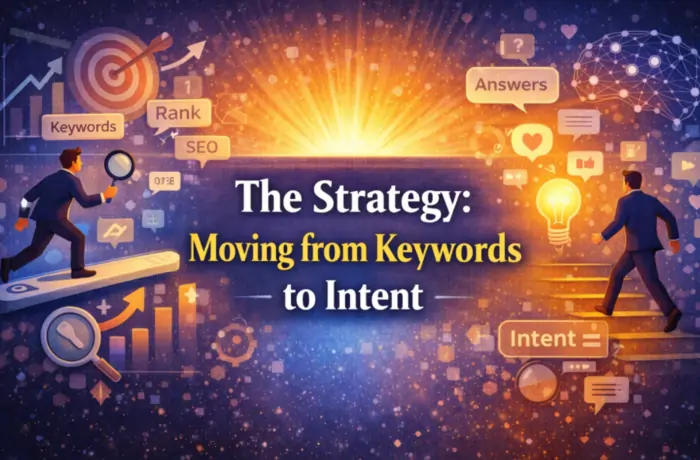
From Keywords To Questions: The AEO Shift
The AEO shift is simple and powerful: stop chasing keywords, start owning answers. Instead of obsessing over head terms, you think beyond keywords and organize your strategy around user intent and real questions.
Build Around Questions, Not Just Phrases
AEO starts with question-based keyword research. You dig into:
- Questions from sales calls, support tickets, community posts, and customer interviews.
- People also ask questions and related questions in SERPs.
- Long-tail question keywords surfaced by SEO tools and AI search tools.
You then group these into query clusters and answer journeys: sequences of related queries that describe how someone moves from “What is AEO?” to “AEO vs SEO” to “How do I implement AEO on my site?”. Instead of one article per micro‑variation, you build strong answer hubs that own each cluster.
Helpful starting points:
Learn AI Search’s roadmap: https://learningaisearch.com
CXL’s research and clustering process: https://cxl.com/blog/answer-engine-optimization-aeo-the-comprehensive-guide-for-2025/
The Content: Designing for AI Extraction
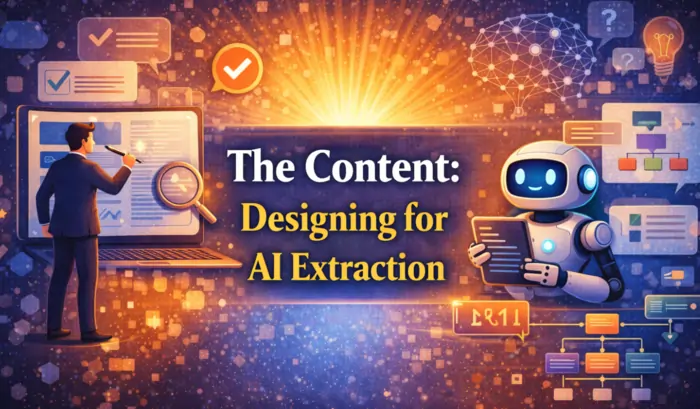
Intent-First, Answer-First Content
Once you understand the questions, you design answer-focused content around them. That means practicing intent-first optimization, where each page is built to solve a specific problem rather than just rank for a specific phrase.
Follow a snippet-ready content format:
- Start with a 40–60 word paragraph that directly answers the main question.
- Use headings written as natural, conversational queries.
- Keep sections focused and self-contained so they can stand alone when quoted.
- Use lists and tables to address how‑to and comparison queries.
This layout makes your content ideal for featured snippet optimization and AI overview inclusion because AI systems can quickly locate and reuse your key answers. A concrete example of this structure is AIOSEO’s AEO explainer:
https://aioseo.com/what-is-answer-engine-optimization/.
Multimodal AEO: Text, Images, and Video
In 2026, answer engines are increasingly multimodal: they don’t just read text; they also lift images, charts, and video snippets into AI overviews and rich results. To truly own answers, you need to treat AEO as a multimodal discipline.
Actionable upgrades:
- Add descriptive, keyword‑aligned alt text to key images so AI vision models can correctly interpret graphs, workflows, and screenshots.
- Use short, clear captions under images and embedded videos that restate the main takeaway in natural language.
- For video, front‑load the answer in the first 30–60 seconds and mirror your page headings in chapters or timestamps, so answer engines can pinpoint the right segment.
- Where supported, experiment with Speakable‑style markup or audio‑friendly sections clearly marked for voice assistants.
Even though implementation details vary by platform, treating your media as “answer assets” makes it much easier for multimodal models to surface your content across visual, voice, and chat interfaces.
The “Human Bias” Edge: First‑Person Evidence
Answer engines are trained on oceans of generic, pattern‑matched text, so they look for signals that a page reflects real‑world experience, not just regurgitated theory. One of the strongest signals is concrete, first‑person observation.
Where it’s honest and appropriate, weave in:
- Phrases like “In our test of 30 accounts, we saw…” or “Across 120 client audits, we found…”.
- Specific numbers, ranges, and timeframes that could only come from your own experiments or client work.
- Short mini‑case studies (“After adding FAQ schema, this page gained X% more snippet impressions over 60 days.”).
This human layer makes your content both more persuasive to readers and more attractive to answer engines trying to avoid generic AI‑generated fluff. In a world where LLMs must manage hallucination risk, content with verifiable, first‑hand observations is a safer source to cite—and that nudges you closer to being the answer they surface.
Technical Foundations: Schema, Structure, and Entities

Owning answers also requires a solid technical base. You need clean, machine-readable content structure and the right structured data for AEO so search and AI systems can map specific questions to specific answers.
Structured Data and FAQ Sections
Implementing schema markup for questions is central to AEO:
- Use FAQ and Q&A content with FAQPage schema for common questions.
- Use HowTo schema for step‑by‑step tutorials.
- Use Article/BlogPosting schema for long‑form resources.
CXL, AIOSEO, and Xponent all show how this markup helps answer engines recognize which snippets to surface in AI overviews, featured snippets, and People Also Ask modules.
Knowledge Graph, Entities, and E‑E‑A‑T
Modern AI search leans heavily on the knowledge graph and entities plus strong E‑E‑A‑T signals (experience, expertise, authoritativeness, trustworthiness). You can support this by:
- Using consistent naming for your brand, products, and experts.
- Interlinking related pieces into clear topical clusters.
- Citing authoritative external sources and showing author credentials.
Strategic context:
- Forrester – The Marketer’s Guide to Answer Engine Optimization
- Seobility – Answer Engine Optimization (AEO)
Measurement and Execution
Measuring Success When You Aim To Own Answers
With AEO, classic SEO metrics only tell part of the story. Zero‑click search impact means users often get what they need from AI overviews and answer boxes without visiting any site.
To see whether you’re truly owning answers, track:
- Presence and prominence in featured snippets, People Also Ask, and other answer modules.
- Citations and mentions in AI overviews and third‑party answer engines.
- Growth in branded search, direct traffic, and assisted conversions that follow increased answer visibility.
Tools like LLMrefs and other AI search analytics platforms help you monitor where your content appears across AI systems and how often it’s used. Combined with traditional analytics, this gives you a full picture of your “answer share” in the market.
Putting “Stop Chasing Keywords, Start Owning Answers” Into Practice
To embed this mindset into your content program:
- Audit for answer gaps.
Use frameworks from CXL, Xponent, and Seobility to find pages that are keyword‑rich but answer‑poor. - Map intent and questions.
Build query clusters and answer journeys using SERP data, internal questions, and AI search tools like Learn AI Search. - Rewrite key pages with an answer‑first, multimodal mindset.
Follow the snippet‑ready format, add rich FAQs, and treat images and videos as answer assets with strong alt text, captions, and early, on‑screen answers. - Implement schema and strengthen entities.
Add FAQPage, HowTo, and Article schema, clean up HTML structure, and use internal linking and consistent naming to reinforce entities, following advice from OWDT and others. - Shift your KPIs to the answer layer.
Use insights from AEO vs SEO and SEO vs AEO vs GEO to report on answer visibility, citations, and AI presence alongside rankings and sessions.
Do this consistently and you move from playing an endless game of “catch the next keyword” to steadily owning the answers that matter in your market. In a search landscape dominated by AI summaries and conversational interfaces, that’s the advantage that actually lasts.