If you want to survive the current algorithm landscape, you must understand what Google actually rewards in 2026.
If there is one question I hear most after 18 years in the SEO industry, it is this: “Jin, what does the algorithm really care about now?”
They aren’t asking about what trends say.
They aren’t asking about what Twitter threads claim.
They are asking what Google actually rewards when the dust settles.
The answer hasn’t changed as much as people think. While the interface has evolved with AI Overviews and visual search, the core signals of quality remain stubborn.
This article separates the noise from the signal, focusing entirely on what Google actually rewards—and why ignoring the rest is your best strategy.
Why Confusion Around Rankings Persists
Every year, the noise gets louder.
- “Google no longer cares about websites.”
- “AI decides everything now.”
- “One technical mistake will wipe you out.”
Most of this confusion comes from mixing observation with assumption. Google doesn’t rank content based on hype. It ranks based on systems designed to surface the most helpful, authoritative result.
To understand what Google actually rewards, we have to look at their consistency, not their experiments. Google has been very specific about this in their own documentation: 👉 Google Search Central: How Search Works
🔍 What Google Actually Rewards in 2026
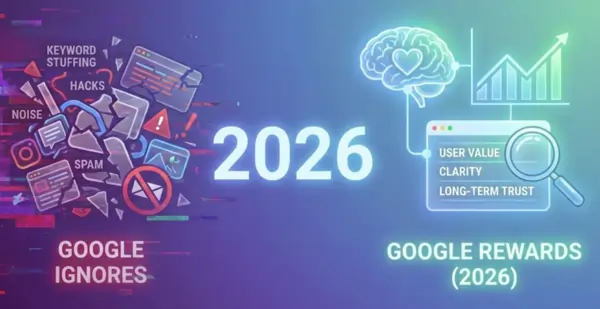
Let’s strip away the panic and focus on the signals that continue to move the needle.
1️⃣ Content That Clearly Helps Users
First and foremost, what Google actually rewards is utility. The algorithm is looking for content that:
- Answers a real question immediately.
- Matches the user’s “search intent” (the why behind the search).
- Is easy to parse and understand.
- Comes from genuine experience, not speculation.
This is why thin, rushed, or purely AI-generated pages struggle to sustain rankings. They might rank for a day, but they lack the “satisfaction score” that sustains a position. Google’s Helpful Content guidance makes this explicit: 👉 Google Search Central: Creating Helpful Content
Helpfulness is not an optional bonus—it is foundational to what Google actually rewards.
2️⃣ Consistency Over Time
Google evaluates patterns, not moments. Sites that:
- Publish consistently…
- Update old content responsibly…
- Maintain a clear topic focus…
…tend to rank more steadily and recover faster from core updates. This aligns with long-standing SEO research showing that trust compounds gradually, not instantly: 👉 Moz: The Beginner’s Guide to SEO
Sudden overhauls confuse systems. Gradual refinement builds confidence. If you want to know what Google actually rewards, look at the sites that have survived for a decade. They are rarely the ones pivoting every month.
3️⃣ Clear Topical Focus and Internal Structure
Google doesn’t rank isolated pages—it ranks pages in context.
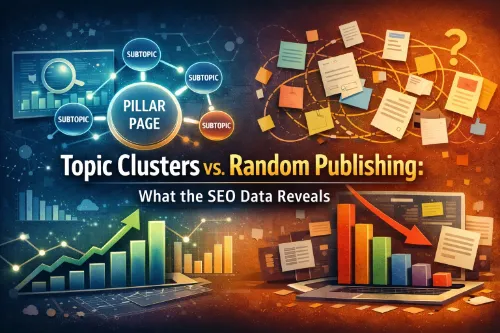
Strong sites build “Content Clusters” using logical internal links. This is exactly what Google actually rewards: a site that demonstrates deep expertise across an entire topic, not just one lucky viral post.
This is why pillar-and-cluster strategies outperform random publishing. For example, your anchor article acts as a contextual foundation for related posts, rather than a standalone opinion: 👉 SEO Was Never the Problem. The Noise Was.
4️⃣ Technical Accessibility (Without Obsession)
Finally, what Google actually rewards is a friction-free experience. This means sites that:
- Load reliably on mobile.
- Are crawlable by standard bots.
- Don’t block critical resources (CSS/JS).
This doesn’t mean chasing a perfect 100/100 score on every tool. It means removing barriers. Google has repeated this for years in its starter guidance: 👉 Google SEO Starter Guide
Technical SEO supports content. It doesn’t replace it.
What Google Mostly Ignores in 2026
Now let’s talk about the inverse: what doesn’t move rankings on its own. Understanding what to ignore is just as important as knowing what Google actually rewards.
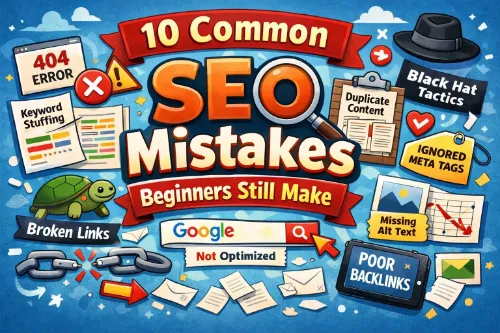
❌ Keyword Stuffing: Repeating keywords excessively doesn’t improve rankings; it harms clarity and breaks trust.
❌ Meta Keywords Tags: Google has publicly stated for over a decade that the <meta keywords> tag is ignored.
❌ Exact-Match Domains: Buying best-cheap-pizza-2026.com does not create authority. Content does.
❌ Chasing Every Update: Reacting to every algorithm tremor often causes more harm than good.
Semrush’s ranking factor research consistently shows that stable sites outperform reactive ones. Stability is what Google actually rewards, even if gurus sell panic: 👉 Semrush: Ranking Factors Study
Why Google’s Priorities Feel Different in 2026
AI has changed the presentation, not the principles. Google still needs reliable sources, clear answers, and trusted publishers. AI summaries don’t invent authority—they pull from it.
That is why the concepts discussed in my 2026 forecast matter more now, not less: 👉 Why SEO Still Works in 2026 (If You Ignore the Noise)
When you focus on what Google actually rewards, you stop worrying about the interface and start owning the information.
A Simple Filter for SEO Decisions
Before making any SEO change, ask yourself three questions:
- Does this improve clarity?
- Does this actually help the user?
- Does this strengthen my topical authority?
If the answer is “Yes,” it aligns with what Google actually rewards. If the answer is “No,” it is probably just noise.
This principle connects directly to the dangers of trend-chasing, which I explore here: 👉 Why Chasing SEO Trends Is Killing Your Rankings
Final Thought
Google doesn’t reward perfection. It rewards Helpfulness, Consistency, Clear Intent, and Trust.
That is what Google actually rewards in 2026. Everything else is just a distraction.
FAQ
What does Google actually reward in SEO?
Google rewards helpful content, clear intent, consistent publishing, internal structure, and long-term trust signals.
Does Google ignore keywords now?
No. Google still uses keywords for understanding context, but keyword stuffing no longer works.
Are backlinks still important in 2026?
Yes, but quality, relevance, and natural acquisition matter more than volume.
Does Google penalize websites for mistakes?
Most issues cause ranking drops, not penalties. Penalties are rare and usually involve spam or manipulation.
What should SEO focus on most in 2026?
Clarity, usefulness, topical authority, and consistency over time.