What Publishers Need to Know About Search Changes in 2026
Search is evolving faster than ever. Google’s AI-powered search experiences, growing competition from AI assistants, and increasingly sophisticated ranking systems are changing how users discover content online.
For publishers, these developments create both opportunities and challenges. Websites that rely on outdated SEO practices may experience declining visibility, while publishers who prioritize expertise, originality, and audience value can strengthen their authority and organic reach.
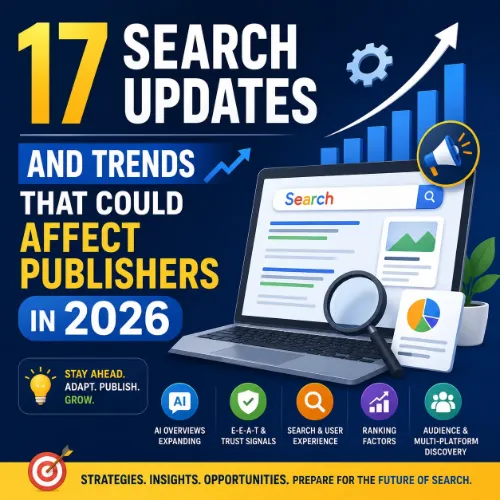
The following search updates and trends are among the most important developments publishers should monitor in 2026.
1. AI Overviews Continue Expanding Across Search Results
Google’s AI Overviews are appearing for an increasing number of informational searches. These AI-generated summaries provide quick answers directly within search results.
Why This Matters
Users can often find the information they need without clicking through to a website.
As a result, many publishers have reported lower click-through rates for top-of-funnel informational content.
How Publishers Can Adapt
Focus on Original Information
Publish content that includes:
- First-hand experience
- Original research
- Industry surveys
- Expert opinions
- Unique case studies
Create Citation-Worthy Content
AI systems are more likely to reference content that offers unique insights rather than generic information available elsewhere.
2. Entity-Based Search Is Becoming More Important
Search engines increasingly understand topics through entities and relationships instead of relying solely on keywords.
What Is Entity-Based Search?
An entity can be a:
- Person
- Brand
- Organization
- Product
- Concept
- Location
Google connects these entities to better understand context and relevance.
Publisher Strategy
Build Topic Clusters
Instead of creating isolated articles targeting individual keywords, build comprehensive content hubs around broader topics.
3. E-E-A-T Signals Continue Influencing Visibility
Google emphasizes Experience, Expertise, Authoritativeness, and Trustworthiness when evaluating content quality.
Strong E-E-A-T Signals Include
- Author biographies
- Professional credentials
- Editorial guidelines
- Source citations
- Updated content
Why Publishers Should Care
Trust signals help search engines and users evaluate content credibility, especially in competitive industries.
4. Helpful Content Evaluation Is Becoming More Sophisticated
Google’s systems continue improving their ability to identify content created primarily to help users.
Content Most Likely to Underperform
- Thin articles
- Rewritten content
- Automated content without human oversight
- Keyword-stuffed pages
Content More Likely to Succeed
Experience-Based Content
Content that demonstrates real-world expertise often performs better than generic summaries.
5. AI Search Engines Are Emerging as Discovery Platforms
Users increasingly seek answers from platforms such as:
- ChatGPT
- Perplexity
- Claude
- Gemini
Why This Matters for Publishers
These systems frequently recommend and cite external sources.
Optimization Recommendations
Create Direct Answers
Provide concise, factual responses near the beginning of sections.
Use Clear Heading Structures
Well-organized content is easier for AI systems to understand and reference.
6. Search Personalization Continues Expanding
Search results are becoming increasingly customized based on individual users.
Factors Influencing Personalization
- Location
- Search history
- Device usage
- Interests
- Previous interactions
What Publishers Should Focus On
Creating content that serves audience needs rather than focusing exclusively on ranking positions.
7. Zero-Click Searches Continue Growing
Many searches now end without users visiting a website.
Why It Happens
Search engines increasingly display:
- Featured snippets
- AI summaries
- Knowledge panels
- Instant answers
Publisher Opportunity
Target Complex Topics
Users are still willing to click when they need:
- Detailed analysis
- Product comparisons
- Expert recommendations
- Comprehensive guides
8. Brand Authority Is Becoming a Competitive Advantage
Strong brands often receive greater visibility in search results.
Ways to Build Brand Authority
- Consistent publishing
- Digital PR campaigns
- Expert contributions
- Community engagement
- Thought leadership content
Long-Term Benefit
Recognizable brands often experience greater resilience during algorithm updates.
9. User Experience Remains a Core Consideration
Google continues evaluating page quality through user experience signals.
Important Performance Metrics
- Largest Contentful Paint (LCP)
- Interaction to Next Paint (INP)
- Cumulative Layout Shift (CLS)
Best Practices
Improve Site Performance
Optimize loading speed, responsiveness, and visual stability across all devices.
10. Structured Data Helps Search Engines Understand Content
Schema markup provides additional context about website content.
Valuable Schema Types for Publishers
- Article
- FAQ
- Organization
- Person
- Breadcrumb
- Review
Benefits
Proper implementation may improve search visibility and content understanding.
11. Freshness Signals Continue Influencing Rankings
Search engines often prioritize recently updated information.
Topics Most Affected
- Technology
- SEO
- News
- Finance
- Product reviews
Publisher Action
Schedule Content Audits
Regularly update statistics, examples, and recommendations.
12. Visual Search Is Growing
Google Lens and image-based discovery continue expanding.
Optimization Tips
Improve Image SEO
Use:
- Descriptive filenames
- Alt text
- Original visuals
- Informative graphics
Why It Matters
Visual assets can generate additional organic visibility beyond traditional search.
13. Video Content Occupies More Search Real Estate
Video results continue gaining prominence within search results.
Opportunities for Publishers
- Tutorials
- Product demonstrations
- Interviews
- Educational content
Additional Benefit
Video content can appear across multiple discovery channels.
14. Community Content Is Receiving Greater Visibility
Google increasingly surfaces content from:
- Quora
- Industry forums
Why Search Engines Value Community Discussions
Users often trust authentic experiences shared by real people.
Publisher Takeaway
Encourage engagement, discussions, and user-generated contributions when appropriate.
15. Search Intent Matching Is More Important Than Ever
Even well-written content may fail if it does not satisfy search intent.
Primary Search Intent Categories
- Informational
- Commercial
- Transactional
- Navigational
Best Practice
Analyze Search Results Before Publishing
Review top-ranking pages to understand what users expect.
16. AI-Generated Content Faces Greater Quality Evaluation
Google evaluates content quality rather than content creation methods.
Successful AI-Assisted Content Typically Includes
- Human editing
- Fact verification
- Expert review
- Original examples
Publisher Recommendation
Use AI as a productivity tool rather than a replacement for expertise.
17. Multi-Platform Discovery Is the Future
Search is no longer limited to traditional search engines.
Discovery Channels Continue Expanding
- Google Search
- YouTube
- TikTok
- AI assistants
Future-Proof Publishing Strategy
Diversify Traffic Sources
Relying exclusively on one platform increases risk and limits growth opportunities.
Publisher Action Checklist for 2026
Immediate Priorities
Strengthen E-E-A-T
- Expand author profiles
- Highlight credentials
- Add editorial policies
Improve Content Quality
- Publish original research
- Add expert commentary
- Update outdated articles
Optimize for AI Overviews
- Answer questions directly
- Use structured headings
- Create citation-worthy content
Enhance Technical SEO
- Improve Core Web Vitals
- Implement schema markup
- Optimize images and videos
Frequently Asked Questions
1. How can publishers measure the impact of AI Overviews on their traffic?
Publishers can monitor changes in organic click-through rates, impressions, and traffic trends using Google Search Console. Comparing performance before and after AI Overview appearances can help identify affected pages and keywords.
2. Are smaller publishers at a disadvantage compared to large media brands?
Not necessarily. Smaller publishers can compete by focusing on niche expertise, original insights, and audience-specific content. Search engines increasingly value relevance and expertise over company size alone.
3. What role does topical authority play in modern search rankings?
Topical authority helps search engines recognize a website as a trusted source within a specific subject area. Publishers can build authority by consistently covering related topics in depth and maintaining content quality.
4. Can outdated content negatively affect an entire website?
In some cases, a large amount of outdated or low-quality content can impact overall site quality signals. Regular content audits help publishers maintain relevance and trustworthiness.
5. How often should publishers update evergreen content?
Evergreen content should typically be reviewed every 6 to 12 months. Industries that change rapidly, such as technology and SEO, may require more frequent updates.
6. Why are search engines emphasizing first-hand experience?
First-hand experience provides unique insights that cannot easily be replicated by automated content generation. It also helps establish credibility and aligns with Google’s Experience component of E-E-A-T.
7. Do publishers need separate strategies for mobile and desktop search?
Yes. User behavior often differs across devices, and mobile-first indexing means Google primarily evaluates the mobile version of a website for ranking purposes.
8. How important are author pages for SEO?
Author pages can strengthen credibility by showcasing expertise, qualifications, published work, and professional experience. They also support E-E-A-T signals.
9. Can interactive content improve search performance?
Interactive tools such as calculators, quizzes, and assessments can increase engagement, encourage backlinks, and provide value beyond traditional articles.
10. What types of content are most likely to earn backlinks in 2026?
Original research, industry reports, surveys, data studies, and expert roundups are among the content formats most likely to attract high-quality backlinks.
11. Should publishers focus on search volume or audience needs?
Audience needs should come first. While search volume is important, content that solves real problems often generates stronger engagement and long-term traffic.
12. How does content depth affect rankings?
Content depth helps demonstrate expertise and comprehensively address user questions. However, depth should focus on value rather than simply increasing word count.
13. Can publishers benefit from voice search optimization?
Yes. Optimizing for conversational queries and direct answers can improve visibility for voice-enabled devices and digital assistants.
14. What is the difference between topical authority and domain authority?
Topical authority relates to expertise within a specific subject area, while domain authority is a third-party metric estimating overall website strength based on backlinks and other factors.
15. How can publishers improve content discoverability beyond Google?
Publishers can expand visibility through social media, newsletters, podcasts, video platforms, online communities, and AI-powered discovery tools.
16. Are long-form articles still effective in 2026?
Yes, when they thoroughly address user intent and provide meaningful value. Long-form content performs best when it is well-structured and easy to navigate.
17. What role do internal links play in modern SEO?
Internal links help search engines understand website structure, distribute authority across pages, and guide users toward related content.
18. How can publishers reduce dependency on algorithm updates?
Building a loyal audience through email marketing, community engagement, subscriptions, and brand recognition can reduce reliance on search traffic alone.
19. Why is audience engagement becoming more important?
Metrics such as time on page, return visits, and content sharing can indicate user satisfaction and help strengthen overall content performance.
20. What should publishers prioritize over the next five years?
Publishers should focus on expertise, originality, brand development, audience trust, content quality, and adaptability as search technology continues evolving.
Final Thoughts
Search in 2026 is increasingly shaped by AI, personalization, and evolving user behavior. While traditional ranking factors remain relevant, publishers must adapt to a landscape where visibility depends on expertise, originality, and trustworthiness.
The publishers most likely to succeed are those that create genuinely useful content, demonstrate real-world experience, and provide value that cannot easily be replicated by AI-generated summaries.
By understanding these 17 search updates and trends, publishers can position themselves for sustainable growth in an increasingly competitive digital environment.
About the Author
John Michael Palmes
John Michael Palmes is an SEO strategist and content publishing specialist who focuses on search engine optimization, AI-driven search experiences, content authority, and sustainable organic growth. His work explores emerging search trends, algorithm developments, and practical SEO strategies for publishers and website owners.
Author Profile: https://seomafiaclub.com/expert/john-michael-palmes/
Email: palmesjohnmichael19@gmail.com
Tumblr: www.tumblr.com/johnmichaelnotes
Facebook: https://www.facebook.com/john.michael.palmes.2024