

Aubrey Taviola is an On-Page & Content SEO Marketing Specialist and professional Ghost Writer with over 3 years of hands-on experience in keyword ranking, on-page optimization, and data-driven SEO execution.
Her work focuses on building content systems that are optimized for both users and search engines, supporting long-term visibility and stable organic growth.
With a background as a professional teacher, Aubrey brings a unique advantage to SEO content creation—clarity, structure, and purpose-driven messaging.
She applies educational principles to SEO writing, ensuring content is easy to understand, well-organized, and aligned with real search intent.
On-Page SEO & Content Optimization Expertise
Aubrey specializes in on-page SEO, where precise execution and content structure directly influence rankings. Her work includes:
- Keyword research and intent alignment
- Content optimization for relevance and clarity
- Metadata, heading, and internal linking improvements
- Structuring content for readability and crawl efficiency
- Supporting faster, more stable rankings through clean on-page foundations
By aligning content with how users search and how search engines evaluate relevance, Aubrey strengthens website foundations that support consistent organic performance.
Content Marketing & Ghost Writing
In addition to on-page SEO, Aubrey works as a Ghost Writer, supporting individuals and brands who need high-quality content but lack the time to write it themselves. Her ghost writing services focus on:
- SEO-optimized blog articles and website content
- Clear, authoritative messaging that reflects the client’s voice
- Content structured for both rankings and user engagement
- Ethical, original writing that supports long-term SEO value
Her ability to combine SEO strategy with strong writing skills allows content to perform without sounding forced or artificial.
Communication-Driven SEO Execution
Aubrey’s teaching background enhances her ability to translate complex ideas into clear, accessible content. This skill is especially valuable in SEO, where clarity directly impacts:
- User engagement
- Time on page
- Content comprehension
- Conversion potential
Her content strategies emphasize usability, intent matching, and information flow, rather than keyword stuffing or shortcuts.
SEO Workflow & Continuous Improvement
Aubrey approaches SEO as a system that improves over time. She continually refines her strategies through:
- Strategic planning and content audits
- Research-based execution
- Performance monitoring and iteration
- Ongoing learning and skill development
This process-driven mindset allows her to support websites operating in competitive environments without relying on risky tactics.
Professional Philosophy
Aubrey believes effective SEO content should:
- Serve users first
- Be structured clearly
- Align with search intent
- Support sustainable growth
Her work prioritizes long-term results over quick wins, making her a reliable partner for brands and individuals seeking consistent SEO performance.
Looking Ahead
As search continues to evolve, Aubrey remains focused on building smarter SEO content frameworks—ones that balance clarity, relevance, and technical precision. Her goal is to help websites perform competitively through thoughtful optimization and high-quality content that stands the test of time.
Work With Aubrey Taviola
Aubrey Taviola works with businesses, brands, and teams that need clear, well-structured SEO content designed to support search visibility and long-term growth.
Her work is best suited for projects that require strong on-page foundations, consistent content optimization, and messaging aligned with user intent.
She partners with SEO teams and site owners who value clarity, structure, and precision in content execution. Whether supporting ongoing content production, optimizing existing pages, or ghostwriting SEO-focused articles, Aubrey brings a disciplined, intent-driven approach focused on sustainable performance rather than shortcuts.
Aubrey Taviola Blogs
- Keyword Research Without Getting Overwhelmed
 Learning Keyword Research Without Getting Overwhelmed is possible—even if you’re a complete beginner. When I first started SEO, keyword research felt like staring at a wall of numbers, graphs, and tools that all claimed to have “the answer.” Instead of clarity, I felt pressure. But over time, I built a system for Keyword Research Without… Read more: Keyword Research Without Getting Overwhelmed
 - How Google Renders Pages in 2026: SEO Guide (PH)
 Understanding How Google Renders Pages in 2026 is one of the most important skills for SEO professionals, developers, and business owners. Many websites look perfect to users but fail to rank because they misunderstand how Google processes modern JavaScript-driven pages. In this complete guide, we will break down How Google Renders Pages in 2026 in… Read more: How Google Renders Pages in 2026: SEO Guide (PH)
 - How to Build a Custom SEO Dashboard
 Most SEO dashboards fail for one simple reason: they track everything except what actually drives decisions. You don’t need 50 widgets.You don’t need every metric from every tool.You need clarity. Learning How to Build a Custom SEO Dashboard starts with understanding that a dashboard is not a decoration — it’s a decision system. When structured… Read more: How to Build a Custom SEO Dashboard
 - How to Prepare Your Site for Algorithm Shifts in 2026
 In 2026, the most dangerous SEO mindset is waiting for an algorithm shift to happen to you—then reacting in panic. Google’s systems evolve constantly. Sometimes it’s a confirmed core update. Sometimes it’s silent ranking volatility. Sometimes the SERP layout changes and your clicks drop even when rankings hold. That’s why learning How to Prepare Your… Read more: How to Prepare Your Site for Algorithm Shifts in 2026
 - How Google Understands Websites in 2026
 In 2026, SEO isn’t about “telling Google what your page is.” It’s about making your site easy to interpret as a system. Google doesn’t just read text anymore—it evaluates structure, intent satisfaction, entity relationships, internal linking, indexing patterns, and signals that indicate whether a site is consistent and trustworthy. That’s why understanding How Google Understands… Read more: How Google Understands Websites in 2026
 - How Search Intent Has Changed in 2026
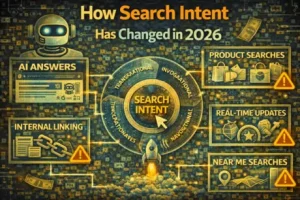 If you learned SEO a few years ago, you probably learned intent in a simple way: informational, navigational, transactional. That model still exists—but in 2026 it’s no longer enough to win consistently. SERPs are more dynamic, AI Overviews reshape behavior, and Google is far better at interpreting what users actually want, not just what they… Read more: How Search Intent Has Changed in 2026
 - How to Structure Websites for Long-Term SEO
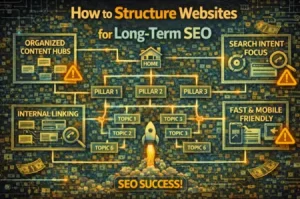 If you want SEO that lasts in 2026, you don’t start with content hacks. You start with structure. Because great content on a messy site still struggles. Google can’t prioritize what it can’t understand, and users won’t trust what feels hard to navigate. That’s why learning How to Structure Websites for long-term SEO is one… Read more: How to Structure Websites for Long-Term SEO
 - How to Improve Rankings Without Publishing More Content
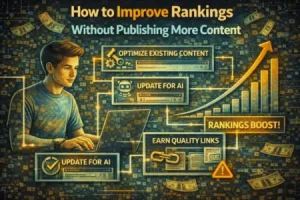 In 2026, publishing more content is not the automatic answer it used to be. For many sites, “more” becomes noise: more URLs to crawl, more overlap, more thin pages, more content decay to maintain. That’s why I’ve learned How to Improve Rankings without defaulting to new posts every time performance dips. The truth is, most… Read more: How to Improve Rankings Without Publishing More Content
 - How SEO Is Different in 2026 for Beginners
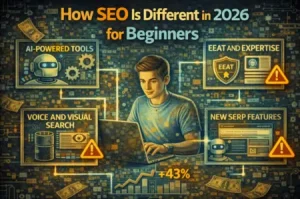 If you’re starting SEO today, you’re not walking into the same game people played in 2018, 2020, or even 2023. Search has changed fast: AI Overviews reshape clicks, SERP features crowd the page, and Google is more selective about what it indexes and rewards. That’s why How SEO Is Different in 2026 isn’t just a… Read more: How SEO Is Different in 2026 for Beginners
 - How to Audit Your SEO Without Paid Tools
 In 2026, doing a solid SEO audit no longer depends on expensive subscriptions. While paid tools can speed things up, they are not required to understand what’s broken, what’s underperforming, and what needs fixing next. What is required is a clear process. This guide explains How to Audit Your SEO step by step using only… Read more: How to Audit Your SEO Without Paid Tools