hard truths about modern SEO Key Takeaways
Modern SEO is no longer about gaming algorithms; it is about earning visibility through genuine authority, user-first content, and technical excellence.
- Hard truths about modern SEO include the death of keyword stuffing, the dominance of user intent, and the need for real E-E-A-T signals.
- Technical health, brand authority, and strategic content distribution now matter more than link count alone.
- Adapting to these realities requires a mindset shift from short-term hacks to long-term sustainable practices.
Why Facing the Hard Truths About Modern SEO Matters Now
Every week, a new tool promises to “hack” Google’s algorithm or a viral post claims ranking is dead. The reality is more nuanced: search engines have become incredibly good at understanding language, context, and user satisfaction. If your strategy still relies on outdated tactics like exact-match domains or mass link buying, you will see traffic decline. Accepting these hard truths about modern SEO is the first step toward building a strategy that survives core updates and delivers consistent results. For a related guide, see Why Vibe Coding Might Replace Entry Level Developers: 5 Harsh Truths.
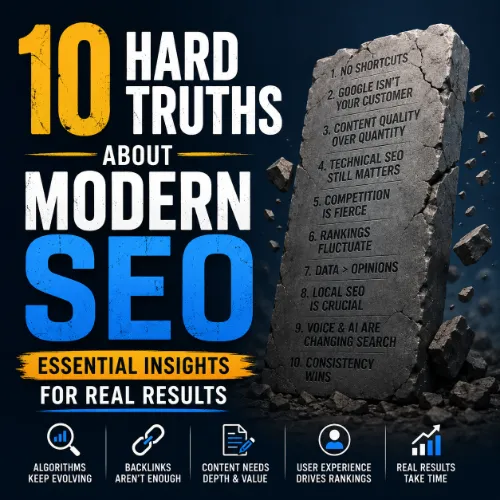
The 10 Hard Truths About Modern SEO You Must Accept
Let’s walk through the fundamental shifts that define today’s search landscape. Each truth is paired with a practical takeaway so you can adjust your approach immediately.
1. Intent Trumps Keywords Every Time
Search engines no longer just match strings of words. They interpret the searcher’s goal. A page optimized for “best running shoes” without understanding whether the user wants to buy, compare, or learn will rank poorly. You must align content with the dominant search intent behind your target queries. That means analyzing SERP features like People Also Ask and featured snippets to see what format the search result expects. For a related guide, see Why Generic SEO Content No Longer Drives Search Traffic.
2. Content Volume Without Value Hurts More Than It Helps
Publishing hundreds of thin, generic blog posts dilutes your site’s authority. Google’s helpful content system rewards pages that demonstrate genuine expertise and satisfy the user’s need. It is better to publish one deeply researched guide that earns citations and shares than to churn out daily fluff. Focus on comprehensiveness, original data, and clear writing.
3. E-E-A-T Is a Real Ranking Signal, Not a Buzzword
Experience, expertise, authoritativeness, and trustworthiness — E-E-A-T — are not a checkbox. They are a composite signal Google uses to assess content quality. For YMYL (Your Money or Your Life) topics, strong E-E-A-T is non-negotiable. Build it by featuring author bios with credentials, citing reputable sources, and maintaining a transparent contact and about page.
4. Technical SEO Is the Foundation You Cannot Skip
Even the best content will not rank if search engines cannot crawl, render, or index it properly. Core Web Vitals, mobile usability, structured data, and crawl budget management are not optional enhancements; they are prerequisites. A single technical flaw — like a redirect chain or a blocked resource — can prevent your content from ever being evaluated.
5. Backlinks Still Matter, But Quality Is Everything
Links remain a strong authority signal, but the era of quantity-driven link building is over. One editorial link from a reputable industry site carries more weight than fifty low-quality directory links. Invest in earning links through original research, expert commentary, and genuinely useful resources that people want to reference.
6. Brand Searches Are the New Ranking Booster
Google uses brand signals — such as the number of people searching for your brand name, brand mentions across the web, and branded anchor text — as a proxy for trust. If nobody searches for your brand, it signals low authority. Build brand awareness through PR, social media, and community participation, then measure your brand search volume as a key SEO metric.
7. Keyword Difficulty Is a Guide, Not a Gate
Many marketers avoid topics with high keyword difficulty scores, but those scores only reflect current competition. If you create significantly better content than what currently ranks, you can still win. Instead of avoiding difficulty, assess your ability to out-execute competitors with stronger content, better internal linking, and a more authoritative domain.
8. SERP Features Demand Different Content Formats
A standard text article rarely ranks for queries that trigger featured snippets, video carousels, or local packs. You need to match the format to the intent. For “how to” queries, use clear steps and numbered lists. For “best of” queries, use tables with pros and cons. For local queries, optimize your Google Business Profile and include location-specific content.
9. AI-Generated Content Is Not a Shortcut to Rankings
AI can help with research and drafts, but publishing unedited, low-effort AI content is now detectable and often penalized. Google’s focus on helpfulness requires human oversight: fact-checking, adding original examples, and injecting genuine opinion. Use AI as an assistant, not a replacement for expertise.
10. Sustainable SEO Requires Patience and Consistency
The biggest hard truths about modern SEO may be that there are no shortcuts. Building authority, earning links, and seeing traffic growth takes months or years of consistent effort. The sites that win are those that commit to continuous improvement: updating content, fixing technical issues, and adapting to new SERP features without chasing every fad.
Modern SEO Realities: What Changes in Your Strategy
Accepting these truths means shifting your daily focus. Instead of obsessing over keyword rankings, start measuring organic traffic to specific pages, brand search growth, and the number of quality referring domains. Prioritize user engagement metrics like bounce rate and time on page, and treat content updates as a permanent part of your editorial calendar. The professionals who succeed are those who embrace continuous learning and reject the idea of “set it and forget it” optimization.
SEO Entities and Their Functions
Understanding how different entities interact helps you make better decisions. Here is a quick guide to the most relevant ones for modern SEO analysis:
- Keyword entities (organic keywords, keyword difficulty, search volume) reveal demand and competition. Use them to prioritize topics where you can realistically compete.
- Backlink entities (referring domains, dofollow/nofollow, broken backlinks) tell you which sites already trust your content and where you need to build authority.
- Technical SEO entities (crawl issues, Core Web Vitals, indexability) expose barriers that prevent search engines from discovering or ranking your pages.
- Content entities (authors, topics, social shares) help evaluate whether your content attracts engagement and citations naturally.
- SERP entities (featured snippets, People Also Ask, AI Overviews) show what format and structure the search result rewards, guiding your content creation.
Useful Resources
To dive deeper into modern SEO strategy, explore these trusted sources:
- Google’s guide to creating helpful, reliable, people-first content — official documentation on quality expectations.
- Ahrefs’ SEO basics for beginners — a practical, up-to-date overview of core SEO concepts and tools.
Frequently Asked Questions About hard truths about modern SEO
What are the hard truths about modern SEO that most people ignore?
Many ignore that intent matters more than keywords, that technical flaws can kill rankings, and that building genuine authority takes consistent effort over time.
Is SEO still worth investing in for 2024 and beyond?
Yes, organic search remains one of the highest-ROI channels. However, SEO now requires a broader skillset including content strategy, technical optimization, and brand building.
Do backlinks still matter for rankings?
Yes, backlinks remain a top-three ranking factor. The difference is that quality, relevance, and editorial context are far more important than the sheer number of links.
How important is E-E-A-T for non-YMYL sites?
E-E-A-T applies across the web, but it is strictly evaluated for health, finance, safety, and news topics. For other niches, strong signals of expertise and trust still help.
What is the biggest mistake beginners make in SEO?
Focusing on ranking for high-volume keywords without analyzing the searcher’s intent or the competition’s content quality often leads to zero traffic.
How often should I update my existing content?
Review and refresh high-priority pages every 6–12 months. Update statistics, add new examples, improve readability, and ensure all internal links still work.
Does Google penalize AI-generated content?
Google penalizes low-quality content regardless of how it was created. AI content that is unedited, inaccurate, or lacking originality will not perform well.
What is the role of brand authority in SEO?
Brand authority influences click-through rates, link earning, and even ranking. When people search for your brand, it signals trust to Google.
How do I find the right keywords to target?
Start with your core topics, use a keyword research tool to expand queries, analyze SERP features, and filter by realistic keyword difficulty and search volume.
What technical SEO issue causes the most problems?
Crawlability issues — such as pages blocked by robots.txt, broken internal links, or poor XML sitemaps — prevent search engines from discovering your content.
Should I still use exact-match domains?
Exact-match domains no longer provide a ranking boost and can even look spammy. Focus on a brandable domain that users can remember.
How long does it take to see SEO results?
For new sites, 4–6 months is typical for consistent traffic growth. Established sites may see improvements faster if they already have authority.
What is the most important ranking factor today?
There is no single factor. A combination of content relevance, user engagement, technical health, and link authority collectively determines rankings.
Do social media shares help SEO directly?
Social shares are not a direct ranking signal, but they can increase content visibility, drive traffic, and lead to more backlinks — all of which help SEO.
How do I optimize for featured snippets?
Research queries that already show snippets, then write a concise definition or step-by-step answer in a clear, structured format (lists, tables, or short paragraphs).
What is content decay and how do I fix it?
Content decay happens when a page’s traffic declines over time due to outdated information or new competition. Fix it by updating stats, adding fresh examples, and improving internal links.
Should I remove pages that get zero traffic?
Delete or merge low-value pages that offer no unique information. Redirect them to a related, higher-quality page to preserve any accumulated link equity.
How do I measure the success of my SEO efforts?
Track organic traffic to specific pages, rankings for your target queries, number of quality referring domains, and brand search volume over time.
What is the difference between on-page and off-page SEO?
On-page SEO optimizes elements on your site (content, meta tags, internal links). Off-page SEO builds external signals (backlinks, brand mentions, social proof).
How can I stay updated with SEO changes?
Follow Google’s Search Central blog, industry newsletters like Search Engine Journal, and reputable SEO tool blogs such as Ahrefs or Moz.