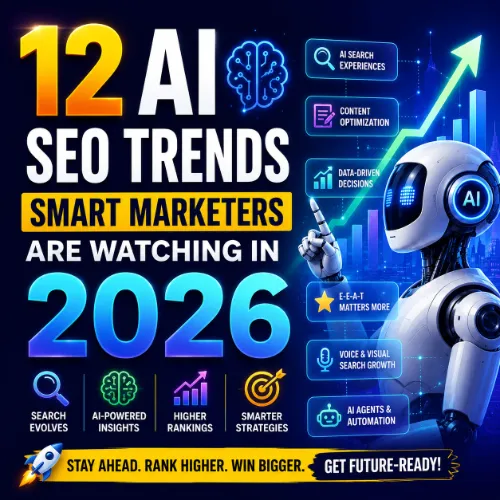
AI SEO trends Key Takeaways
Smart marketers know that understanding AI SEO trends in 2026 is essential for staying ahead of search engine algorithm shifts, user behavior changes, and competitive landscapes.
- AI SEO trends now center on balancing automation with genuine human authority and trust signals.
- Search engines increasingly prioritize entity-based relevance, topical depth, and real-world expertise over keyword density alone.
- Practical adoption of AI tools for research, personalization, and technical monitoring separates high-performing sites from the rest.
How AI SEO trends Are Reshaping Search in 2026
Search engines in 2026 don’t just crawl pages; they interpret context, verify claims, and personalize results at a granular level. The AI SEO trends smart marketers are watching revolve around understanding how algorithms now weigh authority, user satisfaction, and content completeness. If you still rely on old ranking signals without adapting to AI-driven ranking models, you’ll likely see visibility shrink.
The shift from keyword matching to intent prediction means every piece of content must answer the exact question a user has, often before they finish typing. Marketers who treat AI SEO trends as a toolset for deeper audience understanding will outperform those who see them as a threat.
1. Generative Engine Optimization (GEO) Becomes a Core Discipline
Google’s AI Overviews, Bing’s Copilot, and third-party assistants rely on structured, authoritative content to generate inline answers. AI SEO trends now include “Generative Engine Optimization” (GEO) – a practice that optimizes content for extraction into AI-generated summaries. For a related guide, see How Google AI Studio Is Changing AI Content Policies and SEO Trends.
To win in GEO, use clear, declarative sentences in the first 50–100 words of a section, embed schema markup for definitions and Q and As, and include citations from reputable sources. Smart marketers already track how often their pages appear as citation sources inside AI overviews.
2. Entity Optimization Beats Keyword Optimization
In 2026, search engines build knowledge graphs from entities—people, places, organizations, concepts—and their relationships. AI SEO trends show that pages clearly associating entities (e.g., “machine learning model” + “healthcare diagnosis” + “Stanford research”) rank higher than pages simply repeating the phrase “AI in healthcare.”
Map out the key entities relevant to your niche. Link to authoritative definitions and internal pages covering related topics. This tells the AI you cover the subject thoroughly.
3. Automated Content Auditing Tools Become Standard
Manual content audits are giving way to AI-powered tools that scan an entire domain for topical gaps, freshness issues, duplicate content, and intent mismatches. AI SEO trends for 2026 include using these tools not just to find errors but to suggest merges, rewrites, or new articles based on ranking potential.
Run quarterly AI audits to identify pages that lost traffic because of outdated statistics or competing AI Overviews. Then refresh those pages with improved entity coverage and recent data.
4. Search Personalization Grows More Intelligent
AI models now tailor search results based on a user’s past behavior, location, device, and even the time of day. AI SEO trends for 2026 emphasize that a single piece of content must serve multiple personalized variations—without becoming generic. For a related guide, see SEO Experts Must Adapt Quickly to AI Driven Search Trends.
Use dynamic meta descriptions and individualized on-page elements (like location-specific testimonials) where possible. Personalization signals, such as click-through rates from different user groups, directly influence rankings for those groups.
5. Trust Signals and E-E-A-T Become Verifiable
Google continues to refine how it evaluates Experience, Expertise, Authoritativeness, and Trustworthiness. In 2026, AI SEO trends include verifiable trust signals: author bios with external credentials, cited peer-reviewed studies, and transparent update histories.
Ensure every article has a clear author byline with links to their professional profiles. Use structured data to show review scores, certifications, and publication dates. AI crawlers now penalize pages that claim expertise without proof.
6. Voice and Multimodal Search Demand Conversational Structure
Voice search, image search, and video-first interfaces are converging. AI SEO trends for 2026 show that pages optimized for natural language questions and with well-structured image alt texts outperform those built only for text queries.
Write subheadings as complete questions users might say aloud, and include short audio or video snippets summarizing key points. This improves your chance of appearing in voice results and AI-generated video summaries.
7. Zero-Click Searches Drive Content Rethinking
More than 60% of Google searches now end without a click, due to featured snippets, knowledge panels, and AI Overviews. AI SEO trends for 2026 require marketers to value brand visibility even when clicks decline.
Adopt a hybrid strategy: optimize for zero-click features to build brand authority, while simultaneously creating deep-dive resources (guides, data studies, interactive tools) that users will click to engage with fully.
8. AI-Powered Link Building with Predictive Authority Scoring
Manual outreach for backlinks is being augmented by AI tools that predict which domains will become authoritative in the next 6–12 months. AI SEO trends include using machine learning to identify link prospects based on topic relevance, traffic growth rate, and domain authority trajectory.
Start building relationships with up-and-coming sites in your niche before their DR peaks. The AI helping you rank now also helps you spot early opportunities.
9. Content Clustering and Topical Authority Mapping
Instead of random blog posts, smart marketers create topical clusters with a pillar page and supporting articles linked logically. In 2026, AI SEO trends emphasize that algorithms evaluate the entire cluster, not just individual URLs.
Use a tool (like Ahrefs or Semrush) to map your current content against a target topic. Fill gaps with articles that connect back to the pillar. AI rewards sites that demonstrate comprehensive coverage of a subject area.
10. Real-Time SERP Volatility Monitoring
Search results fluctuate more frequently because AI models learn from new data continuously. AI SEO trends for 2026 include using real-time rank tracking that alerts marketers to shifts in featured snippets, AI Overview appearances, and position changes.
Set up daily alerts for your money pages. When volatility hits, review the pages for recent changes in competitor content, user behavior signals, or Google algorithm updates. Quick adaptation limits traffic loss.
11. AI-Generated Meta Data and Structured Schema
Manual meta title and description writing is giving way to AI-generated variants optimized for click-through rate. AI SEO trends now include dynamic schema generation that automatically adds FAQ, HowTo, and Product schemas based on content analysis.
Test AI-written meta descriptions for your top 10 landing pages. Often, AI identifies emotional triggers or question formats that human writers miss. Pair this with automated A/B testing via SERPs.
12. Ethical AI Transparency in Content Creation
Search engines are developing guidelines that require disclosure of AI-generated content. In 2026, AI SEO trends push for transparency: labeling AI-assisted content, providing human oversight, and retaining editorial responsibility.
If you use AI to draft content, always have a subject matter expert review and add original insights. Publish editorial guidelines that explain your AI usage. This builds trust with both users and search algorithms.
SEO Entities and Their Functions
Understanding the entities involved in SEO helps you target the right metrics and make data-driven decisions. Here are key entities relevant to the AI SEO trends discussed above:
- Keyword Entities: Organic keywords, keyword difficulty (KD), search volume, and CPC indicate demand and competition. Use them to identify where to focus content efforts.
- Backlink Entities: Referring domains, dofollow/nofollow distribution, and anchor text diversity show link quality and authority transfer. Track these to build a healthy backlink profile.
- Technical SEO Entities: Core Web Vitals, crawl errors, indexability status, and canonicals are critical for ensuring AI crawlers can access and evaluate your content.
- SERP Entities: Featured snippets, People Also Ask, AI Overviews, and local packs define which content formats the search engine rewards most.
- Competitor Entities: Competing domains, content gap opportunities, and shared keywords reveal where rivals gain visibility and where you can fill content voids.
Useful Resources
For deeper dives into these AI SEO trends, explore these resources:
- Google’s Guide to Creating Helpful Content – Official guidelines that align with E-E-A-T and entity-based ranking.
- Ahrefs: How Google AI Overviews Affect SEO – Practical analysis of generative search and its impact on click-through rates.
Frequently Asked Questions About AI SEO trends
What are the most important AI SEO trends for 2026?
Key trends include Generative Engine Optimization, entity-based ranking, automated content auditing, personalized search, verifiable E-E-A-T, and voice/multimodal search strategies.
How is AI changing keyword research in 2026?
AI now analyzes searcher intent, entity relationships, and conversational patterns to suggest keywords. It shifts focus from exact-match phrases to topic-based clustering.
Do AI-generated content penalties still exist in 2026?
Yes, if content is unoriginal or lacks human oversight. Search engines reward AI-assisted content that adds unique value, includes expert review, and clearly discloses AI use.
What is Generative Engine Optimization (GEO)?
GEO is the practice of structuring content so AI-powered search engines (like Google AI Overviews) extract and cite it in their generated answers. It emphasizes clear definitions, structured data, and citations.
How do entities affect SEO rankings in 2026?
Entities help search engines understand the real-world relationships between concepts. Pages that explicitly connect entities (e.g., company, product, author) rank higher for relevant queries.
Should I use AI tools for content creation?
Yes, but always with human review. AI tools excel at research, outlines, and rewrites, but original insights, expert perspective, and editorial quality remain human-driven.
How often should I audit my content using AI?
At least quarterly. AI-powered audits can flag outdated stats, coverage gaps, and declining traffic signals that need immediate attention.
What is zero-click search and why does it matter?
Zero-click search occurs when a user finds the answer directly on the SERP without clicking any result. It matters because it reduces organic traffic but increases brand visibility and authority signals.
How does personalization affect SEO strategy?
Personalization means different users may see different results for the same query. You need to optimize for user segments by using dynamic content, location targeting, and behavioral signals.
Can AI help with backlink building?
Yes. AI tools can predict future authoritative domains, identify broken link opportunities, and even draft personalized outreach emails, making link building more efficient.
What is E-E-A-T and how do I verify it?
E-E-A-T stands for Experience, Expertise, Authoritativeness, and Trustworthiness. Verify it by providing author credentials, citing reputable sources, and showing clear content updates.
How do AI Overviews impact click-through rates?
AI Overviews often reduce click-through rates because users get answers directly on the SERP. However, being cited in an Overview builds trust and increases brand recall.
What role does schema markup play in 2026 SEO?
Schema markup helps AI understand your content’s structure. FAQ, HowTo, and Article schemas are critical for appearing in rich results and AI-generated answers.
Is voice search optimization still relevant in 2026?
Absolutely. Voice search is now part of multimodal search (voice + text + image). Optimizing for natural language questions improves visibility across devices.
How do I measure the success of an AI SEO strategy?
Track organic traffic, featured snippet appearances, AI Overview citation frequency, keyword positions, and click-through rates. Use tools like Ahrefs and Google Search Console.
What is topical authority and how do I build it?
Topical authority means covering a subject comprehensively. Build it by creating pillar pages, supporting content, and internal links that cover every facet of a topic.
How does AI detect content quality?
AI uses natural language processing to evaluate readability, factual accuracy, entity usage, and whether content satisfies user intent. High-quality content answers questions thoroughly and cites sources.
Should I optimize for Bing or Google separately?
While Google dominates, Bing’s Copilot integration and share of voice/mobile searches make it worthwhile. Many AI trends apply to both, but Bing prioritizes exact citations slightly more.
What is the biggest mistake marketers make with AI SEO?
Relying on AI entirely without human oversight. The biggest winners combine AI efficiency with human creativity, editorial judgment, and ethical transparency.
Where can I learn more about AI SEO trends?
Follow resources like the Ahrefs Blog, Google Search Central, and industry newsletters from SEO thought leaders. Also join communities that discuss entity-based and generative search strategies.