

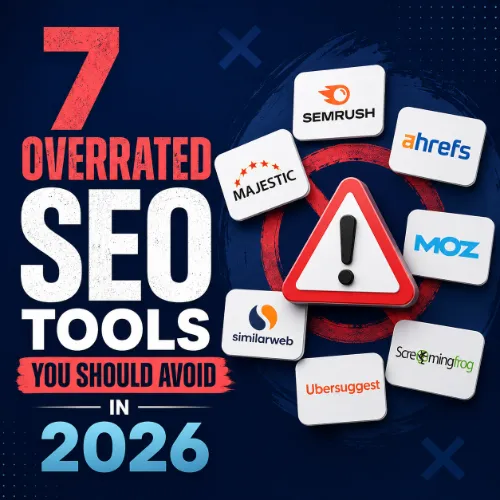
overrated SEO tools Key Takeaways
Many popular overrated SEO tools promise effortless rankings but deliver inflated metrics and wasted budget.
- The most hype-driven overrated SEO tools often provide vanity metrics that don’t correlate with real search visibility.
- Free or low-cost alternatives frequently outperform expensive suites for small and mid-size businesses.
- Focus on tools that offer actionable data, not just impressive-looking dashboards.
Why So Many SEO Tools That Are Overrated Dominate the Market
The SEO tool industry is flooded with products that prioritize flashy interfaces over real utility. Many businesses purchase expensive subscriptions based on aggressive marketing, only to find that the metrics don’t align with actual ranking improvements. The problem isn’t that these tools are useless—it’s that they’re often oversold for tasks they weren’t designed to handle. For example, a tool might boast a huge keyword database but fail to filter for search intent, leading to poor content strategy decisions.
Another common pattern is the overreliance on proprietary metrics like Domain Authority or Trust Flow. While these can be useful directional signals, they are often mistaken for Google’s own ranking factors. Seasoned SEOs know that correlation does not equal causation, but beginners frequently fall into the trap of obsessing over these numbers at the expense of technical health, content quality, and backlink relevance. For a related guide, see 10 Features of Google Gemini You’re Getting in AI Subscription Deals.
The 7 Most Overrated SEO Tools That Waste Your Time and Money
After analyzing dozens of tools across years of practical SEO campaigns, these seven consistently underdeliver relative to their reputation and price tag.
1. Moz Pro: Overinflated Authority Metrics
Moz Pro pioneered SEO software, and its Domain Authority (DA) metric is still widely quoted. However, DA is a relative score that changes as Moz updates its algorithm, causing wild swings that don’t reflect actual Google ranking changes. The tool’s site audit and rank tracking features are decent but lag behind competitors in crawl depth and fresh data.
What to use instead: For link analysis, combine Ahrefs or Majestic with Google Search Console data. For site audits, Screaming Frog SEO Spider (free for up to 500 URLs) is more thorough and transparent.
2. SEMrush: Overwhelming Complexity
SEMrush is a powerhouse, but its vast feature set makes it one of the most overrated SEO tools for beginners and small teams. The platform tries to do everything—SEO, PPC, social media, content marketing—but mastering its interface requires significant training. Many users end up paying for features they never touch, and the data export limits can be frustrating.
What to use instead: For focused keyword research and competitor analysis, Ubersuggest offers a simpler interface at a fraction of the cost. For technical audits, use the free Google Lighthouse for Core Web Vitals.
3. Ahrefs Keyword Difficulty Score
Ahrefs is an excellent tool overall, but its Keyword Difficulty (KD) score is often misinterpreted. The score heavily weights the number of referring domains to top-ranking pages, which ignores other critical factors like content quality, page authority, and user engagement signals. A KD of 30 might be impossible for a new site in a competitive niche, while a KD of 70 could be achievable with well-optimized content in a less competitive space.
What to use instead: Ignore KD numbers for short-term decisions. Instead, manually analyze the top 10 results: look for thin content, outdated information, and weak backlink profiles. These represent real opportunities that a score alone can’t capture.
4. Majestic SEO: Legacy Link Data Without Context
Majestic boasts the largest backlink index in the world, but its user interface feels stuck in 2010. The tool reports a vast number of backlinks, many of which come from spammy or irrelevant sources. Its Trust Flow and Citation Flow metrics are useful for initial filtering, but the lack of integration with modern content analysis tools makes it cumbersome to use alone.
What to use instead: Use Ahrefs or SEMrush for link analysis because they contextualize backlinks with anchor text, page content, and traffic estimates. If you need Majestic’s raw data, save it for bulk link research and combine it with Bing Webmaster Tools for free crawl insights.
5. Google PageSpeed Insights (When Misused)
PageSpeed Insights is a free tool from Google, so it’s not overrated in cost, but it is often misused to the point of being one of the most SEO tools that are overrated in terms of perceived importance. Many site owners panic over amber or red scores, thinking these directly cause ranking drops. In reality, the scores are diagnostic, not ranking factors. A site with a 45 mobile score can rank higher than one with a 95 if it has superior content and backlinks.
What to use instead: Focus on real user metrics from the Chrome User Experience Report (CrUX) in Google Search Console. Optimize for Largest Contentful Paint (LCP) and Cumulative Layout Shift (CLS) based on field data, not lab data from a single test. For a related guide, see 16 SEO Audit Tools Reviewed With Real Data: 2026 Guide!.
6. Surfer SEO: Content Optimization Without Substance
Surfer SEO suggests word counts, keyword densities, and heading structures by analyzing top-ranking pages. While this sounds helpful, it often leads to formulaic, bloated content that sacrifices readability for metrics. Google’s algorithms increasingly understand semantic relevance, not just keyword frequency. Content written strictly to Surfer’s guidelines can feel robotic and fail to earn natural backlinks.
What to use instead: Write for humans first. Use a tool like Frase or Clearscope if you absolutely need NLP-driven content guidance, but always override its suggestions based on your editorial judgment. Prioritize unique insights over hitting a keyword count.
7. Rank Tracker Tools (Generic, Single-Keyword Focus)
Rank tracking tools like Rank Ranger, AccuRanker, and similar platforms are valuable for large reporting dashboards. However, they often track individual keywords in isolation, which is one of the most outdated approaches in modern SEO. Google personalizes results based on location, device, search history, and intent, making global rank positions meaningless for local businesses or niche queries.
What to use instead: Track visibility trends via Google Search Console’s average position metric, which accounts for all variations. For specific campaigns, use a rank tracker that supports local SERP tracking and groups keywords by topic cluster, not just by rank position.
Comparison Table: Overrated vs. Recommended Alternatives
| Overrated Tool | Why It’s Overrated | Better Alternative | Cost Savings |
|---|---|---|---|
| Moz Pro | Domain Authority volatility | Ahrefs + Screaming Frog | 50-70% lower cost |
| SEMrush | Too many unused features | Ubersuggest + Google Lighthouse | 80% lower cost |
| Ahrefs KD | Misleading difficulty score | Manual SERP analysis | Free |
| Majestic SEO | Outdated interface, spammy data | Ahrefs or Bing Webmaster Tools | Varies, often free |
| PageSpeed Insights | Lab data misinterpretation | CrUX field data via GSC | Free |
| Surfer SEO | Formulaic content prompts | Frase + human editorial review | Similar cost, better results |
| Rank Trackers | Single-keyword focus | GSC average position | Free |
SEO Entities and Their Functions
Understanding key SEO entities helps you evaluate which tool reports are actually useful. Here’s how the most important ones work:
- Keyword entities: Organic keywords, paid keywords, and keyword difficulty (KD) show demand and competition, but KD alone doesn’t predict ranking success. Always pair KD with search volume and SERP feature analysis.
- Backlink entities: Referring domains, anchor text, and dofollow/nofollow status reveal link quality and risk. Focusing solely on the count of backlinks is a common trap with overrated tools.
- Page entities: Top pages by traffic or links help prioritize content optimization. Use this data to update or consolidate underperforming pages.
- SERP entities: Featured snippets, People Also Ask, and local packs show what content format the search engine rewards. Overrated tools often miss these nuances.
- Technical SEO entities: Crawl issues, redirect chains, and Core Web Vitals expose real obstacles that no rank tracker can fix.
How to Choose SEO Tools That Actually Deliver Value
Avoiding overrated SEO tools starts with a clear strategy. Before you buy, ask yourself three questions: What specific problem am I solving? Does this tool provide data I can act on today? Is there a free or cheaper alternative that does 80% of the same job?
Many successful SEOs operate with just Google Search Console, Google Analytics, and a keyword research tool like Ubersuggest. If you need backlink analysis, consider using the free trial of Ahrefs once a month rather than maintaining a full subscription. For site audits, Screaming Frog’s free tier covers most needs for sites under 500 pages.
The key is to stop chasing vanity metrics and start measuring what matters: organic traffic growth, conversion rates from organic visitors, and real improvements in page experience metrics. When you evaluate tools through this lens, you’ll quickly see which ones are truly essential and which are SEO tools that are overrated marketing hype.
Useful Resources
For deeper guidance on choosing SEO tools, refer to these authoritative sources:
- Google’s Guide to Creating Helpful Content — Official guidance on content quality that no tool score can replace.
- Ahrefs Blog: The Ultimate List of SEO Tools — A balanced overview of both free and paid tools, including critical evaluations of each.
Frequently Asked Questions About overrated SEO tools
What makes an SEO tool overrated?
An SEO tool becomes overrated when its marketing promises exceed its practical value. Common signs include proprietary metrics that don’t correlate with Google rankings, overwhelming feature sets that beginners never use, and data that’s too broad to provide actionable insights.
Is Moz Pro completely useless for SEO?
No, Moz Pro has value for tracking basic keyword positions and performing site audits. However, its Domain Authority metric is volatile and can mislead beginners. It’s best used as a supplementary tool rather than a primary data source.
Can I do SEO without paying for tools?
Yes. Google Search Console, Google Analytics, and Bing Webmaster Tools cover keyword tracking, traffic analysis, and technical audits for free. For backlinks, the free trials of Ahrefs or Majestic are sufficient for occasional research.
Why do people still pay for overrated SEO tools ?
Many businesses buy them due to strong brand recognition, fear of missing out, or the belief that expensive tools equal better results. Once subscribed, the switching cost and integration inertia keep them paying.
What is the most common mistake with SEO tool reports?
Focusing on single-point metrics like Keyword Difficulty or Domain Authority without understanding the context. For example, a low KD score doesn’t guarantee easy rankings if all top results are from authoritative sites with high-quality content.
Is Surfer SEO good for content writers?
Surfer SEO can help structure content, but it often leads to over-optimized text that lacks natural readability. Content written solely to its recommendations tends to perform worse than content written for human engagement.
Does Ahrefs keyword difficulty ever work correctly?
Ahrefs KD is a useful directional indicator but should never be the sole deciding factor for keyword targeting. It measures backlink profiles of top-ranking pages but ignores content quality, user intent, and brand authority.
Are all rank trackers a waste of money?
Not all, but many are overpriced for the value they deliver. Generic rank tracking that ignores local variation and personalization is indeed a waste. Tools that support local SERP tracking and keyword clustering are more useful.
What is the best free alternative to SEMrush?
Ubersuggest offers keyword research, site audit, and content ideas at no cost (with daily limits). Paired with Google Search Console, it covers most needs for small to medium sites.
Can Google PageSpeed Insights hurt my rankings?
No, the tool itself doesn’t affect rankings. However, misinterpreting its scores can lead to unnecessary code changes that break site functionality. Focus on real user metrics from CrUX instead.
What should I look for in an SEO tool instead of metrics?
Look for actionable insights: specific URLs to fix, content gaps to fill, and prioritized technical errors. The best tools provide a clear action plan, not just a dashboard full of numbers.
Is Majestic worth using for link building?
Majestic’s large index is useful for finding link prospects, but its interface is outdated. Most link builders prefer Ahrefs for combining backlink data with content analysis.
How do I know if an SEO tool is overpriced?
Compare the tool’s pricing to the value of actionable data it provides. If a $200/month tool only confirms what Google Search Console shows for free, it’s overpriced.
Does Ahrefs replace all other SEO tools?
Ahrefs is powerful but not comprehensive. It lacks deep local SEO features and advanced content optimization that tools like Frase provide. It’s best used as part of a broader toolkit. For a related guide, see 25 Best SEO Tools Compared for 2026.
What is the hidden cost of using overrated SEO tools ?
The hidden cost is time wasted on chasing meaningless metrics and the opportunity cost of not fixing real issues like site speed, content quality, and UX.
Can a beginner use SEMrush effectively?
Technically yes, but most beginners get overwhelmed by the interface. It’s better to start with simpler tools and graduate to SEMrush once you understand which reports you actually need.
Is it safe to rely solely on free tools for SEO?
For small sites and local businesses, free tools are often sufficient. As the site grows, investing in specialized tools for link analysis or enterprise reporting becomes more valuable.
What is the best way to track keyword rankings without a paid tool?
Use Google Search Console’s Performance report to see average position, impressions, and clicks. For manual checks, incognito searches with location-specific parameters work for spot-checks.
Do agencies need these overrated SEO tools for client reports?
Some clients expect fancy dashboards, but many agencies overpay for tools just to generate reports. Focus on delivering results and use free tools for reporting where possible.
What is the single best SEO tool that is not overrated?
Google Search Console is the most underrated and essential tool. It provides first-party Google data with no cost, covering performance, indexing, security, and page experience.







