

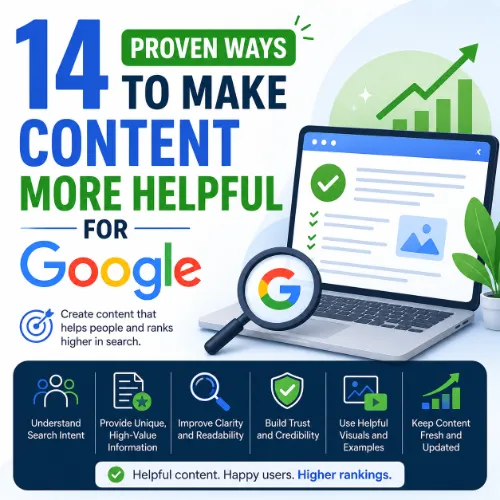
make content more helpful for Google Key Takeaways
Creating content that genuinely addresses user intent and demonstrates expertise is the most reliable path to better rankings.
- To make content more helpful for Google , you must first understand what users are actually searching for and serve that need directly.
- Practical steps like structuring content with clear headings, adding unique insights, and citing credible sources can dramatically improve your content’s helpfulness.
- Regularly updating content, optimizing for featured snippets, and avoiding fluff are essential habits for long-term SEO success.
Why You Need to Make Content More Helpful for Google
Google’s entire mission revolves around organizing the world’s information and making it universally accessible and useful. When you create content that aligns with that mission, you naturally satisfy both the algorithm and your readers. The helpful content system, introduced in 2022 and updated regularly, explicitly rewards pages that offer a satisfying, first-hand, and accurate experience. This means that simply targeting keywords without delivering real value will no longer work. For a related guide, see 7 Content Signals Google Still Values.
The shift toward helpfulness puts the focus on the reader. Instead of asking “How can I rank for this keyword?” the better question is “What does my audience truly need to know?” By answering that question thoroughly, you build trust, earn backlinks, and improve dwell time — all signals that reinforce your page’s relevance. Below are 14 actionable ways to put this principle into practice.
1. Write for People, Not Just for Crawlers
The easiest way to make content more helpful for Google is to prioritize human readability. Use natural language, avoid keyword stuffing, and structure paragraphs so they flow logically. When your content is easy to read and understand, users stay longer and engage more.
Example: Instead of writing “Best running shoes for flat feet provide arch support,” craft a sentence that feels conversational: “If you have flat feet, the right running shoes can make a huge difference in comfort and injury prevention.”
2. Target Search Intent First
Before writing a single word, identify the intent behind the query. Is the user looking for information, a product to buy, a step-by-step guide, or a comparison? Aligning your content with intent is the foundation of helpful content for Google.
Example: A query like “how to fix a leaky faucet” demands a clear tutorial with tools, steps, and troubleshooting. A product-focused page wouldn’t match that intent.
3. Use Clear and Descriptive Headings
Headings guide both readers and search engines through your content. Each H2 should preview the value of the section, and subheadings should break down complex ideas into digestible chunks. This structure also helps Google understand your page’s outline for featured snippets. For a related guide, see What Is Zero Click Content? How to Write Answers That Rank Without Clicks.
4. Include Original Research, Data, or Personal Experience
Google’s system evaluates whether a page demonstrates first-hand expertise. Adding original data, personal stories, or unique insights sets your content apart from the thousands of generic articles on the same topic.
Example: If you run a marketing blog, include a case study from a client campaign with real numbers. That’s a signal of authority that algorithms and readers both appreciate.
5. Update and Refresh Older Content
Outdated information isn’t helpful. Regularly review your top-performing pages and update statistics, links, and examples. Freshness is one of the ways to make content helpful for Google that directly impacts visibility. For a related guide, see Content More Engaging and SEO-Friendly: 7 Ways to Boost.
6. Add Visuals and Supplementary Media
Images, charts, infographics, and videos break up text and explain concepts faster than words alone. This improves user experience and often earns placement in Google Image Search and video results.
7. Cite Trustworthy Sources
Every claim should be backed by a credible source. Internal links to your own authoritative content and external links to respected domains (like .gov, .edu, or industry-leading sites) reinforce credibility.
8. Optimize for Featured Snippets and People Also Ask
Answer common questions concisely in paragraphs or lists. Structuring content to earn a featured snippet position increases your visibility directly on the SERP and positions you as a helpful resource.
9. Avoid Fluff and Word Count Inflation
Longer isn’t always better. Cut unnecessary adjectives, filler sentences, and redundant explanations. Every paragraph should serve a purpose — either educating the reader or helping them take the next step.
10. Use a Conversational and Confident Tone
Write like an expert talking to a colleague. Avoid hedging language like “maybe” or “it could be said that” when you have a clear answer. Confidence builds trust.
11. Include a Clear Call-to-Action (CTA)
After providing helpful content, guide the reader on what to do next. Whether it’s subscribing, downloading a resource, or reading a related article, a CTA turns helpful information into an action.
12. Make Your Content Accessible
Use alt text for images, ensure text is legible (proper contrast and font size), and write for a reading level that matches your audience. Accessibility improves user experience for everyone and can positively impact rankings.
13. Leverage Internal Linking Strategically
Internal links distribute authority across your site and help users explore related topics. For a reader looking for ways to make content more helpful for Google, linking to a guide on keyword research or site structure adds immediate value.
14. Monitor Performance and Iterate
Use analytics to see which pages perform best, how users behave, and where they drop off. Then, improve those pages. Continual iteration is the hallmark of a content strategy that remains helpful over time.
SEO Entities and Their Functions
Understanding the building blocks of SEO can help you create more targeted and helpful content. Here are some key entities to know:
- Keyword entities: Analyze keywords by search volume, keyword difficulty (KD), and traffic potential. These metrics reveal demand for specific helpful content for Google topics.
- Backlink entities: Referring domains and dofollow/nofollow links indicate how much authority your page has earned. Quality backlinks signal trustworthiness to Google.
- Content entities: Track articles, authors, publish dates, and social shares to evaluate which content formats attract the most engagement and links.
- SERP entities: Featured snippets, People Also Ask boxes, and AI Overviews show the specific format Google prefers for a query. Structuring content to match those formats makes it more likely to be featured.
- Technical SEO entities: Core Web Vitals, indexability, and crawl issues affect whether your page can even be discovered. Eliminating these barriers ensures your helpful content gets served.
Useful Resources
For a deeper dive into creating helpful content for Google, check out these resources:
- Google’s official guide on creating helpful, reliable, people-first content
- Ahrefs’ analysis of the helpful content update and how to adapt
Frequently Asked Questions About make content more helpful for Google
What is Google’s helpful content system?
It’s a ranking algorithm that rewards pages that provide a satisfying, original, and informative experience while penalizing content written primarily for search engines.
How do I know if my content is helpful enough?
Review your analytics for high bounce rates, low time on page, and poor engagement. Also, ask if your content answers the user’s query completely and accurately.
Does word count matter for helpful content?
No. What matters is that you cover the topic thoroughly. A 500-word article can be more helpful than a 2000-word article if it directly answers the question without fluff.
Can I use AI to create helpful content?
Yes, but you must edit and add original insights. Google values first-hand experience and unique perspectives that AI alone cannot provide.
What are the first steps to make content more helpful for Google?
Start by identifying search intent for your keywords, then write for humans with clear structure and authoritative sources.
Should I update old content regularly?
Absolutely. Review top pages every 6 months to update statistics, links, and examples. Freshness signals that your content is still accurate.
How do I optimize for featured snippets?
Use lists, tables, and concise paragraphs that directly answer common questions. Structure your page with clear headings for each sub-topic.
What’s the difference between helpful content and SEO content?
Helpful content puts the user first, while old-school SEO content prioritized keywords. Today, the best SEO content is helpful content.
Can internal linking make my content more helpful?
Yes. Internal links help readers find related information and distribute authority across your site. Use descriptive anchor text to guide the user.
Is it important to cite sources?
Yes. Citing credible sources increases trustworthiness. Google’s E-E-A-T guidelines reward content that demonstrates expertise and authority.
Do visuals improve helpfulness?
Yes. Images, charts, and videos explain concepts faster, improve user engagement, and can appear in image search results.
How do I avoid creating thin content?
Focus on depth over length. Cover subtopics, answer related questions, and include examples or case studies to provide comprehensive value.
What role does user experience play?
A great user experience (fast loading, mobile-friendly, accessible design) helps your helpful content get read and shared.
Should I write for beginners or experts?
That depends on search intent. If the query is introductory, aim for beginners. Advanced queries expect technical depth. Match your audience.
How does Google measure content helpfulness?
Through a mix of algorithmic signals like user engagement (dwell time, bounce rate), backlinks, and direct human quality raters following Search Quality Evaluator Guidelines.
Can I use the same approach for different content types?
The principles apply broadly, but adapt the execution: listicles need clear numbering, how-tos need step-by-step guidance, and reviews need honest pros/cons.
What’s the biggest mistake when trying to create helpful content?
Writing what you think the algorithm wants instead of what the reader needs. Always start with user intent.
How long does it take to see results from helpful content?
It varies. Some pages rank within weeks; others take months. Consistency and quality usually lead to gradual, sustainable improvements.
Is there a checklist I can follow?
Yes: Identify intent → Write naturally → Structure with headings → Cite sources → Add visuals → Update regularly → Avoid fluff → Monitor performance.
Do AI-written articles count as helpful?
Google doesn’t ban AI content, but it must be original, accurate, and offer human insight. Relying solely on AI without editing is risky.







