Local SEO Services in the Philippines: Turn Local Searches Into Real Customers
If you run a business in the Philippines, your next customers are already searching on Google—usually on mobile, usually with location‑based queries like “near me,” “in Manila,” or “in Cebu.” Local SEO services in the Philippines are all about making sure your business shows up in those high‑intent searches, in Google Maps, and in the local 3‑pack—before your competitors do.
What Are Local SEO Services in the Philippines?
Local SEO focuses on helping nearby customers find your business when they search for services in a specific city, district, or region (for example, “dental clinic in Quezon City” or “digital marketing agency Cebu”). Instead of chasing broad, global keywords, local SEO services in the Philippines optimize your website, Google Business Profile, and local citations so you can dominate location‑specific results in Manila, Cebu, Davao, and other key cities.
In practice, a strong local SEO campaign for Filipino businesses includes:
- Local keyword research for city‑ and neighborhood‑based queries
- Google Business Profile optimization and review strategy
- NAP (Name, Address, Phone) consistency across directories
- Local on‑page optimization, schema, and internal linking
- Region‑specific content and blog clusters tailored to your service areas
To see how all of this fits into a broader strategy, you can review foundational resources on SEO services and specialized local SEO services for small businesses.
Why Local SEO Matters So Much in the Philippines
Filipino Consumers Rely on Local Search
Millions of Filipinos now search on mobile before visiting a shop, booking a clinic, or inquiring with a service provider. Local SEO puts your business in front of those searchers at the exact moment they’re ready to call, chat, or visit your branch.
Local Packs and Maps Drive Calls and Walk‑Ins
Google’s local 3‑pack and Maps view often appear above traditional organic results, especially for “near me” and “service in [city]” keywords. If you’re not actively optimizing for local SEO, you’re invisible in the part of the SERP that generates the most calls, quote requests, and in‑store visits.
To understand how broader technical and on‑page fundamentals support local, explore guides on technical SEO services, on‑page SEO services, and page speed impacts on SEO performance.
How Blog Clusters Supercharge Your Local SEO Service Pages
From Single Service Pages to Local Topic Clusters
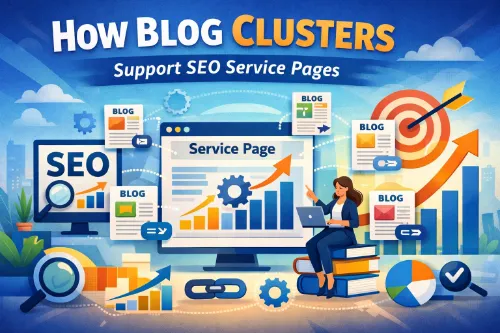
Most Philippine businesses have a basic “Local SEO Services” page and a few disconnected blogs. Topic clusters flip this into a structured system: one pillar page for “Local SEO Services in the Philippines,” surrounded by interlinked cluster posts that cover all related questions, problems, and comparisons.
Your local SEO pillar might be supported by cluster posts like:
- “How Local SEO Works for Filipino Small Businesses”
- “Local SEO Checklist for Restaurants in Cebu”
- “Google Business Profile Optimization Tips for Manila Companies”
- “How Topic Clusters Improve Local SEO for Service Businesses”
A full walk‑through of this structure is available in the guide on how blog clusters support SEO service pages.
Building Topical Authority Around Local SEO
When multiple high‑quality pages all support one main local SEO service page, Google and AI systems can clearly see that your site is a local SEO authority rather than a generic blog. This cluster approach lets you cover:
- “What is local SEO?” introductions
- Checklists (for restaurants, clinics, real estate agencies, etc.)
- City‑specific tactics (Manila, Cebu, Davao, Iloilo)
- Industry‑specific local SEO strategies for law firms, medical clinics, real estate, SaaS, and more
You can go deeper into industry‑specific content by referencing resources like industry‑specific clusters, local SEO helps clinics, law firms, and restaurants, and local SEO strategies for property listings.
Core Components of Effective Local SEO in the Philippines
| Component | What It Covers | Why It Matters for PH Businesses |
|---|---|---|
| Local keyword research | “service + city/area” queries, “near me” style phrases | Aligns with how Filipinos actually search on mobile |
| Google Business Profile (GBP) | Categories, photos, services, posts, reviews | Feeds Google Maps and local 3‑pack visibility |
| NAP and citations | Consistent Name, Address, Phone across PH‑specific directories | Builds trust and improves local relevance signals |
| Local on‑page and schema | Location terms in titles, headings, content; LocalBusiness schema | Helps search engines understand your exact service area |
| Internal linking & cluster blogs | Linking blogs to “Local SEO Services in the Philippines” pillar | Concentrates authority on money pages |
To execute these pieces properly, it helps to lean on specialized frameworks like local SEO ranking factors for multi‑location brands, local citation building, and local SEO audit guides.
Local SEO Topic Clusters for Filipino Industries
Law Firms and Legal Services
Law firms in Metro Manila, Cebu, and other Philippine cities thrive when they rank for both practice‑area and location queries (for example, “family lawyer in Makati” or “personal injury lawyer Cebu”). A local SEO cluster for law firms might include:
- Pillar: “SEO Services for Law Firms in the Philippines”
- Cluster: local SEO for personal injury and family law firms
- Cluster: law firm content strategy for organic leads
You can tie this back to a broader pillar using the resource on SEO services for law firms.
Clinics, Dental Practices, and Healthcare Providers
Clinics and dental practices rely heavily on local search to drive new patients. Local SEO clusters can target queries like “dentist in Quezon City,” “dental clinic near me,” or “physical therapy Davao.” Supporting reads such as local SEO for dental clinics and healthcare providers and medical content SEO and E‑E‑A‑T best practices show how to blend medical accuracy, trust signals, and local relevance.
Real Estate Agencies and Property Listings
Real estate searches are hyperlocal by nature—buyers filter by city, district, or even neighborhood. A local SEO cluster can target “house and lot for sale in Cavite” or “condo for rent in BGC” with content inspired by SEO services for real estate agencies, local SEO strategies for property listings, and real estate content ideas for organic lead generation.
Making Your Local SEO Pages AI‑Overview Friendly
AI Overviews and generative search experiences don’t just look for keywords; they look for pages that answer entire tasks clearly. To make your “Local SEO Services in the Philippines” content AI‑Overview friendly, you should:
- Use question‑style H2s and H3s like “How Does Local SEO Work in the Philippines?”
- Include concise, list‑based answers near the top of each section
- Add short key takeaway or summary boxes that an AI system can easily lift
- Use entity‑rich language: talk about services, cities, industries, common problems, and outcomes
The guide on search intent optimization for better rankings and the resource on SEO content planning for topical authority both align neatly with how AI Overviews choose which pages to feature.
Step‑by‑Step: How We Build Local SEO Clusters for Philippine Businesses
1. Define Your Core Local SEO Pillar
We start with your primary money page: “Local SEO Services in the Philippines” or “Local SEO Services in [City].” This page targets your main commercial keyword and explains what’s included in your local SEO package, who it’s for, and what results to expect. To set expectations clearly, we reference concepts from what small businesses should expect from SEO packages and what’s included in SEO packages.
2. Map Supporting Cluster Topics and Keywords
Next, we conduct keyword research with a strong local focus, combining service terms with city and region names. We map each keyword to a unique URL to avoid cannibalization, guided by frameworks in keyword research services for lead generation, keyword mapping for service pages and blogs, and long‑tail keywords for SEO services businesses.
3. Design Internal Links and Anchor Text
Before publishing, we design how every cluster post will link back to your local SEO pillar and to related posts. We use descriptive anchor text like “our local SEO services for Philippine businesses” instead of generic “click here,” aligning with best practices from internal linking improves rankings and on‑page SEO checklist for service‑based websites.
4. Publish, Optimize, and Refresh
We launch your pillar page first, then roll out cluster blogs in batches so internal links can immediately support your main service page. Each article is optimized using foundational resources like on‑page SEO basics, content optimization vs keyword stuffing, and optimize landing pages for search engines, and we schedule regular updates supported by content refresh services.
What You Can Expect From Local SEO Services in the Philippines
Timelines, Cost, and ROI
Local SEO is a long‑term investment, but it often moves faster than national SEO because you’re targeting narrower markets. You can use resources like how much do SEO services cost?, how long do SEO services take to work?, and why SEO is a long‑term investment to help stakeholders understand budget and timelines.
To measure ROI, we track metrics covered in how to measure SEO ROI for your business, SEO KPIs every business owner should track, and SEO reporting metrics clients actually care about.
Real‑World Wins You Can Aim For
Local SEO case studies—from local SEO success stories for Philippine businesses to broader content‑led SEO growth case studies—show how even modest technical fixes, better content, and structured topic clusters can significantly increase leads. You can benchmark your own goals using examples in how a service business increased leads organically, before and after SEO results, and SEO wins from technical fixes alone.
How to Choose the Right Local SEO Partner in the Philippines
Before you commit, it’s important to understand the difference between vendors and strategic partners in the local SEO space. Guides like SEO consultant vs SEO agency, how to choose the right SEO agency, and best SEO agency traits for long‑term growth can help you vet providers. You should also be aware of red flags to watch for in SEO companies, guaranteed SEO services, and expectations around what SEO services can and cannot guarantee.
If you’re exploring flexible arrangements, consider resources like fractional SEO support for growing businesses and SEO consulting for in‑house marketing teams.
Ready to Build Your Local SEO Cluster in the Philippines?
Local SEO services in the Philippines work best when they’re not just a list of optimizations, but a structured strategy: a strong service pillar, GEO‑aware topic clusters, technical and on‑page foundations, and reporting that connects traffic to leads and revenue. When you combine these with localized keyword research, Google Business Profile optimization, and industry‑specific content, you create a system that consistently turns local searches into enquiries, bookings, and sales.
Frequently Asked Questions
1. How is local SEO different from traditional SEO?
Local SEO focuses on ranking for location‑based searches (like “dentist in Makati” or “SEO agency Cebu”) and appearing in Google Maps and the local pack, while traditional SEO targets broader, national, or global keywords. Local SEO also relies more heavily on Google Business Profile optimization, local citations, and proximity signals.
2. Do I need local SEO if my business is already active on social media?
Yes. Social media can build awareness and engagement, but it does not replace search visibility when people actively look for services “near me” or in a specific city. Local SEO ensures you appear in those high‑intent searches where buyers are ready to contact a provider.
3. How important are online reviews for local SEO?
Reviews are a strong trust and relevance signal for Google and potential customers. A steady flow of real, positive reviews on your Google Business Profile and key directories can improve your local rankings and significantly increase clicks and calls.
4. Can I rank in multiple cities with one website?
Yes, but you’ll usually need dedicated, well‑optimized location pages (for example, /manila‑seo, /cebu‑seo) and localized content for each area. Each page should target distinct local keywords and include unique information, not just city name swaps.
5. What is NAP consistency and why does it matter?
NAP stands for Name, Address, and Phone number. Consistent NAP details across your website, Google Business Profile, and local directories help search engines trust that your business is legitimate and located where you claim, which supports better local rankings.
6. How long does it take to see results from local SEO?
Most businesses start seeing noticeable improvement in visibility and traffic within 3–6 months, depending on competition, current site health, and how aggressively they implement recommendations. Highly competitive locations or industries can take longer, especially if you’re starting from scratch.
7. Do I need a physical address to do local SEO?
A physical address helps if you want to appear in Google’s local pack and on Maps, but service‑area businesses can still rank by specifying the regions they serve in Google Business Profile. However, using virtual offices or fake addresses violates Google’s guidelines and can lead to suspension.
8. How often should I update my Google Business Profile?
You should keep your profile updated continuously—adjust hours, add photos, respond to reviews, and post updates at least a few times per month. Active profiles tend to perform better and give customers more confidence to contact or visit you.
9. Are local SEO results the same on desktop and mobile devices?
No. Local results can vary based on device type, user location, and personalization signals. Mobile users often see stronger “near me” and map‑driven results, so mobile‑friendly pages and accurate location data are critical.
10. Can paid ads replace local SEO?
Paid ads can generate quick visibility, but they stop the moment you pause your budget. Local SEO builds long‑term organic visibility and trust, and most successful businesses in competitive markets use both together.
11. What are the most common local SEO mistakes businesses make?
Frequent mistakes include inconsistent NAP data, unverified or poorly optimized Google Business Profiles, thin or duplicated location pages, and ignoring reviews. Another common issue is targeting generic keywords without adding city or area modifiers that match how people actually search.
12. How do blog posts help with local SEO?
Blog posts let you target long‑tail, location‑based questions and topics that don’t fit on a single service page. When you interlink these posts to your local service pages, they support topical authority and send more qualified visitors into your conversion paths.
13. Should I use local languages (Tagalog, Cebuano, etc.) in my SEO content?
If your audience naturally searches in Tagalog, Cebuano, or a mix of Filipino and English, using those terms can help you match real search behavior and capture more relevant queries. Just make sure translations are accurate and used naturally in titles, headings, and body content.
14. How do I know which local keywords to target?
Start by combining your core services with city, district, or neighborhood names, then validate them using tools like Google Keyword Planner and SERP checks. You can also analyze how competitors rank and listen to the exact phrases customers use when they call or message you.
15. Does page speed affect local SEO rankings?
Yes. Slow pages hurt user experience, increase bounce rates, and can negatively impact both local and organic rankings. Optimizing Core Web Vitals and mobile performance helps your local pages load quickly, especially important for users on mobile data.
16. Can I do local SEO myself or should I hire an agency?
You can handle basic tasks yourself—like claiming your Google Business Profile, fixing NAP issues, and publishing simple local content—but more competitive markets often require professional strategy and technical work. Many businesses mix both: in‑house basics plus an agency or consultant for deeper optimization and tracking.
17. How do I track whether my local SEO is working?
You can monitor Google Business Profile insights, local keyword rankings, organic traffic by location, calls and direction requests, and form submissions from local landing pages. Over time, you should see more visibility for city‑plus‑service terms and more enquiries from nearby customers.
18. Why do rankings differ between my office location and other areas in the same city?
Local results use proximity as a key factor, so searchers closer to your physical location may see you higher in the local pack than those farther away. Competition density and user behavior in different neighborhoods also influence which businesses appear.
19. Is it okay to use the same phone number for multiple branches?
You can, but it’s usually better for each branch to have its own phone number so Google and users can clearly distinguish locations. Unique numbers make call tracking easier and reduce confusion in local citations and map listings.
20. What happens if I violate Google’s local SEO guidelines?
Violations like fake addresses, keyword‑stuffed business names, or misleading categories can lead to suspensions, removal from the local pack, or loss of reviews. Recovering from a suspension can be time‑consuming, so it’s safer to follow Google’s rules from the start.