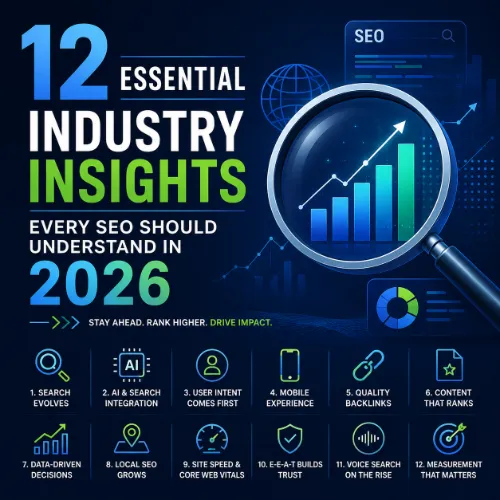
industry insights every SEO should understand Key Takeaways
Google’s Core Web Vitals — LCP, FID/INP, and CLS — measure loading performance, interactivity, and visual stability.
- Search intent now dictates content format — match the query’s goal, not just the keyword.
- Core Web Vitals and user experience signals are ranking factors, but they depend on solid technical foundations.
- Quality backlinks from relevant domains remain a top authority signal, though link profiles must look natural.
Why Industry Insights Every SEO Should Understand Are Non-Negotiable in 2026
The search landscape shifts constantly. Algorithm updates, new SERP features, and changing user behavior make it easy to fall behind if you rely on outdated tactics. Grasping the industry insights every SEO should understand helps you adapt proactively rather than reactively. These insights are grounded in data from tools like Ahrefs, Google Search Console, and real-world case studies — not speculation. When you internalize them, you can prioritize work that actually moves organic traffic and revenue. For a related guide, see SEO Experts Must Adapt Quickly to AI Driven Search Trends.
Insight 1: Search Intent Is the New Keyword Targeting
Gone are the days when exact-match keyword density drove rankings. Modern search engines interpret the intent behind a query: informational, navigational, commercial, or transactional. For example, someone searching “best running shoes for flat feet” wants comparisons and recommendations, not a product page to buy immediately. If you serve the wrong content type, you lose visibility. For a related guide, see Topical Authority Outperforms Keyword Stuffing in Modern SEO.
How to Apply This Insight
Analyze the top-ranking pages for your target keywords. Look at the SERP features present — if you see Featured Snippets and “People Also Ask” boxes, the intent is likely informational. Create content that answers the question thoroughly before suggesting a purchase.
Insight 2: Core Web Vitals Are Table Stakes, Not Differentiators
Google’s Core Web Vitals — LCP, FID/INP, and CLS — measure loading performance, interactivity, and visual stability. While they are ranking signals, meeting the thresholds alone won’t skyrocket your rankings. However, ignoring them can hold you back, especially on mobile. A slow site frustrates users and increases bounce rates, which indirectly hurts SEO.
Practical Steps
Run regular audits using tools like PageSpeed Insights or Lighthouse. Prioritize fixing Largest Contentful Paint issues (e.g., oversized images, slow server response) and eliminating layout shifts caused by ads or dynamic content.
Insight 3: Content Depth Beats Word Count
The old rule “write 2000+ words to rank” is incomplete. What matters is comprehensiveness — covering a topic in enough detail to satisfy the searcher’s journey. A 600-word article that answers every sub-question and links to relevant resources can outrank a 3000-word fluff piece.
Example
For a query like “how to start a podcast,” include a step-by-step checklist, equipment recommendations, hosting platform comparisons, and promotion tips. Use internal links to deeper guides on each subtopic.
Insight 4: E-E-A-T Is More Than a Buzzword
Experience, Expertise, Authoritativeness, and Trustworthiness are part of Google’s quality rater guidelines. While not direct ranking factors, they influence how algorithms assess content, especially for YMYL (Your Money or Your Life) topics like health, finance, and legal advice.
Actionable Takeaway
Add author bios with credentials, cite reputable sources, include real customer reviews, and update content regularly. A site with clear ownership and expertise signals will perform better long-term.
Insight 5: Backlink Quality Is About Relevance, Not Just Authority
A link from a high-DR site about pet food won’t help your SaaS blog as much as a link from a mid-sized tech publication with relevant traffic. Search engines evaluate topical alignment between linking and linked pages.
How to Audit Your Backlink Profile
Use Ahrefs or similar tools to review referring domains. Filter by the linking page’s topic. Prioritize outreach to sites that cover complementary subjects — for example, a marketing blog linking to your SEO guide.
Insight 6: SERP Features Are Opportunities, Not Obstacles
Featured Snippets, AI Overviews, People Also Ask, video carousels, and local packs dominate many queries. Instead of fearing them, structure your content to win these placements. For instance, use clear
/ headings and concise definitions to capture Featured Snippets.
Optimization Tip
Optimization Tip
Identify which SERP features appear for your target keywords. If a video result ranks, consider creating a short explainer video. If a local pack shows up, optimize your Google Business Profile.
Insight 7: Technical SEO Foundations Must Be Monitored Continuously
Crawl errors, broken links, duplicate content, and slow pages can silently drain your traffic. A one-time technical audit isn’t enough. Websites change — plugins update, content gets moved, and new pages are added without redirects.
Set Up Automated Monitoring
Use Google Search Console alerts and tools like Ahrefs Site Audit to schedule weekly scans. Fix critical issues immediately: 404 errors, redirect chains, and orphan pages. This ensures search engines can efficiently crawl and index your site.
Insight 8: Internal Linking Distributes Authority and Improves User Navigation
Internal links help search engines understand site structure and pass link equity to deeper pages. They also keep users engaged by guiding them to related content. A page with zero internal links is often an orphan page that rarely ranks.
Linking Strategy
Link from high-traffic pages to important but underperforming pieces. Use descriptive anchor text that includes target keywords naturally. Aim for 3-5 internal links per article.
Insight 9: Mobile Experience Is the Baseline, Not an Afterthought
Google uses mobile-first indexing, meaning the mobile version of your site determines rankings. If your desktop site loads fast but mobile is clunky, you’ll suffer. Test on real devices, not just browser emulators.
Common Mobile Issues
Small font sizes, touch elements too close together, slow image loading, and intrusive interstitials. Fix these to improve user experience and rankings.
Insight 10: Structured Data Is the Shortcut to Rich Results
Schema markup helps search engines understand your content deeply. It can enable rich snippets like ratings, FAQs, how-to steps, and product prices. This doesn’t guarantee a rich result, but it increases your chances.
Implementation Advice
Start with basic types like Article, FAQPage, and Product for relevant pages. Validate your markup using Google’s Rich Results Test. Keep it up-to-date as schema.org evolves.
Insight 11: Competitor Analysis Reveals Gaps and Opportunities
You don’t operate in a vacuum. Studying competitors shows which keywords they rank for that you don’t, their top backlink sources, and content formats that work in your niche. This turns guesswork into a strategic plan.
Using Ahrefs for Competitor Research
Enter a competitor domain into Site Explorer. Go to the Organic Keywords report, then use the “Content Gap” tool to find keywords they rank for but you don’t. Prioritize those with high traffic potential and low difficulty.
Insight 12: Data-Driven Decision-Making Separates Good SEOs from Great Ones
Intuition can mislead you. Track metrics like organic traffic, conversion rate, bounce rate, and keyword position changes. Use Google Search Console, Google Analytics, and tool-specific reports to validate hypotheses. If a tactic isn’t moving the needle, pivot quickly.
Building a Data Habit
Set a weekly review cadence. Look at trends over 30/60/90 days. Correlate algorithm updates with traffic shifts. Document wins and losses — they become your personal playbook.
SEO Entities and Their Functions
Understanding key entities helps you analyze data more effectively. Here are the most relevant ones for the industry insights every SEO should understand:
- Root Domain: The entire site. Metrics here reveal overall authority and health. For example, DR and total organic traffic.
- Organic Keywords: Queries driving traffic. Track top 100 to spot opportunities. High keyword difficulty (KD) means more work to rank.
- Referring Domains: Sites linking to you. More unique domains usually mean stronger backlink profile. Focus on relevant niches.
- Top Pages: URLs earning the most traffic. Study their content structure for patterns you can replicate.
- SERP Features: Featured Snippets, People Also Ask, AI Overviews. Optimize your content format to capture these.
- Technical SEO entities: Crawl errors, redirect chains, duplicate content. Regular audits prevent long-term ranking damage.
- Competitor entities: Domains competing for your keywords. Content gap and link intersect tools reveal where to invest.
Useful Resources
For deeper dives into specific topics, consult these authoritative guides:
- Google’s Guide to Helpful Content — Official guidelines on creating people-first content that ranks well.
- Ahrefs Blog on SEO Strategy — Data-backed articles covering keyword research, backlinks, and technical SEO best practices.
Mastering these industry insights every SEO should understand transforms your approach from reactive to strategic. Each insight is a tool you can apply today to improve rankings, traffic, and user satisfaction. Stay curious, keep testing, and let data guide your decisions.
Frequently Asked Questions About industry insights every SEO should understand
What are the most important SEO industry insights for?
The most important insights include search intent optimization, Core Web Vitals as a baseline, content depth over word count, E-E-A-T signals, and backlink relevance. These shape modern strategies.
How do I stay updated with SEO industry changes?
Follow official Google channels (Search Central blog, YouTube), read trusted SEO blogs like Ahrefs and Moz, join industry communities, and attend conferences like MozCon or BrightonSEO.
Why is search intent more important than keywords now?
Search engines use intent to deliver the most relevant result format. Matching intent improves click-through rates and rankings more than exact-match keywords alone.
How do Core Web Vitals affect SEO?
Core Web Vitals are ranking signals that measure page experience. Poor scores can hurt rankings, especially on mobile, but are one of many factors in Google’s algorithm.
Does content length still matter for SEO?
Depth matters more than length. Cover the topic comprehensively — answer related sub-questions, provide examples, and link to resources. A thorough 800-word article can outrank a thin 3000-word post.
What is E-E-A-T and how do I improve it?
Experience, Expertise, Authoritativeness, Trustworthiness. Add author credentials, cite reliable sources, get genuine reviews, keep content fresh, and display site ownership clearly.
Are backlinks still crucial for SEO in 2026?
Yes, backlinks remain a top authority signal. Focus on earning links from relevant, trusted sites rather than chasing high DR numbers alone.
How do I optimize for Featured Snippets?
Use clear headings, provide concise definitions (40–60 words), include bullet lists or numbered steps, and answer the question directly in the first paragraph under the heading.
What technical SEO issues should I fix first?
Prioritize crawl errors (404s, redirect chains), duplicate content, slow page speed, mobile usability problems, and proper use of canonical tags.
How many internal links should a page have?
Aim for 3–5 relevant internal links per article. Link to cornerstone pages and new content naturally within the body, using descriptive anchor text.
Why is mobile-first indexing important?
Google uses the mobile version of your site for indexing and ranking. If mobile experience is poor, rankings will suffer even if the desktop version is excellent.
Do I need structured data on every page?
Not every page, but prioritize pages where rich results are possible: articles, products, recipes, FAQs, how-to guides, and local businesses. Validate markup with Google’s Rich Results Test.
How do I analyze competitors for SEO?
Use tools like Ahrefs or SEMrush to identify competitors’ top keywords, backlink sources, and content gaps. Focus on keywords you can realistically target with better content.
What metrics should I track weekly?
Track organic traffic, keyword position changes (especially for money pages), bounce rate, conversion rate, backlink growth, and Core Web Vitals scores.
How do I know if my SEO strategy is working?
Set specific KPIs (e.g., increase organic traffic by 20% in 6 months, rank top 5 for 10 target keywords). Use dashboards to compare month-over-month and year-over-year data.
What is a content gap analysis?
It identifies keywords that competitors rank for but your site doesn’t. Use Ahrefs Content Gap tool to compare multiple competitors and find opportunities to create superior content.
How often should I update old blog posts?
Review content every 6-12 months. Update statistics, add new examples, improve readability, and add internal links to newer relevant posts. This signals freshness to search engines.
Does AI-generated content hurt SEO?
Not inherently, if you produce helpful, original, and well-researched content. Google penalizes low-quality, mass-produced AI content. Always fact-check and add unique perspective.
What are the biggest SEO mistakes beginners make?
Keyword stuffing, ignoring mobile experience, buying cheap backlinks, neglecting technical audits, and creating thin content that doesn’t satisfy user intent.
How long does it take to see SEO results?
Typically 4-6 months for new sites or major changes, but could be longer for highly competitive niches. Consistently publishing quality content and earning backlinks speeds up the process.