Automating Internal Linking Strategy Using Vibe Coding Key Takeaways
Automating internal linking strategy using vibe coding combines AI-driven prompts, natural language algorithms, and developer-coded workflows to dynamically connect related pages across a website.
- Automating internal linking strategy using vibe coding enables real-time link suggestions and implementation across large websites, improving crawlability and indexation.
- Developers use prompts and AI coding tools to map content clusters, generate contextual anchor text, and avoid common automation pitfalls like over-optimization.
- Human oversight remains critical for search intent alignment and editorial quality, ensuring automated links add genuine user value.
What Automating Internal Linking Strategy Using Vibe Coding Actually Means
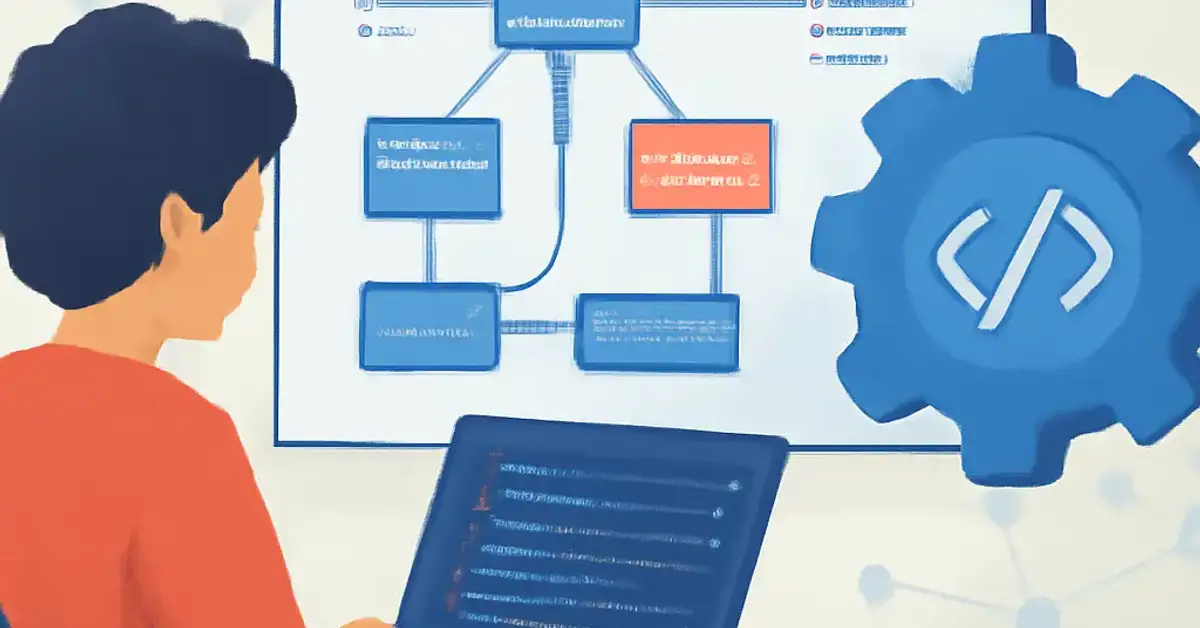
Automating internal linking strategy using vibe coding refers to a hybrid approach where developers and SEO professionals use AI-assisted code generation—often through natural language prompts—to build scripts, plugins, or systems that analyze a website’s content and automatically create or suggest internal links. The term “vibe coding” captures the iterative, conversational nature of working with AI coding tools like GitHub Copilot, Cursor, or Claude to produce functional SEO automation scripts without writing every line from scratch. For a related guide, see Build SEO Automation Tools Using Vibe Coding Workflows (Proven).
Instead of manually reviewing hundreds of pages for link opportunities, you prompt an AI to identify pages that share semantic themes, then generate code that inserts links with optimized anchor text. This methodology is especially powerful for sites with thousands of pages, such as ecommerce stores, content publishers, and SaaS knowledge bases, where internal linking automation becomes a bottleneck for technical SEO automation.
Core Components of a Vibe-Coded Internal Linking System
A typical automated SEO workflow built with vibe coding includes three layers: content analysis, link discovery, and implementation. The analysis layer uses AI to extract topics, entities, and keywords from each page. The discovery layer matches pages based on content relationship mapping, often using TF-IDF or semantic similarity scores. The implementation layer generates the HTML for each link and updates the CMS database or sitemap.
Developers can also integrate website crawlability optimization checks into the same pipeline, ensuring that automated links point to indexable pages with proper canonical tags and no conflicting redirects.
The Role of AI Internal Linking in Modern Search Engine Indexing
AI internal linking directly influences how search engines discover and rank content. Google’s crawlers follow internal links to find new pages, distribute PageRank, and understand topical relevance. When you automate this process using vibe coding, you create a system that continuously adapts to new content, ensuring that every page receives appropriate link equity and contextual signals.
For example, an ecommerce site launching a new product category can automatically link related product pages, blog posts, and buying guides using pre-defined prompt instructions. This accelerates search engine indexing of the new pages and reinforces website architecture SEO by maintaining a logical, hierarchical link structure.
How Prompts Influence Internal Linking Automation Quality
The quality of your internal linking automation depends heavily on the prompts you write. A well-crafted prompt might instruct the AI: “Find all pages about ‘content marketing’ and create internal links to the pillar page ‘What Is Content Marketing’ with anchor text variations including ‘content marketing strategy’ and ‘content marketing benefits.'” Without clear, specific guidance, the AI may generate links with thin anchor text or connect unrelated pages, hurting both user experience and SEO performance.
Developers often iterate on prompts, testing outputs across a subset of pages before rolling out automation site-wide. This ensures that anchor text optimization aligns with user search intent and avoids keyword stuffing.
Comparing Manual Internal Linking vs. AI-Driven Automation
| Factor | Manual Internal Linking | AI-Driven Automation with Vibe Coding |
|---|---|---|
| Efficiency | Hours per week for audits; limited to small sites | Minutes to process thousands of pages; continuous scanning |
| Consistency | Prone to human oversight and inconsistent anchor text | Uniform link quality, but requires prompt discipline |
| Scalability | Breaks down beyond a few hundred pages | Handles millions of pages with parallel processing |
| Search Intent Alignment | High when done by experienced SEOs | Moderate; requires human review and prompt tuning |
| Cost | High labor cost for ongoing maintenance | Low ongoing cost after initial system build |
The comparison reveals that scalable SEO automation heavily favors vibe coding for large websites, but manual oversight remains essential for quality assurance. The best approach is hybrid: leverage AI for bulk discovery and implementation, then have an editor review high-impact pages manually. For a related guide, see Vibe Coding for Large Scale Website Optimization and Crawling Systems.
Building a Vibe Coding Workflow for Content Clustering SEO
Content clustering SEO organizes pages into topic groups, with a central pillar page linking to supporting articles. Vibe coding can automate this by analyzing the semantic similarity of existing content and suggesting cluster groupings. You can then prompt the AI to generate internal links that reinforce those clusters, such as linking each supporting article to the pillar page with topical authority strategy anchors.
Step 1: Map Your Content Inventory
Export all URLs and metadata from your CMS. Use a Python script (generated via vibe coding) to calculate content relationship mapping scores between every pair of pages. The AI can identify pages with overlapping entities, keywords, or categories, forming the basis for clusters.
Step 2: Generate Contextual Anchor Text
With clusters identified, prompt an AI model to generate anchor text candidates for each link pair. Ensure the anchors are descriptive, varied, and include the target page’s primary keyword naturally. This step directly contributes to anchor text optimization and prevents over-optimization penalties.
Step 3: Automate Link Insertion
Write a vibe-coded script that inserts the generated links into the appropriate pages. The script should respect existing link density, avoid linking to the same page twice within a single article, and exclude navigational or boilerplate content. Test on a staging environment before deploying to production.
Common Mistakes in Automated Internal Link Management
Even with advanced AI SEO systems, automated linking can backfire. One frequent error is creating too many internal links per page, which dilutes link equity and overwhelms users. Another mistake is using exact-match anchor text repeatedly, which appears spammy to search engines. Vibe coding systems can include guardrails—such as capping link count per paragraph or requiring at least 30% anchor text variation—to avoid these pitfalls.
Additionally, automated scripts sometimes link to orphan pages that lack other internal references, inadvertently creating isolated link paths. Regular audits using internal link management tools can catch these issues and prompt corrections.
Why Human Oversight Still Matters in Automated SEO Workflows
No matter how sophisticated the AI, automated SEO workflows require human judgment for search intent alignment. An AI might correctly identify two pages about “JavaScript loops” and generate a link with the anchor “learn JavaScript loops,” but if the user’s search intent is a tutorial for beginners versus a reference for advanced developers, the link could mislead the reader. Humans must review automated links on high-traffic and conversion-focused pages to ensure the context matches the intent.
Furthermore, vibe coding SEO still depends on developers to write accurate prompts, debug scripts, and update the system when site architecture changes. Treat vibe coding as a productivity accelerator, not a replacement for strategic thinking.
Measuring the Impact on Website Crawlability Optimization
After implementing automating internal linking strategy using vibe coding, track changes in crawl efficiency through Google Search Console. Metrics like crawl requests per day, indexation rate, and average time to index new pages reveal whether your automated links are helping search engines discover content faster. A well-executed system often reduces the time to index new pages by 30–50% within the first month.
Also monitor internal linking automation errors, such as 404 links or links to pages behind login walls. Include automated checks in your vibe coding pipeline to validate that every generated link resolves to a live, indexable URL.
Useful Resources
For deeper technical implementation patterns, refer to the Google SEO Documentation on Linking, which outlines best practices for both internal and external links. Developers can also study Ahrefs’ Guide to Internal Links, which provides actionable data on how internal links influence rankings and crawl budget.
Frequently Asked Questions About Automating Internal Linking Strategy Using Vibe Coding
How can vibe coding automate internal linking strategy?
Vibe coding uses AI coding tools with natural language prompts to build scripts that analyze your site, identify related pages, and generate or insert internal links automatically. You can prompt the AI to follow specific rules for anchor text, link density, and topic clustering, creating a repeatable automation pipeline.
What is automated internal linking in SEO?
Automated internal linking in SEO refers to using software, scripts, or AI systems to create internal links between pages without manual curation. This approach scales link building across large websites, improves crawlability, and ensures consistent anchor text optimization.
Can AI create internal links across large websites?
Yes, AI can create internal links across large websites by analyzing semantic relationships, keyword overlaps, and entity co-occurrence. Combined with vibe coding, you can automate link insertion for millions of pages while controlling quality through prompt parameters.
How do developers build internal linking systems with vibe coding?
Developers start by writing prompts that define link criteria, such as topic similarity or content pillar relationships. They then use AI coding assistants to generate Python or PHP scripts that interact with the CMS API or database, inserting links programmatically. Testing and iteration ensure accuracy.
What are the benefits of automating internal links?
Automating internal links saves time, reduces human error, scales to thousands of pages, improves crawl efficiency, and helps maintain consistent topical authority signals. It also frees SEO professionals to focus on strategy and content quality rather than mechanical linking tasks.
How does internal linking improve search rankings?
Internal links help search engines discover pages, distribute PageRank, and understand the relationship between topics. Well-structured internal linking can increase the indexing rate of new content and improve rankings for target keywords by signaling relevance and authority.
Can AI identify relevant pages for internal links?
Yes, AI can identify relevant pages for internal links by analyzing content similarity, shared entities, and user navigation patterns. Vibe coding allows you to define similarity thresholds and exclude low-quality or duplicate content from link candidates.
How do prompts influence internal linking automation ?
Prompts act as the instruction manual for the AI. A specific prompt produces accurate, context-aware links, while a vague prompt may generate irrelevant or spammy links. Developers iterate on prompts to balance link volume, anchor diversity, and topical relevance.
What tools support AI driven internal linking workflows?
Tools like GitHub Copilot, Cursor, Claude, and ChatGPT can generate vibe coding scripts. For execution, you need a CMS like WordPress, or a custom framework. SEO platforms like Ahrefs and Screaming Frog can provide input data for analysis.
How can websites scale internal linking using automation?
Websites scale internal linking by building automated pipelines that process new content as it is published. Vibe coding scripts can run on a schedule, re-analyzing the site daily or weekly to discover new linking opportunities as the content library grows.
What are common mistakes in automated internal linking?
Common mistakes include creating too many links per page, using repetitive anchor text, linking to unrelated pages, generating broken links, and failing to update links when pages are moved or deleted. These issues can harm user experience and dilute SEO value.
How does internal linking affect crawlability and indexing?
Internal links create pathways for search engine crawlers to discover and revisit pages. Without sufficient internal links, pages can remain orphaned and never get indexed. Automated linking ensures every important page receives at least one crawl path.
Can vibe coding optimize anchor text selection?
Yes, vibe coding can optimize anchor text selection by generating variations from a prompt that includes primary keywords, LSI terms, and brand names. You can also program rules to avoid exact-match repetition and maintain a natural anchor text profile.
What role does internal linking play in topical authority?
Internal linking connects related content into topic clusters, signaling to search engines that your site is an expert resource on a subject. Automated systems using content clustering SEO can strengthen these connections systematically.
How do search engines evaluate AI generated internal link structures?
Search engines evaluate AI generated internal link structures the same way they evaluate manual links: by assessing relevance, user value, and naturalness. If the automated links appear contextual and helpful, they are treated positively. If they appear spammy, they may be discounted.
Is vibe coding suitable for small websites?
Vibe coding can benefit small websites if the owner has basic development skills. For sites under 200 pages, manual linking may be faster, but setting up an automated system prepares the site for future growth and ensures consistent internal link management.
Does automate d internal linking work with all CMS platforms?
Automated internal linking works with any CMS that provides an API or database access. Popular platforms like WordPress, Shopify, and custom PHP frameworks are well-supported. Headless CMS setups may require additional middleware for link injection.
How do I test automated internal links before going live?
Always test automated internal links in a staging environment. Run scripts on a subset of pages, verify that all links resolve correctly, check anchor text distribution, and review a random sample for contextual relevance. Only after passing these checks should you deploy site-wide.
Can vibe coding integrate with existing SEO tools?
Yes, vibe coding can integrate with SEO tools via APIs. For example, you can pull crawl data from Screaming Frog, export internal link reports from Ahrefs, and feed that data into your vibe coding script to refine link recommendations.
What programming languages are best for vibe coding internal linking scripts?
Python is the most popular choice due to its rich library ecosystem for data analysis and web scraping. PHP is also common for WordPress-specific automation. The programming language matters less than the quality of your AI prompts and testing workflow.