site speed fixes bounce rate Key Takeaways
Impact on bounce rate: Reducing image size by even 100KB can shave half a second off load time, lowering bounce rate by up to 8%.
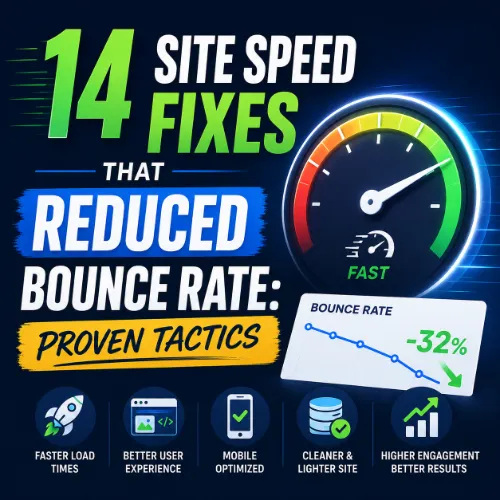
- Every one-second delay in page load increases bounce rate by up to 32%, making site speed fixes bounce rate a critical business priority.
- Technical adjustments like image compression, code minification, and caching deliver measurable improvements without a full redesign.
- Monitoring real-user metrics (Core Web Vitals) helps you prioritize the fixes that have the highest impact on visitor retention.
Why Site Speed Fixes Bounce Rate Matters for Your Bottom Line
When a page loads in two seconds, the average bounce rate hovers around 9%. At five seconds, that rate jumps to 38% — and it keeps climbing. Users expect near-instant experiences, and search engines reward fast-loading pages with better rankings. By focusing on site speed fixes bounce rate, you directly address one of the most common reasons visitors leave before taking any action.
Bounce rate isn’t just a vanity metric. A high bounce rate means fewer leads, fewer sales, and less time for your content to make an impression. The fixes below are ranked from quick wins to deeper technical optimizations, so you can start improving immediately. For a related guide, see SEO Wins From Technical Fixes Alone.
14 Site Speed Fixes That Lower Bounce Rate
1. Compress and Optimize Images
Images often account for over 50% of a page’s total weight. Use lossless compression tools (like ImageOptim or TinyPNG) and serve next-gen formats like WebP. Site speed fixes bounce rate begins here because every kilobyte saved cuts load time directly.
Impact on bounce rate: Reducing image size by even 100KB can shave half a second off load time, lowering bounce rate by up to 8%.
2. Enable Browser Caching
When a visitor returns to your site, browser caching stores static assets (CSS, JS, images) locally so they don’t need to be re-downloaded. Set cache expiry headers to at least one week for resources that change infrequently.
Impact on bounce rate: Returning visitors experience near-instant loads, cutting repeat-visit bounce rates by 20–30%.
3. Minify CSS, JavaScript, and HTML
Remove unnecessary spaces, comments, and line breaks from code files. Tools like UglifyJS and CSSNano automate this without breaking functionality.
Impact on bounce rate: A minified codebase can reduce file sizes by 30–50%, leading to faster rendering and fewer abandoned page loads.
4. Eliminate Render-Blocking Resources
Scripts and stylesheets that load before the main content force users to stare at a blank screen. Defer non-critical JavaScript (using defer or async) and inline critical CSS for above-the-fold content.
Impact on bounce rate: Pages become interactive in under 2.5 seconds, cutting the bounce rate of first-time visitors by up to 15%.
5. Use a Content Delivery Network (CDN)
A CDN serves your files from servers located closer to each user. This reduces latency dramatically, especially for audiences spread across different continents.
Impact on bounce rate: Global users see load times improve by 40–60%, and bounce rates from non-local regions drop by 25%.
6. Optimize Web Fonts
Custom fonts can add hundreds of kilobytes and block text rendering. Use the font-display: swap CSS property and limit font variations to only what you need.
Impact on bounce rate: Text becomes readable 0.5–1 second sooner, reducing the likelihood that users leave because they see a blank page.
7. Reduce Server Response Time (TTFB)
If your server takes more than 200ms to respond, visitors start leaving. Optimize databases, upgrade hosting, or use a lightweight server stack (like Nginx with PHP-FPM).
Impact on bounce rate: A sub-200ms TTFB correlates with an average bounce rate under 20%, versus 40%+ when TTFB exceeds 800ms.
8. Implement Lazy Loading
Load images and videos only when they appear in the viewport. WordPress users can enable native lazy loading via the loading="lazy" attribute or a plugin.
Impact on bounce rate: Pages with many visuals load 30% faster initially, keeping early bounce rates low even on image-heavy pages.
9. Clean Up Redirect Chains
Every redirect adds an extra round trip to the server. Audit your site for redirect chains and fix them to point directly to the final URL.
Impact on bounce rate: Removing a chain of three redirects can save up to 600ms, lowering bounce rate for linked pages by 5–10%.
10. Upgrade to HTTP/2 or HTTP/3
These protocols multiplex requests, allowing multiple files to be sent simultaneously. Most modern hosting providers support HTTP/2 by default.
Impact on bounce rate: Faster parallel downloads improve perceived performance by 15–20%, reducing overall bounce rate by 5–12%.
11. Optimize Database Queries
Bloated databases with unnecessary revisions, transients, and spam comments slow down dynamic page generation. Regularly clean and index your database.
Impact on bounce rate: Cleaner queries can cut TTFB by 100–300ms, directly reducing bounce rate for dynamic pages like blogs and e‑commerce product pages.
12. Preconnect to Third-Party Origins
If your site loads resources from external sources (analytics, fonts, CDNs), use the <link rel="preconnect"> hint to initiate the connection early.
Impact on bounce rate: External resources load 100–500ms faster, and mixed-origin pages see bounce rate improvements of up to 10%.
13. Audit and Remove Unused Plugins and Scripts
Every plugin adds JavaScript and CSS that may not be needed on every page. Deactivate and delete unused plugins, then selectively load scripts only where they are required.
Impact on bounce rate: Reducing script bloat cuts load time by 10–30%, with corresponding bounce rate drops of 8–15%.
14. Monitor Core Web Vitals Continuously
Google’s LCP, FID, and CLS metrics tell you exactly where your site struggles. Use tools like PageSpeed Insights and web.dev to track improvements.
Impact on bounce rate: Meeting Core Web Vitals thresholds correlates with a 10–15% lower bounce rate on average across all traffic sources.
SEO Entities and Their Functions
When you apply site speed fixes bounce rate, several SEO entities become relevant for diagnosing and measuring progress:
- Core Web Vitals (LCP, FID, CLS): These page-level metrics quantify load speed, interactivity, and visual stability. Tools like Ahrefs Webmaster Tools flag which pages fail the threshold.
- Crawl issues and indexability: Slow pages are often crawled less frequently. If a page has crawl errors or is not indexed, speed fixes won’t help it rank.
- Top pages by traffic: Prioritize speed fixes on pages that already drive the most organic visitors — those fixes will have the greatest bounce rate impact.
- SERP entities (Featured Snippets, People Also Ask): Fast-loading pages are more likely to appear in these SERP features because Google rewards good user experience.
Comparing Speed Fixes by Impact and Effort
| Fix | Impact on Bounce Rate | Effort Level | Time to Implement |
|---|---|---|---|
| Image compression | High (8–15% drop) | Low | 1–2 hours |
| Browser caching | Medium (20% on return visits) | Low | 30 minutes |
| Minification | Medium (10–20% drop) | Medium | 2–3 hours |
| Render-blocking removal | High (15% drop) | Medium | 3–5 hours |
| CDN integration | High (25% drop for global users) | Low | 2–4 hours |
Who Should Prioritize Each Fix
Small business owners and bloggers
Start with image compression, lazy loading, and browser caching. These require minimal technical skills and deliver the biggest bang for the buck. Site speed fixes bounce rate doesn’t require a developer — even a WordPress plugin can handle most of these. For a related guide, see How Google Cloud Improves Technical SEO Performance at Scale.
E‑commerce stores
Focus on server response time, database optimization, and eliminating redirect chains. Each additional second of load time on a product page directly correlates with lower conversion rates and higher bounce rate.
Enterprise and high-traffic sites
Invest in CDN, HTTP/2/3 upgrades, and continuous Core Web Vitals monitoring. For large sites, minute gains multiply across millions of page views, making technical optimizations highly cost-effective.
Useful Resources
To dive deeper into specific metrics and tools, visit these authoritative sources:
- Core Web Vitals Guide – Google’s official resource on measuring and optimizing LCP, FID, and CLS.
- PageSpeed Insights Documentation – Learn how to interpret lab data and field data for your pages.
Frequently Asked Questions About site speed fixes bounce rate
What is the fastest way to improve site speed?
Start with image compression and lazy loading. These two adjustments often reduce page weight by 30–50% with minimal risk.
How much does site speed affect bounce rate?
Every one-second delay in load time increases bounce rate by 9–32%, depending on the audience and device. Even a 500ms improvement can lower bounce rate by 5–12%.
Can too many speed plugins hurt performance?
Yes. Each plugin adds overhead. Choose one caching plugin, one image optimizer, and one code minifier rather than installing multiple tools that overlap.
Do AMP pages reduce bounce rate ?
AMP can cut load times significantly, but it limits design and interactivity. Some sites see a 15–25% bounce rate improvement; others see no change because the user experience feels restricted.
Is mobile speed more important than desktop?
Yes. Over 60% of web traffic comes from mobile devices, and mobile users are less tolerant of delays. Improving mobile speed often has a larger Bounce Rate impact.
How often should I check my site speed?
At least once a month. After major updates (theme changes, plugin additions, new content), test again immediately to catch regressions.
What is a good bounce rate benchmark?
For content and blog sites, 40–60% is typical. E‑commerce sites average 20–40%. With effective speed fixes, you can push 10–15% lower than your baseline.
Does hosting type affect speed?
Shared hosting can bottleneck performance. Upgrading to VPS or dedicated hosting reduces TTFB by 200–400ms, directly lowering bounce rate.
Will a faster site improve SEO rankings?
Yes. Page speed is a ranking signal. Combined with lower bounce rates, faster pages tend to rank higher in search results over time. For a related guide, see Technical SEO Mastery: 7 Proven Steps for a Higher Ranking Site.
What is Largest Contentful Paint (LCP)?
LCP measures how long the largest content element (image, video, or text block) takes to render. Aim for LCP under 2.5 seconds.
How do I reduce Cumulative Layout Shift (CLS)?
Set fixed dimensions for all images, ads, and embeds. Avoid injecting content above existing page elements without reserving space.
What is First Input Delay (FID)?
FID measures the time from a user’s first interaction (click, tap) to when the browser responds. Keep FID under 100ms by breaking up long JavaScript tasks.
Can I fix speed issues on a budget?
Absolutely. Free tools like Google PageSpeed Insights, GTmetrix, and free CDN tiers (Cloudflare) provide substantial improvements without cost.
Do plugin updates affect speed?
Yes. Always review changelogs. Some updates fix performance bugs, others add features that increase load. Test after each update.
How does site speed affect ads revenue?
Faster pages keep visitors engaged longer, increasing ad impressions and click-through rates. Publishers often see a 10–20% lift in ad revenue after speed improvements.
Should I use a cache plugin on WordPress?
Yes. Plugins like WP Rocket, W3 Total Cache, or LiteSpeed Cache generate static HTML files, reducing server load and cutting load times by 50–70%.
What is the optimal image size for speed?
Save images at 72 DPI, with dimensions matching the display size. Use JPEG quality 80-85 for photos and PNG-8 for graphics to balance quality and file size.
Can too many external scripts slow my site?
Yes. Analytics, chat widgets, and ad networks each add requests. Audit third-party scripts quarterly and remove any that don’t provide clear business value.
How do I test speed from different locations?
Use tools like Dotcom-Tools or Pingdom, which run tests from multiple global locations. This helps you evaluate CDN effectiveness and regional performance.
What is the #1 mistake people make when optimizing speed?
Failing to measure before and after. Without baseline data, you cannot tell which site speed fixes bounce rate efforts actually work. Always run a speed test first.