

broken link building strategies Key Takeaways
Broken link building remains one of the most reliable ways to earn high-quality backlinks in 2025.
- Focus on authoritative broken link building strategies that prioritize relevance over volume for lasting SEO gains.
- Use tools like Ahrefs or Check My Links to find broken backlinks pointing to your site or competitors.
- Always offer a direct, high-value replacement page to maximize your conversion rate during outreach.
Understanding Broken Link Building Strategies in 2025
Broken link building strategies have evolved, but the core principle remains the same: find a broken link on a relevant site, create or suggest a suitable replacement, and earn a backlink. This technique works because it provides immediate value to the site owner, who avoids a poor user experience and potential SEO penalties from dead links. For a related guide, see Advanced Link Building Strategies: 8 Powerful Ways to Rank Higher.
To succeed, you need a systematic approach. Start by identifying high-authority pages in your niche. Look for resource lists, roundups, and educational guides that naturally link out. Use broken link building techniques that work such as checking for 404 errors on older posts or leveraging expired domains.
Remember, the goal is not just any link—but a link from a site that shares your audience. When you suggest a replacement, ensure it’s genuinely better than the original. This builds trust and increases the likelihood of a successful link placement.
Why Effective Broken Link Building Methods Still Matter
Search engines reward links that come from contextually relevant, authoritative sources. Effective broken link building methods help you acquire these links without spamming or paying for them. With Google’s continued emphasis on E-E-A-T, earning links from sites with high topical authority gives your page a significant ranking boost.
Moreover, broken link building is a win-win. Webmasters appreciate having their dead links fixed, and you gain visibility. It also protects your own site from losing link equity due to broken outbound links. In an era where content quality and user experience matter more than ever, this strategy aligns perfectly with best practices.
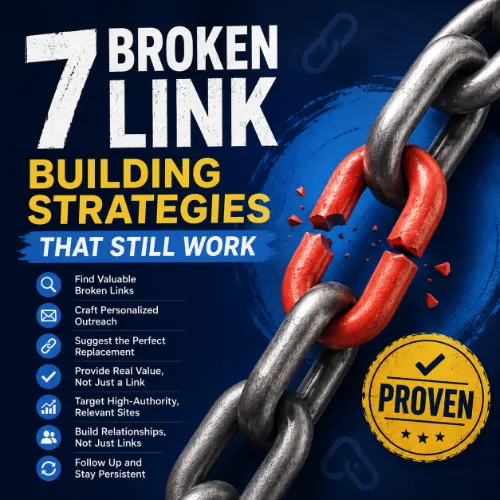
7 Proven Broken Link Building Strategies
1. Find Broken Backlinks Pointing to Your Own Site
Start by auditing your existing backlink profile for links that now lead to 404 pages. Use Ahrefs or a similar tool to filter for broken backlinks. When you find one, create or redirect a relevant page on your site that matches the original link’s intent.
For example, if a popular blog linked to an old guide that no longer exists, recreate that guide with updated information. Then, reach out to the linking site and politely inform them of the broken link while suggesting your new resource as a replacement. This often results in a quick win because the site owner already liked your content enough to link once.
2. Monitor Competitor Broken Backlinks
Identify competitors in your niche and run a backlink audit on their sites. Look for links that have gone dead. Tools like Ahrefs’ Broken Backlinks report can show you exactly which pages are losing link equity.
When you find a broken link pointing to a competitor, check if you have a better or equivalent page on your site. If you do, reach out to the linking site and propose your URL as a replacement. This technique is highly effective because the link is already contextually relevant, and the site owner is motivated to fix the error.
3. Find Broken Links on Resource Pages
Resource pages are goldmines for broken link building strategies. Search for terms like “helpful resources” or “best guides” plus your niche keyword. Use a browser extension like Check My Links to scan the page for 404 errors.
Once you identify broken links, reach out to the webmaster with a polite message. Explain that you noticed a few dead links on their resource page and offer your high-quality content as a replacement. Be specific about which links are broken and provide direct URLs to your suggested replacements.
4. Use the “Dead Link Reclamation” Technique
This involves scanning old blog posts or articles that have lost links over time. Use Ahrefs to find pages on your site that have lost referring domains. Then, check if those lost links are now pointing to dead pages elsewhere.
For instance, if a popular industry site linked to a now-defunct study, you can create a new, updated study on the same topic and reach out to them. This method requires a bit more effort but often yields high-authority links because you’re filling a void left by outdated or deleted content.
5. Leverage Broken Links in Guest Posts
When pitching guest posts to reputable blogs, review their existing content for broken links. If you find any, include a note in your pitch offering to fix them. This shows you’ve done your homework and are providing value beyond just the article.
Once your guest post is accepted, you can naturally suggest a link to your own relevant content as part of the fix. Over time, this builds rapport with editors and increases your chances of future link opportunities.
6. Target Expired Domains That Still Have Backlinks
Expired domains often still hold valuable backlinks. Use a tool like Ahrefs to find expired domains in your niche with strong referring domains. Check if those backlinks point to pages that now return 404 errors.
If you can register the expired domain and redirect it to a relevant page on your site, you may inherit those backlinks. Alternatively, if the domain is gone, you can reach out to the sites still linking to it and suggest your content as a replacement. This advanced tactic requires careful execution but can yield impressive results.
7. Create a “Broken Link Roundup” Post
Write a comprehensive article that lists and replaces broken links on major sites in your industry. For example, “Updated List of Top SEO Resources (Fixing 2023’s Dead Links).” Share this post with your network and mention the sites you helped fix.
Some site owners may reciprocate by linking to your roundup. This approach positions you as a helpful expert and can generate multiple backlinks from a single piece of content.
SEO Entities and Their Functions
Understanding the entities involved in broken link building helps you make data-driven decisions. Here are the key ones:
- Backlink entities: Referring domains, referring pages, anchor text, dofollow/nofollow links, and broken backlinks. These show link quality, authority, and outreach priorities.
- Page entities: Top pages, best by links, best by traffic, broken pages, and internal pages. These reveal which URLs earn visibility or need repair.
- Competitor entities: Competing domains, content gap opportunities, link intersect domains, shared keywords. Use these to find where rivals win links and where you can catch up.
- Metrics entities: DR (Domain Rating), UR (URL Rating), traffic value, referring domains count. These summarize authority and search visibility.
- Technical SEO entities: Crawl issues, redirect chains, canonicals, duplicate content, Core Web Vitals. These expose obstacles that prevent crawling or ranking.
Useful Resources
Learn more about using Ahrefs for link audits: Ahrefs Broken Link Checker Guide.
Understand how to find link building opportunities: Moz Beginner’s Guide to Link Building.
Conclusion
Broken link building is not a relic of the past—it’s a thriving tactic that adapts to modern SEO demands. By focusing on effective broken link building methods like reclaiming your own lost links, monitoring competitors, and targeting resource pages, you can build a robust backlink profile that drives organic traffic. Start small, track your progress, and refine your outreach to build lasting relationships. For a related guide, see 15 Backlink Building Methods That Actually Work Today.
Ready to put these broken link building strategies into action? Choose one tactic from this list and implement it this week. Your future rankings will thank you.
Frequently Asked Questions About broken link building strategies
What is broken link building?
Broken link building is an SEO technique where you find dead links on other websites, then suggest your own relevant content as a replacement to earn a backlink.
Why is broken link building effective in 2025?
It remains effective because it provides value to both the site owner (fixing an error) and the SEO (earning a high-quality link), aligning with Google’s focus on user experience.
Which tools do I need for broken link building?
Popular tools include Ahrefs, SEMrush, Check My Links browser extension, and Broken Link Checker by WPKlik. They help identify 404 errors on your site or others.
Can I use free tools for broken link building?
Yes, tools like Check My Links (Chrome extension) and Dead Link Checker offer free options, though they have limitations compared to paid tools like Ahrefs.
How do I find broken backlinks pointing to my site?
Use Ahrefs’ Backlink Checker or Google Search Console to see backlinks, then filter for pages that return 404 errors. This reveals which external links are broken.
Should I always offer a replacement link?
Yes, always suggest a high-quality, relevant replacement. This increases your success rate and shows professionalism, making webmasters more willing to link to you.
What should I include in my outreach email?
Be polite, specific about the broken link, explain why your content is a good fit, and include the direct URL to your suggested replacement.
How long does it take to see results from broken link building?
Results vary; you may get a response within days, but building a strong link profile can take weeks to months depending on your niche and outreach consistency.
Can broken link building harm my SEO?
No, if done ethically. Avoid spammy outreach or suggesting irrelevant content. Focus on quality and relevance to maintain a positive reputation.
What is the success rate of broken link building?
Typical success rates range from 10-30%, depending on the quality of your outreach, relevance of your replacement, and authority of the target site.
Do I need a blog for broken link building?
While a blog helps, you can use any high-quality content like guides, case studies, or tools. The key is having relevant resources that can replace dead links.
How do I find broken links on competitor sites?
Use Ahrefs’ Broken Backlinks report to see which links pointing to competitors are broken. Then, suggest your content as a replacement.
What’s the best way to scan a page for broken links?
Install the Check My Links browser extension, open a page, click the extension, and scan. It will highlight all broken links in red.
Can I use broken link building for local SEO?
Yes, find local business directories or resource pages with broken links and offer your local content as a replacement to earn citations and backlinks.
What if a site owner doesn’t respond?
Follow up once after a week. If still no reply, move on to other opportunities. Focus on high-probability targets to maximize your time.
Is broken link building good for new websites?
Yes, but start by creating a few high-quality resource pages first. Then target low-competition sites to build your link profile gradually.
How do I track my broken link building efforts?
Use a spreadsheet to log target URLs, outreach date, response status, and whether a link was placed. Tools like BuzzStream can help automate tracking.
Can broken link building work for e-commerce sites?
Yes, e-commerce sites can create helpful guides, product comparisons, or resource pages that replace dead links on review sites or blogs.
What should I avoid in broken link building outreach?
Avoid generic templates, excessive follow-ups, and suggesting low-quality content. Personalize each email to the site owner’s context.
How do I check if my replacement content is suitable?
Ensure your content matches the original link’s topic and depth. It should provide equal or greater value, and ideally be more up-to-date and comprehensive.







