

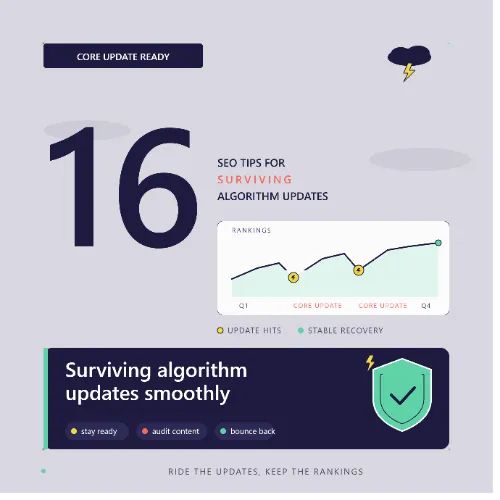
SEO tips for surviving algorithm updates Key Takeaways
Actionable takeaway: Use a free tool like Google PageSpeed Insights to identify specific fixes for both mobile and desktop.
- SEO tips for surviving algorithm updates center on timeless fundamentals like E-E-A-T, Core Web Vitals, and natural link profiles.
- Every update rewards sites that prioritize people over search-engine tricks. The safest strategy is to build authority, not hacks.
- Regular site audits and a content-refresh schedule turn uncertainty into a competitive edge.
9. Improve site speed
Users expect pages to load in under two seconds. Even a one-second delay can reduce conversions by 7%. Compress images, leverage browser caching, and minify CSS and JavaScript.
Actionable takeaway: Use a free tool like Google PageSpeed Insights to identify specific fixes for both mobile and desktop. For a related guide, see Google Updates Are Destroying Weak SEO Strategies in 2026.
10. Optimize for mobile-first indexing
Google predominantly uses the mobile version of your site for indexing and ranking. Ensure your mobile design is responsive, buttons are tappable, and text is readable without zooming. For a related guide, see 11 Proven SEO Tricks to Boost Organic CTR (Expert Guide).
Actionable takeaway: Test your site with Google’s Mobile-Friendly Test and fix any issues related to viewport or tap targets.
11. Reduce bounce rate with clear navigation
A high bounce rate may indicate that users don’t find what they expected. Use descriptive headings, logical internal links, and a clear table of contents for long articles.
Actionable takeaway: Review Google Analytics behavior flow and simplify any navigation paths that show drop-offs.
12. Use structured data for rich results
Schema markup helps search engines understand your content and can earn you rich snippets, FAQ carousels, or review stars—all of which improve click-through rates.
Actionable takeaway: Implement FAQ schema on your most popular Q and A pages using the JSON-LD format.
Link building SEO tips for stability
13. Audit your backlink profile
Low-quality links can trigger manual penalties or lose value after an algorithm update. Use a tool like Ahrefs or Moz to identify toxic domains and disavow them if necessary.
Actionable takeaway: Export your backlink list and remove any links from spammy sites or irrelevant directories.
14. Focus on earning contextual links
Links from relevant, authoritative pages within the body of content carry more weight than directory or sidebar links. Guest post with deep expertise, not thin articles.
Actionable takeaway: Pitch guest posts to 5 relevant sites this month, each with a topic that includes a link-worthy data point.
15. Replace lost links proactively
When you lose a valuable backlink, reach out to the referring site. Sometimes the page changed, or the link was accidentally removed. A friendly email can restore it.
Actionable takeaway: Use a backlink monitoring tool to track new and lost links weekly.
16. Build relationships, not just links
Algorithm updates often target manipulative link schemes. A network of real industry contacts who mention your content naturally is far more resilient.
Actionable takeaway: Join one online community (like a Slack group or LinkedIn niche forum) and contribute genuinely before asking for anything.
SEO Entities and Their Functions
Understanding the entities involved in surviving algorithm updates helps you make smarter decisions. Here are the key categories:
- Domain entities: Root domain and subdomain analysis shows whether performance comes from your whole site or just a section. Monitor root domain authority to gauge overall trust.
- Keyword entities: Organic keywords, keyword difficulty, and search volume quantify demand and competition. Use them to prioritize which terms to protect after an update.
- Backlink entities: Referring domains and dofollow/nofollow ratios reveal link quality. A sudden spike in lost backlinks often signals an update penalty.
- Page entities: Top pages by traffic and by links tell you which URLs matter most. Audit these first after any ranking change.
- Content entities: Published dates, authors, and social shares help evaluate freshness and engagement—both key to recovery.
- SERP entities: Featured snippets, People Also Ask, and AI Overviews show what format Google prefers for your queries.
- Technical SEO entities: Crawl issues, redirect chains, and Core Web Vitals expose barriers that updates can exploit.
- Competitor entities: Content gaps and shared keywords reveal where rivals gain an edge that you can close.
- Metrics entities: Domain Rating (DR), URL Rating (UR), and organic traffic provide a quick health check.
Looking ahead: Make algorithm updates work for you
Algorithm updates are not going away. But by applying these 16 SEO tips for surviving algorithm updates, you shift from reacting to preparing. Focus on technical solidity, content depth, user empathy, and natural link growth. That combination rarely fails, no matter what Google changes next. Bookmark this page and commit to reviewing one pillar each month. Your traffic—and your peace of mind—will thank you.
Useful Resources
For ongoing monitoring and deeper analysis, these tools are invaluable:
- Ahrefs: Google Algorithm Updates – Live Monitoring – Stay informed about every confirmed and unconfirmed update with real-time data.
- Google: Creating Helpful, Reliable, People-First Content – The official guide to aligning your content strategy with Google’s quality expectations.
Frequently Asked Questions About SEO tips for surviving algorithm updates
How often do Google algorithm updates happen?
Google makes minor updates daily and major core updates several times a year, usually every two to three months.
What should I do immediately after an algorithm update?
Don’t panic. Wait a few days for the update to fully roll out, then compare your traffic and rankings to the period before the update using a reliable analytics tool.
Can I recover from a ranking drop after an update?
Yes. Identify the affected pages, improve their content and user experience, fix any technical issues, and build quality contextual links.
Do small sites get hit harder by algorithm updates?
Not necessarily. Small sites with focused authority and high-quality content often survive better than larger sites with thin pages.
How do I know if my site was affected by an update?
Check Google Search Console for a sudden change in impressions and clicks. Cross-reference with the date a known update started rolling out.
Does E-E-A-T directly affect rankings?
E-E-A-T is not a direct ranking factor, but Google uses it to assess content quality, which influences rankings in your topic area.
Should I change my keyword strategy after an update?
Only if the update shifted search intent. Re-evaluate the top results for your target keywords and adjust your content to match the new SERP landscape.
Is it safe to buy backlinks?
No. Google’s algorithms can detect paid link patterns, and buying links violates Google’s Webmaster Guidelines, risking a manual penalty.
How long does it take to recover from a penalty?
Recovery from a manual penalty can take weeks to months after you fix the issue and submit a reconsideration request.
Will improving Core Web Vitals guarantee higher rankings?
No guarantee, but it removes a potential negative signal. Good Core Web Vitals are a baseline requirement in competitive niches.
What is the safest type of link building?
Earning editorial links from authoritative sites because of genuinely useful content is the safest and most sustainable approach.
Should I delete old content after an update?
Instead of deleting, update and improve underperforming old content. Deletion can remove crawl budget and link equity from your site.
How can I monitor algorithm update news?
Follow trusted sources like Google Search Central Blog, Search Engine Land, and Ahrefs for confirmed update announcements and analysis.
Does duplicate content trigger a penalty?
Duplicate content generally doesn’t trigger a manual penalty, but it can confuse search engines and dilute ranking potential. Consolidate it when possible.
Should I keep targeting the same focus keyword after a ranking drop?
Yes, but reassess the page’s ability to satisfy the query. You may need to rewrite, add multimedia, or improve internal linking.
Are there algorithm updates that target specific industries?
Sometimes. For example, Google has launched updates specifically targeting health, finance, and reviews sites. These are often called “YMYL” updates.
What role does user engagement play in surviving updates?
Strong engagement metrics (time on page, low bounce rate) suggest your content meets user needs, which aligns with Google’s quality goals. For a related guide, see 15 Proven SEO Productivity Hacks for Agencies to Save Time.
How does Google use AI in algorithm updates?
Google uses machine learning systems like RankBrain and MUM to better understand search intent and content relevance, not just keywords.
Can I prevent an algorithm update from affecting my site?
No, but you can build a resilient site that resists negative impacts by adhering to Google’s guidelines and focusing on true value.
What is the most common mistake after an algorithm update?
Making hasty, reactive changes to content or links without diagnosing the real cause. Always analyze before acting.







