algorithm changes impact rankings Key Takeaways
Search engine algorithms evolve constantly, and staying on top of the most significant updates is essential for maintaining and improving your organic visibility.
- The top algorithm changes impact rankings now prioritize content helpfulness, user experience signals, and entity-based relevance over traditional keyword matching.
- Core Web Vitals and page experience have become baseline ranking factors, making technical SEO a prerequisite for visibility.
- Understanding the intent behind search queries is more critical than ever, as algorithms increasingly reward content that directly answers what users are looking for.
How the Latest Algorithm Changes Impact Rankings
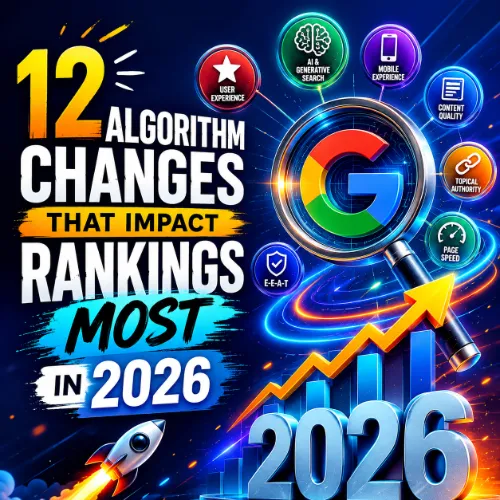
Every year, search engines—especially Google—roll out hundreds of updates, but only a select few truly shift the competitive landscape. For SEO practitioners, differentiating between minor tweaks and game-changing updates is critical. The following 12 updates represent the most consequential algorithm changes impact rankings in 2026, ordered from highest to lowest impact based on observed volatility and industry consensus. For a related guide, see 15 Google Search Changes Hurting Organic Traffic: Expert Guide.
1. Google Helpful Content System (September 2023 and March 2026 Refinements)
What changed: Google’s Helpful Content System became a core part of its ranking algorithm, meaning it now runs continuously rather than in periodic waves. The March 2026 update further refined how the system evaluates “people-first” content, penalizing sites that produce thin, AI-generated, or search-engine-first content at scale.
Why it matters: This is the single most impactful algorithm changes impact rankings because it directly targets the quality and authenticity of content. Sites that rely on automated content generation without human oversight have seen significant drops in organic traffic.
Practical impact: Focus on original research, unique perspectives, and content that genuinely answers user questions. Avoid publishing low-effort pages just to target keywords.
2. Core Web Vitals as a Ranking Signal (Ongoing Enforcement)
What changed: While Core Web Vitals were first announced in 2020, 2026 has seen stricter enforcement. Metrics like Largest Contentful Paint (LCP), First Input Delay (FID), and Cumulative Layout Shift (CLS) now carry more weight, especially for mobile search results.
Why it matters: Poor user experience caused by slow loading or layout shifts directly hurts rankings. This update forces site owners to prioritize performance and mobile optimization.
Practical impact: Audit your pages using Google’s PageSpeed Insights and address issues like oversized images, render-blocking resources, and unstable layouts.
3. AI Overviews (Formerly SGE) Integration
What changed: Google began rolling out AI-generated overviews at the top of search results, providing concise answers synthesized from multiple sources. This changes how users interact with SERPs and shifts click-through rates.
Why it matters: Even if your page ranks #1, the AI Overview may reduce organic clicks. However, being cited as a source in these overviews can drive significant exposure.
Practical impact: Structure your content to be easily summarized by AI—use clear headers, concise definitions, and direct answers to common questions. Optimize for featured snippets as they often feed into AI Overviews.
4. March 2026 Core Update – Deindexing of Low-Quality Sites
What changed: This was one of the largest core updates in recent years, resulting in the deindexing of hundreds of thousands of low-quality pages across multiple domains. Sites with high ad-to-content ratios, scraped content, or poor user engagement were heavily hit.
Why it matters: It raised the bar for what Google considers a “valuable” page. Simply having keyword-optimized content is no longer enough; usability and authenticity are now baseline requirements.
Practical impact: Remove or consolidate thin pages, improve site navigation, and ensure every page serves a clear purpose for the user.
5. Reviews System Update (February and November 2023, Extended Impact)
What changed: Google expanded its Reviews System to cover services, destinations, and products more broadly. The algorithm now rewards detailed, first-hand review content with evidence (photos, specific experiences) over generic summaries.
Why it matters: For affiliate sites and review blogs, this algorithm changes impact rankings directly by prioritizing authentic user voices over templated reviews.
Practical impact: If you run a review site, include original testing, personal opinions, and real-world context. Avoid rephrasing manufacturer specs without adding value.
6. Link Spam Update (December 2023 – Continuous Application)
What changed: Google’s link spam detection became more aggressive, particularly against unnatural link patterns and guest post networks. The update uses machine learning to identify and discount manipulative link building.
Why it matters: Backlinks remain a strong ranking factor, but low-quality links now carry greater risk. Over-optimized anchor text and large-scale link acquisition can trigger manual or algorithmic penalties.
Practical impact: Audit your backlink profile using Ahrefs or similar tools. Disavow toxic links and focus on earning links through genuine outreach, content partnerships, and digital PR.
7. Passage Indexing General Availability
What changed: Google now routinely indexes individual passages from longer pages, allowing them to rank for specific queries even if the page targets a broader topic. This was officially confirmed as a global signal in 2026.
Why it matters: It rewards comprehensive, well-structured content. A single long-form guide can now rank for dozens of long-tail queries.
Practical impact: Break content into clear sections with descriptive H2 and H3 headings. Use bullet points and tables to make key passages easily extractable.
8. Entity-Based Rankings Growth
What changed: Google’s Knowledge Graph and entity understanding have matured, meaning the algorithm now prioritizes content that demonstrates topical authority through entities and relationships rather than just keywords.
Why it matters: This algorithm changes impact rankings by favoring sites that cover a topic comprehensively with linked entities (people, places, things) rather than just repeating a focus keyword.
Practical impact: Use schema markup (especially Article, FAQ, and HowTo). Mention related entities naturally in your content and build topical clusters.
9. Mobile-First Indexing – Now the Only Indexing Method
What changed: Google officially retired desktop-first indexing. All new and existing sites are now indexed using the mobile version of the page. Sites with poor mobile experience face direct ranking consequences.
Why it matters: If your mobile site has different content, slower performance, or broken navigation than the desktop version, you risk losing rankings across all devices.
Practical impact: Use responsive design, ensure parity of content between mobile and desktop, and test mobile usability in Google Search Console.
10. E-E-A-T Refinement for YMYL Topics
What changed: Google updated its Quality Rater Guidelines to emphasize “Experience” as a distinct component of E-E-A-T (Experience, Expertise, Authoritativeness, Trustworthiness). For Your Money or Your Life (YMYL) topics, personal experience signals are now weighted more heavily.
Why it matters: Sites offering medical, financial, or legal advice must demonstrate first-hand knowledge or professional credentials. Generic advice without credible authorship may lose visibility.
Practical impact: Include author bios with credentials and real-world experience. Add case studies, testimonials, or original research to support claims.
11. Sitelinks Search Box Removal for Many Sites
What changed: Google quietly removed the sitelinks search box for many websites, particularly those with limited internal search functionality or low user engagement. The sitelinks themselves remain, but the search box is no longer automatic.
Why it matters: Sitelinks improve click-through rates and brand perception. Losing the search box can reduce the SERP real estate your brand occupies.
Practical impact: Improve your site’s internal search experience and ensure site structure is logical. Use breadcrumb markup to reinforce navigation signals.
12. Local Pack Expansion with AI Summaries
What changed: The local pack (map + 3 listings) now sometimes includes AI-generated summaries of reviews and services. Google also expanded local pack triggers for queries with implicit local intent.
Why it matters: Local businesses must manage online reviews more carefully, as AI extracts and highlights common themes. Accuracy of business information (NAP) is even more critical.
Practical impact: Regularly respond to reviews, update Google Business Profile details, and encourage customers to leave specific, detailed feedback.
Understanding Where the Algorithm Changes Impact Rankings Most
The common thread across all 12 updates is a shift toward quality, user experience, and authentic content. Algorithms are no longer fooled by shortcuts; they reward genuine effort. To stay competitive, invest in algorithm changes impact rankings awareness and adapt your workflow accordingly.
SEO Entities and Their Functions
Understanding the entities behind these ranking signals helps you diagnose and act on changes. Here are key categories:
- Website / Domain entities: Root domain, subdomain, and URL-level analysis identify whether a ranking drop affects your entire site or just a section.
- Keyword entities: Organic keywords, keyword difficulty (KD), search volume, and SERP features show demand, competition, and opportunity.
- Backlink entities: Referring domains, anchor text distribution, and dofollow/nofollow ratios help you assess link quality and risk.
- Content entities: Articles, authors, topics, and social shares reveal which content earns visibility and engagement.
- Technical SEO entities: Crawl issues, redirect chains, canonical tags, and Core Web Vitals expose obstacles preventing proper indexing and ranking.
Useful Resources
For deeper analysis and real-time data on these updates, consult these authoritative sources:
- Google Search Status Dashboard – Official updates on ranking changes
- Search Engine Land – Industry analysis and coverage of algorithm developments
Frequently Asked Questions About algorithm changes impact rankings
What is the most important algorithm change in 2026?
The Helpful Content System, now a continuous core component, is the most impactful algorithm changes impact rankings because it evaluates content authenticity on an ongoing basis.
How often does Google update its algorithm?
Google makes thousands of minor changes per year, but major updates that significantly algorithm changes impact rankings occur several times annually, often with confirmed announcements. For a related guide, see 18 Google SEO Updates You Must Know in 2026 (Essential Guide).
Do algorithm changes always hurt rankings?
Not necessarily. Many sites benefit from updates, especially those with high-quality content and good user experience. Negative impacts usually hit sites that rely on outdated tactics.
What is the Helpful Content System?
It’s a Google algorithm that rewards people-first content and penalizes content created primarily for search engine rankings. It now runs continuously as part of the core ranking process.
How do Core Web Vitals affect rankings?
Core Web Vitals measure loading performance, interactivity, and visual stability. Poor scores can lower rankings, especially on mobile. They are now a baseline requirement for competitive keywords.
What is AI Overviews in search results?
AI Overviews are AI-generated answer summaries that appear at the top of some SERPs, reducing click-through rates but offering visibility if your content is cited as a source.
How can I recover from a core update?
Focus on removing thin content, improving page experience, adding authoritative citations, and aligning your content with user intent. Recovery often takes several months.
What is passage indexing?
Passage indexing allows individual sections of a longer page to rank for specific queries, rewarding well-structured, comprehensive content.
Do backlinks still matter after 2026 updates?
Yes, but quality matters more than ever. The link spam update penalizes manipulative link building, while natural, authoritative backlinks remain a strong positive signal.
What is E-E-A-T and why is it important?
E-E-A-T stands for Experience, Expertise, Authoritativeness, and Trustworthiness. It’s a framework Google uses to assess content quality, especially for health, finance, and legal topics.
How do entity-based rankings work?
Google uses its Knowledge Graph to understand entities (people, places, things) and their relationships. Content that covers topics comprehensively with entity references can rank better.
What is the impact of mobile-first indexing?
Since mobile-first indexing is now the only method, sites with poor mobile experiences, missing content, or broken navigation on mobile will lose rankings on all devices.
How do I prepare for future algorithm changes?
Build a sustainable SEO strategy: prioritize user needs, maintain technical health, earn genuine backlinks, and produce original, helpful content that answers real questions.
What is a Google core update?
A core update is a broad, global change to Google’s ranking systems that typically rolls out over one to two weeks and can significantly alter search results across many niches.
How can I monitor algorithm changes?
Use tools like Google Search Console (for traffic shifts), Ahrefs (for ranking volatility), and follow industry news from Search Engine Land or the Google Search Status Dashboard.
Why did my traffic drop after an update?
Common reasons include thin content, poor Core Web Vitals, unnatural link profiles, or misaligned search intent. Conduct a full site audit to identify the root cause.
What is the Reviews System update?
This update rewards detailed, first-hand review content with evidence over generic summaries. It affects product, service, and destination review pages.
How does AI Overviews affect SEO strategy?
It encourages concise, extractable answers and structured data. Being cited in an AI Overview can offset click losses from reduced organic CTR.
What should I do if I receive a manual action?
Identify the cause (e.g., unnatural links, thin content), fix the issues, and submit a reconsideration request through Google Search Console.
How often should I audit my site for algorithm compliance?
At least quarterly, and after every major confirmed update. Regular audits help you catch issues early and maintain alignment with current algorithm changes impact rankings.