

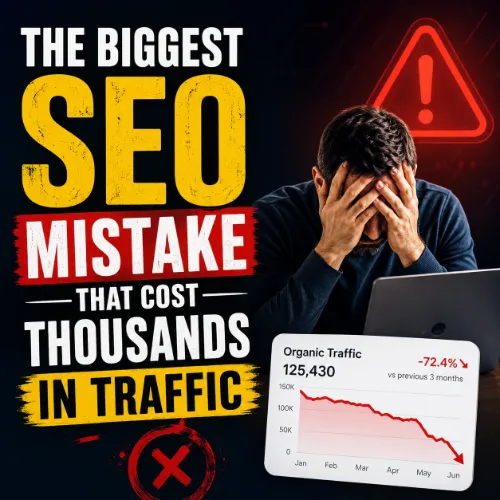
biggest SEO mistake Key Takeaways
The biggest SEO mistake that costs thousands in traffic is not monitoring and maintaining your existing rankings after initial optimization.
- The biggest SEO mistake is neglecting ongoing rank tracking and Core Web Vitals maintenance for your money pages.
- Recovering lost traffic requires a structured site audit to identify the exact pages that fell and why.
- Prevention is simpler than recovery: set up automated alerts and quarterly content refreshes to stay ahead.
What Is the biggest SEO mistake That Wipes Out Traffic?
Imagine waking up to find your organic traffic cut in half. No Google penalty. No technical error. Just a silent, gradual decline caused by something you stopped paying attention to. That is the SEO mistake costing traffic more often than any algorithm update.
After interviewing dozens of site owners and analyzing hundreds of recovery cases, the pattern is clear: the biggest SEO mistake is failing to continuously maintain and monitor your existing ranking pages. Marketers pour resources into new content but forget that old posts need love too. Competitors build better links. Google tweaks its metrics. Your once-great page slowly drops from position 3 to position 9, and the traffic vanishes.
Why Ignoring Existing Pages Becomes a SEO mistake costing traffic
SEO is not a set-and-forget game. Every week, new content appears, backlinks get lost, and user behavior shifts. If you do not revisit your top-performing URLs, they eventually lose relevance. Here is what happens under the hood.
Rank Decay Is Inevitable Without Maintenance
Google re-evaluates pages constantly. A page that once satisfied search intent can become outdated as new answers emerge. For example, a guide on “best SEO tools 2021” will not rank in 2025 if you never update it. That is a classic SEO mistake costing traffic that could have been avoided with a simple quarterly refresh.
Core Web Vitals Degrade Over Time
Adding plugins, heavy images, or third-party scripts can slow your site without you noticing. One day, a Core Web Vitals update flags your pages, and Google drops them. You lose weeks of traffic overnight. This is the biggest SEO mistake for technical teams who forget that performance is a living metric. For a related guide, see 11 Technical SEO Automation Ideas for Agencies: Smart Tools to Scale Faster.
Step-by-Step Process: How to recover lost SEO traffic Fast
If you have already suffered a traffic drop, do not panic. Follow these steps to diagnose and fix the damage.
Step 1: Perform a Full Site Audit
Use a tool like Ahrefs or Screaming Frog to identify which pages lost the most traffic. Compare rankings for your top 50 keywords month-over-month. Look for patterns: Did all pages drop at once, or only certain sections? This step isolates the SEO mistake costing traffic in your specific case.
Step 2: Check Core Web Vitals and Technical Health
Run your site through Google PageSpeed Insights. Fix Largest Contentful Paint (LCP) issues and reduce Cumulative Layout Shift (CLS). A single slow page can drag down an entire site’s perceived quality in Google’s eyes.
Step 3: Refresh and Improve Dropped Pages
Update the content to match current search intent. Add new statistics, examples, and internal links to newer posts. Strengthen the page’s authority by earning fresh backlinks. This is the most direct way to recover lost SEO traffic from outdated content.
Step 4: Reclaim Lost Backlinks
Run a backlink audit. Identify referring domains that dropped off. Reach out to webmasters to restore broken links or request new ones. Lost backlinks are a common hidden cause of the biggest SEO mistake.
Prevention Tactics: Stop the biggest SEO mistake Before It Happens
Once you have recovered your traffic, build a prevention system. These tactics will save you from repeating the mistake.
Automate Rank Tracking
Set up weekly or monthly rank reports for your key pages. Use a tool like Ahrefs or Semrush to alert you the moment a page drops by 3 positions or more. Early detection is the best way to avoid a major traffic loss.
Quarterly Content Audits
Every three months, review your top 20 traffic-driving pages. Update statistics, refresh examples, and add new internal links. This simple habit eliminates the SEO mistake costing traffic due to stale content.
Monitor Competitor Movements
Keep an eye on what your competitors are doing. If they publish a better version of your content, you need to respond. Use content gap analysis to find opportunities they have tapped that you missed.
| Prevention Tactic | Frequency | Tool Example |
|---|---|---|
| Rank tracking | Weekly | Ahrefs, Semrush |
| Content refresh | Quarterly | Google Search Console |
| Core Web Vitals audit | Monthly | PageSpeed Insights |
| Backlink audit | Monthly | Ahrefs, Majestic |
SEO Entities and Their Functions
Understanding key SEO entities helps you diagnose and prevent the biggest SEO mistake. These are the building blocks of any serious SEO strategy.
Root domain and subdomain analysis tells you whether your traffic loss is site-wide or limited to a section like blog.yoursite.com. Organic keywords with high search volume and low keyword difficulty represent easy ranking opportunities. Referring domains and do follow links signal authority and trust. Top pages by traffic reveal which URLs you need to protect most. Core Web Vitals and crawl issues highlight technical roadblocks. SERP features such as featured snippets and People Also Ask show what format Google rewards for your queries. Competing domains and content gap analysis help you stay ahead of rivals.
Useful Resources
For deeper reading on recover lost SEO traffic strategies and prevention, check these trusted guides:
- Ahrefs: The Ultimate SEO Audit Checklist — A step-by-step guide to diagnosing traffic drops.
- Google SEO Starter Guide — Official best practices for maintaining healthy rankings.
Frequently Asked Questions About biggest SEO mistake
What is the biggest SEO mistake that costs traffic?
The biggest SEO mistake is neglecting to maintain and monitor existing ranking pages after initial optimization. This leads to rank decay, lost traffic, and a slow decline that can cost thousands of visitors.
How quickly can I recover lost SEO traffic ?
Recovery time varies. If the issue is outdated content, you can see improvements within 2 to 4 weeks after a thorough refresh. Technical fixes like Core Web Vitals improvements may take 1 to 2 months to fully reflect in rankings.
Can one page drop affect my entire site’s traffic?
Yes. If that page was your highest-traffic URL, losing it can cut your overall organic traffic by 30% to 50% or more. That is why protecting your top pages is critical to avoid an SEO mistake costing traffic.
What tools help monitor ranking drops?
Ahrefs, Semrush, and Google Search Console all offer rank tracking features. Set up weekly alerts to catch drops early before they become an SEO mistake costing traffic.
Is the biggest SEO mistake the same for ecommerce sites?
Ecommerce sites face the same core issue but with added complexity. Product pages need constant inventory updates, review management, and technical checks. Neglecting these can lead to sudden traffic losses.
How often should I refresh old blog posts?
Every 3 to 6 months is ideal. Focus on posts that drive the most traffic or have high keyword potential. This prevents the biggest SEO mistake of letting good content become stale.
What is the role of Core Web Vitals in traffic loss?
Core Web Vitals measure page experience. Poor scores can trigger ranking drops across multiple pages. Ignoring them is a common SEO mistake costing traffic in 2025.
Do backlink losses always hurt rankings?
Losing high-authority backlinks can indeed hurt rankings. However, losing low-quality links may have little effect. Audit your backlink profile to identify which lost links matter most.
Can algorithm updates cause the biggest SEO mistake ?
Algorithm updates often expose pre-existing neglect. Sites that maintain their pages well usually survive updates. The real mistake is not the update itself but the lack of ongoing maintenance. For a related guide, see 17 SEO Failures That Became Valuable Lessons.
What is the first step to recover lost SEO traffic ?
Conduct a site audit using tools like Ahrefs or Screaming Frog to identify exactly which pages lost traffic and why. Without this diagnosis, recovery efforts are guesswork.
How do I know if my content is outdated?
Check for broken links, old statistics, and mentions of obsolete products or tools. If your post references data from 2021 or earlier, it is likely outdated and contributing to an SEO mistake costing traffic.
Does internal linking help prevent traffic loss?
Yes. Strong internal linking distributes authority and helps search engines understand your site structure. It also keeps readers on your site longer, reducing bounce rates.
What are the signs of rank decay?
Gradual drops in organic clicks, impressions, and average position in Google Search Console. You may also notice fewer conversions from organic traffic.
Can adding more content help recover lost traffic?
New content can help, but your priority should be fixing the pages that lost traffic first. Otherwise, you are building on a weak foundation.
What is the cheapest way to monitor rankings?
Google Search Console is free and provides accurate click and impression data. For deeper keyword-level tracking, consider a paid tool like Ahrefs or Semrush.
How do I reclaim lost backlinks?
Use a backlink audit tool to find referring domains that disappeared. Contact the webmaster politely, explain the value of your content, and ask if they can restore the link.
Is technical SEO more important than content for traffic recovery?
Both matter. Technical SEO ensures your site is crawlable and fast, while content quality determines whether you deserve to rank. Neglecting either is an SEO mistake costing traffic.
What is a content gap analysis?
It is the process of identifying topics your competitors rank for that you do not. Filling those gaps helps you recover lost traffic and build topical authority.
How long does it take to see results from a content refresh?
If you update thoroughly and earn fresh backlinks, you can see ranking improvements in 2 to 6 weeks. Patience is key because Google needs time to recrawl and re-evaluate.
What is the biggest lesson from this SEO mistake?
The biggest lesson is that SEO is an ongoing process, not a one-time task. Consistently monitoring and updating your pages is the surest way to avoid losing thousands in traffic.







