

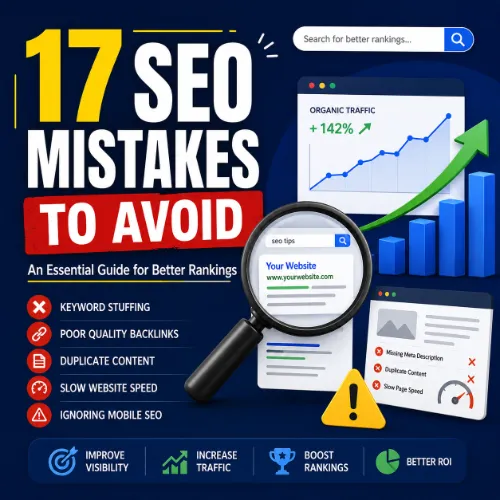
SEO mistakes to avoid Key Takeaways
Many website owners unknowingly commit SEO mistakes to avoid that silently undermine their search rankings and traffic.
- Ignoring technical issues like crawl errors and duplicate content is one of the most critical SEO mistakes to avoid .
- Keyword stuffing, thin content, and neglecting mobile experience are still top reasons sites fail to rank.
- A simple checklist at the end helps you audit your own site for these common SEO errors.
Why Understanding SEO mistakes to avoid Matters for Your Rankings
Search engine optimization has evolved, but the fundamentals remain grounded in user intent and technical quality. When you understand SEO mistakes to avoid, you prevent wasted effort and protect your organic visibility. Many site owners spend months building content, yet they never see results because they are unknowingly breaking basic rules. This article walks through 17 specific errors, explaining the logic behind each fix so you can apply them with confidence. For a related guide, see 21 Technical SEO Errors Most Sites Ignore (Avoid These Mistakes).
Common SEO errors guide: 17 Mistakes and How to Fix Them
Below is a comprehensive breakdown of the most frequent SEO mistakes to avoid. Each entry includes why the mistake hurts your rankings and what to do instead.
1. Ignoring Keyword Research and Targeting the Wrong Terms
Writing content without proper keyword research is like shooting in the dark. You might produce great articles, but if no one searches for those topics, they will never be found. Use tools like Ahrefs or Google Keyword Planner to find terms with genuine search volume and realistic competition. Target a mix of head terms and long-tail variations to capture different stages of the buyer journey.
2. Stuffing Keywords Unnaturally into Content
Keyword stuffing is one of the oldest SEO mistakes to avoid. Repeating a target phrase excessively in headings, paragraphs, and alt text makes your content sound robotic and triggers search engine penalties. Instead, write naturally and use synonyms and related terms. Search engines understand context, so a well-written paragraph about a topic will rank better than a stuffed one. For a related guide, see 17 GEO Ranking Factors SEOs Are Testing Right Now (Avoid These Mistakes).
3. Publishing Thin or Low-Quality Content
Google’s algorithms prioritize content that demonstrates expertise, authority, and trustworthiness. Pages with fewer than 300 words or that simply rephrase existing articles add no value. Each piece should answer a specific question, provide original insight, or solve a problem. If you cannot add something new, consider merging the topic with a related page.
4. Neglecting Title Tags and Meta Descriptions
Title tags and meta descriptions are the first impression in search results. Leaving them blank or duplicating them across pages confuses both users and search engines. Write a unique, compelling title for each page that includes your primary keyword, and craft a meta description that encourages clicks without being clickbait.
5. Overlooking Image Alt Text and File Names
Images help break up text and improve user experience, but they also provide ranking signals through alt attributes. Failing to add descriptive alt text that includes relevant keywords is a missed opportunity. Name your image files with hyphens between words (e.g., “seo-mistakes-checklist.jpg”) and write alt text that accurately describes what the image shows.
6. Using Duplicate or Near-Duplicate Content
Duplicate content confuses search engines about which version to index and rank. This often happens when product descriptions are copied from manufacturers or when blog posts cover the same topic without adding value. Consolidate similar pages using 301 redirects or canonical tags, and always write original product descriptions.
7. Building Low-Quality or Spammy Backlinks
Not all backlinks are helpful. Links from spam directories, link farms, or irrelevant sites can trigger manual penalties and algorithmic demotions. Focus on earning links from authoritative, relevant websites through guest posting, digital PR, or creating link-worthy resources. Monitor your backlink profile regularly with tools like Ahrefs or Moz.
8. Ignoring Mobile-Friendliness and Page Speed
Over 60% of searches now happen on mobile devices. If your site is slow to load or hard to navigate on a phone, users bounce, and rankings drop. Use Google’s PageSpeed Insights and Mobile-Friendly Test tools to identify issues. Compress images, enable browser caching, and minimize JavaScript to improve core web vitals.
9. Not Having a Clear Site Structure with Proper Internal Linking
Search engines crawl your site by following links. A confusing site structure with orphan pages and broken links makes it harder for bots to discover your best content. Use a logical hierarchy with category pages, a clear navigation menu, and strategic internal links from high-authority pages to newer or less visible ones.
10. Setting Up Redirects Incorrectly
Redirects are essential when you move or delete pages, but misusing them causes crawl errors and lost link equity. Use 301 redirects for permanent moves, not 302 or meta refreshes. Avoid redirect chains (multiple redirects in a row) because they waste crawl budget and slow down page speed.
11. Blocking Search Engines with Robots.txt or Noindex Tags
Stopping search engines from crawling important pages is a critical SEO mistake to avoid. Double-check your robots.txt file and ensure you are not blocking entire sections of your site unintentionally. Similarly, avoid using “noindex” on pages you want to rank, unless they are duplicate, thin, or administrative.
12. Forgetting About Local SEO for Location-Based Businesses
If you run a local business, skipping local SEO means losing customers who are searching near you. Claim and optimize your Google Business Profile, ensure your name, address, and phone number are consistent across directories, and collect genuine reviews. Use local schema markup to reinforce your location signals.
13. Ignoring Analytics and Not Tracking Performance
What gets measured gets improved. Installing Google Analytics and Google Search Console is step one, but you must regularly check them. Monitor organic traffic, bounce rate, average position, and click-through rates. Without data, you are guessing which SEO mistakes to avoid are actually affecting your site.
14. Not Updating or Refreshing Older Content
Old content can become outdated, losing accuracy and relevance. Search engines favor fresh, up-to-date information. Review your best-performing pages once a quarter, update statistics, add new examples, and improve formatting. A content refresh often brings a quick ranking boost because the page signals recency.
15. Writing for Search Engines Instead of Real People
User engagement signals such as time on page, bounce rate, and comments tell search engines whether visitors found your content useful. Writing solely for algorithms produces stiff, unnatural text. Write conversationally, use short paragraphs, and answer the questions your audience is asking. When people enjoy reading, they stay longer and share your content.
16. Failing to Claim or Fix Broken Internal and External Links
Broken links lead to a poor user experience and waste crawl budget. Regularly audit your site for 404 errors using tools like Screaming Frog or Ahrefs Site Audit. Fix or redirect broken internal links, and update or remove external links that point to dead pages. A clean link profile builds trust with both users and search engines.
17. Not Adapting to Google Algorithm Updates
Google updates its algorithm hundreds of times a year, and major core updates can reshape rankings. Relying on outdated tactics like exact-match domains or low-quality guest posting is risky. Stay informed through industry blogs (Search Engine Land, Moz, Google’s own blog) and continuously adjust your strategy. Flexibility is key to long-term SEO success.
SEO Mistakes to Avoid: Checklist for a Quick Site Audit
Use this checklist to identify and fix SEO mistakes to avoid on your own site. Go through each item one by one.
| Area | What to check | Fix |
|---|---|---|
| Keywords | Are you targeting keywords with search demand? | Use keyword research tools |
| Content quality | Is each page unique and valuable? | Rewrite or merge thin content |
| Title tags | Are all titles unique and include keywords? | Write custom titles per page |
| Images | Are alt tags descriptive? | Add relevant alt text |
| Duplicates | Any duplicate pages? | Use 301 redirects or canonicals |
| Backlinks | Any spammy links in profile? | Disavow harmful links |
| Mobile | Does site load fast on mobile? | Optimize images and code |
| Internal links | Orphan pages exist? | Add internal links from related pages |
| Redirects | Any redirect chains? | Update to direct 301s |
| Analytics | Are tools installed and monitored? | Set up Google Analytics and Search Console |
SEO Entities and Their Functions
Understanding these key entities helps you diagnose and fix issues faster. Each entity plays a specific role in search performance analysis.
- Root domain vs. subdomain analysis: Determines whether performance problems apply to the whole site or just a section like blog.example.com.
- Keyword difficulty (KD) and search volume: Help prioritize which terms offer the best ranking opportunity for your site’s current authority.
- Referring domains and anchor text: Reveal the quality and relevance of external links pointing to your site.
- Top pages by traffic and top pages by links: Show which content your audience values most and where your link building should focus.
- SERP features such as Featured Snippets and People Also Ask: Indicate what format your content needs to win the top spot.
- Crawl issues and Core Web Vitals: Expose technical barriers that prevent indexing and hurt user experience.
Useful Resources
For deeper dives into any of these topics, check out these authoritative sources:
- Google Search Central — SEO Starter Guide — The official starting point for anyone learning modern SEO best practices.
- Ahrefs Blog — Common SEO Mistakes — A detailed list of errors with real examples and how to fix them.
Frequently Asked Questions About SEO mistakes to avoid
What is the biggest SEO mistake beginners make?
The biggest mistake is skipping keyword research and writing content without knowing if anyone searches for the topic. This leads to pages that never get organic traffic.
Is keyword stuffing still a problem?
Yes, keyword stuffing is still a common SEO mistake to avoid. Search engines penalize pages that overuse a keyword unnaturally, so write for readability first.
How many keywords should a page target?
Most individual pages naturally rank for one to three primary keywords and many long-tail variations. Focus on one clear topic per page rather than trying to rank for every term at once.
Does duplicate content hurt rankings?
Duplicate content can dilute ranking signals and cause search engines to choose the wrong version to display. Use 301 redirects or canonical tags to consolidate similar pages.
Why is mobile optimization important for SEO?
Google uses mobile-first indexing, so the mobile version of your site determines rankings. A slow or unresponsive mobile page increases bounce rates and reduces visibility.
Are backlinks from any site good?
No, backlinks from low-quality or irrelevant sites can harm your rankings. Focus on earning links from authoritative, relevant domains.
How often should I update my old content?
Review and refresh high-performing old content every 3–6 months. Update statistics, improve readability, and add current examples to maintain relevance.
What is the best tool to find broken links?
Ahrefs Site Audit and Screaming Frog are two reliable tools that crawl your site and report all broken internal and external links.
Can I rank without a meta description?
You can rank, but a well-written meta description improves click-through rates. Google may generate a snippet if you don’t provide one, but it is better to write your own.
Should I block search engines from admin pages?
Yes, admin and login pages should be blocked via robots.txt to keep them out of search indexes. But do not block important content pages.
What is a 301 redirect used for?
A 301 redirect tells search engines that a page has permanently moved to a new URL. It passes most of the original page’s link equity to the new location.
Do image file names affect SEO?
Yes, descriptive file names help search engines understand image content. Use hyphens between words, like “seo-checklist.jpg”, rather than generic names like “IMG_1234.jpg”.
How does site speed affect rankings?
Site speed is a direct ranking factor, especially for mobile searches. Faster pages improve user experience and reduce bounce rates, both of which help SEO.
Is it okay to copy content from competitors?
No, copying content violates copyright and provides no original value. It also triggers duplicate content issues and penalties. Always write original insights.
What is the difference between noindex and nofollow?
Noindex tells search engines not to index a page, while nofollow tells them not to follow links on that page. Use noindex for low-value pages, and nofollow only for untrusted links.
Do social shares directly help SEO?
Social shares are not a direct ranking factor, but they increase visibility, which can lead to more backlinks and traffic, indirectly boosting SEO.
How can I recover from a Google penalty?
First, identify the cause via Google Search Console messages. Fix the issues (e.g., disavow bad links, remove thin content), then submit a reconsideration request.
Is local SEO only for physical stores?
Local SEO is essential for any business that serves a specific geographic area, including service-area businesses like plumbers or consultants, even without a storefront.
What is a canonical URL?
A canonical URL tells search engines which version of a page is the preferred one when duplicate or similar pages exist. It consolidates ranking signals to the canonical URL.
Should I add every page to the sitemap?
No, only include high-quality pages you want indexed. Exclude thin affiliate pages, admin areas, and duplicate URLs to avoid wasting crawl budget.







