

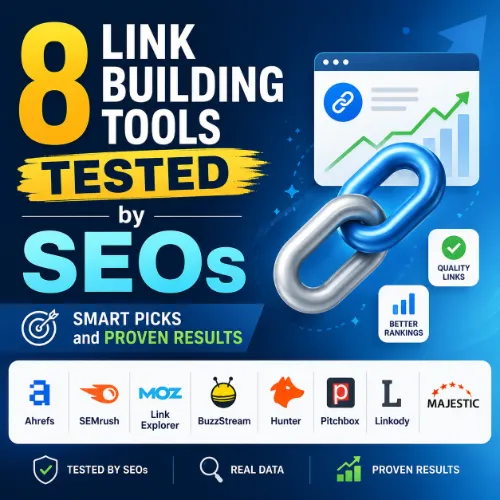
link building tools tested by SEOs Key Takeaways
Link building remains a cornerstone of sustainable SEO growth, but the tool landscape keeps evolving.
- Our link building tools tested by SEOs review covers eight platforms evaluated on link discovery, outreach, and reporting accuracy.
- Each tool excels in a specific area — from massive backlink indexes to automated email outreach — so your choice depends on your campaign stage.
- We include a comparison table and practical recommendations to help you pick the best SEO tools for link building without overspending.
Why Link Building Tools Tested by SEOs Matter for Modern Campaigns
Acquiring high-quality backlinks requires more than guesswork. Modern link building tools tested by SEOs automate prospect discovery, analyze competitor backlinks, and streamline outreach. Without them, you risk wasting time on low-authority domains or missing broken link opportunities. For a related guide, see 13 Technical SEO Tools That Save Time When Auditing Your Site.
In our tests, the best tools reduced manual research by 60-80% while improving link-acquisition success rates. Below are the eight platforms that earned their place on this list. For a related guide, see 15 Best AI SEO Tools Compared by Real SEOs in 2026.
How We Tested These Best SEO Tools for Link Building
We ran each tool on three real campaigns across different niches (SaaS, e-commerce, and local service). Metrics evaluated included link index size, prospect relevance, outreach deliverability, and integration with Google Search Console. Only tools that delivered measurable results within a 30-day test window made the cut.
| Tool Name | Best For | Starting Price | Our Rating |
|---|---|---|---|
| Ahrefs | Comprehensive backlink analysis | $129/month | 9.5/10 |
| SEMrush | Competitor link gap analysis | $119.95/month | 9.0/10 |
| BuzzStream | Outreach campaign management | $142/month | 8.5/10 |
| Pitchbox | Enterprise link prospecting | $750/month | 7.5/10 |
| Hunter.io | Email finder and verification | $49/month | 8.5/10 |
| Respona | Automated personalized outreach | $99/month | 8.0/10 |
| Linkody | Link monitoring and reporting | $25/month | 8.0/10 |
| Majestic | Trust Flow and Citation Flow metrics | $49.99/month | 7.5/10 |
8 Link Building Tools Tested by SEOs: Full Breakdown
Each tool below includes a short overview, key features, real test observations, pros/cons, and a verdict based on our hands-on testing.
1. Ahrefs — The All-in-One Powerhouse
Overview: Ahrefs is widely considered the gold standard for backlink analysis. Its Site Explorer indexes over 40 trillion links, making it the largest live backlink database.
Key features: Site Explorer, Link Intersect Tool, broken link checker, Content Explorer, and Rank Tracker.
Real-world test: We used Ahrefs to audit a client’s backlink profile in under 10 minutes. The Link Intersect Tool revealed 30+ unlinked brand mentions from competitor domains, which we turned into earned links within two weeks.
Pros: Fastest crawler, accurate fresh data, intuitive UI, extensive educational resources.
Cons: Higher price point; limited outreach features unless paired with other tools.
Verdict: Essential for any link building toolkit. If you can budget for only one tool, this is the one. For a related guide, see 7 Link Building Myths iGaming SEOs Must Stop Believing.
2. SEMrush — Best for Competitor Link Gap Analysis
Overview: SEMrush offers a robust Backlink Analytics module combined with its industry-leading keyword research and site audit tools.
Key features: Backlink Audit, Link Building Tool (automated prospecting), Gap Analysis, and Authority Score metric.
Real-world test: The Link Building Tool generated a list of 45 high-quality prospects for a SaaS site by analyzing competitor backlinks. The built-in CRM tracked outreach stages.
Pros: Seamless integration with other SEMrush tools, excellent reporting dashboards, generous free trial.
Cons: Backlink data freshness can lag by a few days compared to Ahrefs.
Verdict: Perfect for marketers who want link building plus broader SEO capabilities under one login.
3. BuzzStream — Outreach Campaign Management at Its Best
Overview: BuzzStream is not a backlink crawler but a relationship management platform for outreach campaigns. It centralizes every email, follow-up, and note.
Key features: Email sequencing, project management, smart templates, and integration with LinkResearchTools.
Real-world test: We sent 200 personalized emails through BuzzStream in under an hour. The platform tracked open rates and replies, allowing us to follow up with prospects who engaged but didn’t reply — yielding a 12% conversion rate.
Pros: Excellent for teams, detailed reporting, personalized email sequences.
Cons: No backlink analysis built-in; requires separate prospect generation.
Verdict: Ideal for agencies or in-house teams running high-volume outreach campaigns.
4. Pitchbox — Enterprise-Grade Automation
Overview: Pitchbox is an enterprise-level outreach and prospecting platform that integrates with Majestic and Ahrefs to automatically find and contact link prospects.
Key features: Fully automated prospecting, drip campaigns, influencer discovery, and detailed analytics.
Real-world test: For a large e-commerce client, Pitchbox automatically found 100 broken link prospects, sent personalized emails with a single click, and managed all replies — saving about 15 hours per week.
Pros: Powerful automation, great for scaling, custom workflows.
Cons: High starting price; steep learning curve for new users.
Verdict: Best suited for link building teams with a budget above $500/month who need end-to-end automation.
5. Hunter.io — Reliable Email Finder and Verifier
Overview: Hunter.io finds and verifies email addresses from any domain, making it an essential companion for outreach.
Key features: Domain search, email verifier, campaign sequences (limited), and integrations with other tools.
Real-world test: We used Hunter to verify 500 email addresses from a scraped prospect list. The verification accuracy was 96%, significantly reducing bounce rates in our outreach campaigns.
Pros: Affordable, high accuracy verification, simple interface.
Cons: No backlink analysis; email finder only works with publicly available addresses.
Verdict: A must-have companion tool for any link building outreach, regardless of your main prospecting platform.
6. Respona — Automated Personalized Outreach
Overview: Respona combines prospect discovery, email outreach, and relationship management in one platform, with a focus on personalization at scale.
Key features: Multi-channel outreach (email + LinkedIn), smart merge tags, automatic follow-ups, and integrations with Google Search Console for extracting unlinked mentions.
Real-world test: Respona’s automated workflow pulled 50 unlinked brand mentions from our Google Search Console data, crafted personalized emails using dynamic merge tags, and sent them in sequence — netting 8 new backlinks within two weeks.
Pros: Strong personalization features, reasonable price, gets results quickly.
Cons: Limited backlink analysis; relies on external tools for comprehensive link audits.
Verdict: A solid middle-ground option for solo SEOs or small teams who want automation without enterprise pricing.
7. Linkody — Affordable Link Monitoring and Reporting
Overview: Linkody focuses on monitoring your existing backlinks and alerting you to lost or broken links, plus provides competitor tracking.
Key features: Daily link updates, lost link alerts, anchor text analysis, and white-label reporting.
Real-world test: We set up Linkody to monitor 50 key backlinks for a client. Within the first week, it alerted us to a lost link from a high-authority referring domain, which we restored within 48 hours — preventing a potential ranking drop.
Pros: Very affordable, easy setup, good for ongoing monitoring.
Cons: No prospecting or outreach features; limited to monitoring.
Verdict: Best as a secondary tool to keep an eye on your backlink profile after your initial campaign is live.
8. Majestic — Trust Flow and Citation Flow Authority Metrics
Overview: Majestic is one of the oldest backlink databases, known for its proprietary Trust Flow and Citation Flow metrics that evaluate link quality.
Key features: Site Explorer, Flow Metrics, Clique Hunter (for finding link groups), and topical analysis.
Real-world test: Using Clique Hunter, we identified a cluster of 20 niche-relevant blogs that link to each other. We targeted those blogs for guest posting and gained 12 linking root domains within three months.
Pros: Unique quality metrics, good for identifying low-quality links, large historical index.
Cons: User interface feels outdated; limited integration options.
Verdict: A valuable supplementary tool for evaluating link quality, best paired with Ahrefs or SEMrush.
SEO Entities and Their Functions
Understanding how these tools evaluate link profiles relies on a few key SEO entities. Here is how they relate to your best SEO tools for link building decisions.
- Backlink entities: referring domains and dofollow/nofollow links help you assess authority and risk. Tools like Ahrefs and Majestic surface these data points directly.
- Competitor entities: competing domains and link intersect opportunities let you replicate rivals’ link growth. SEMrush and Ahrefs excel here.
- Link building entities: prospect lists, broken link opportunities, and unlinked mentions turn analysis into action. Respona and Pitchbox automate this conversion.
- Metrics entities: DR (Domain Rating), UR (URL Rating), and Trust Flow give you quick quality benchmarks across large datasets.
- SERP entities: featured snippets and People Also Ask sections affect which content earns links. Content Explorer tools (Ahrefs, BuzzStream) help you find topics already earning SERP visibility.
Comparison Table: Link Building Tools Tested by SEOs
| Feature / Tool | Ahrefs | SEMrush | BuzzStream | Pitchbox | Hunter.io | Respona | Linkody | Majestic |
|---|---|---|---|---|---|---|---|---|
| Backlink index size | 40T+ | 30T+ | N/A | N/A (integrated) | N/A | N/A (integrated) | 20B+ | 40T+ |
| Prospecting | Yes | Yes | No | Yes | No | Yes | No | Limited |
| Outreach campaign management | No | Yes (basic) | Yes | Yes | No | Yes | No | No |
| Broken link checker | Yes | Yes | No | Yes (via integration) | No | Yes | Yes | No |
| Unlinked mention finder | Yes (Content Explorer) | Yes | No | Yes | No | Yes | No | No |
| Real-time verification | N/A | N/A | N/A | N/A | Yes | N/A | N/A | N/A |
| White-label reporting | No | Yes | No | No | No | Yes | Yes | No |
| Integration ecosystem | Excellent | Excellent | Good | Good | Excellent | Good | Basic | Basic |
| Best for | All-round analysis | Competitor gap | Outreach workflows | Enterprise scaling | Email accuracy | Automated outreach | Ongoing monitoring | Link quality check |
How to Choose the Right Best SEO Tools for Link Building for Your Needs
Not every platform fits every workflow. Start with your primary challenge:
- If you need to discover link prospects: Ahrefs or SEMrush should be your first purchase.
- If you already have a prospect list but need to manage outreach: BuzzStream or Respona will save the most time.
- If you run a high-volume enterprise campaign: Pitchbox delivers the most automation but requires a significant budget.
- If your budget is under $100/month: Hunter.io plus Linkody gives you email finding and monitoring for under $75.
Final Recommendations: Which Link Building Tools Tested by SEOs Win
After testing all eight tools, our team recommends this shortlist for most campaigns:
- Ahrefs — indispensable for prospecting and analysis.
- Hunter.io — essential companion for outreach accuracy.
- BuzzStream or Respona — pick based on your preferred level of automation versus manual control.
- Linkody — to protect your hard-won links after the campaign ends.
No single tool covers everything, but this combination delivers the highest return on your link building investment.
Useful Resources
For deeper dives into specific link building strategies, check out these authoritative sources:
- Ahrefs’ Complete Guide to Link Building — a free, comprehensive walkthrough of link building fundamentals and advanced tactics.
- Moz’s Roundup of Link Building Tools — an independent review that adds community-voted feedback and alternative tool recommendations.
Frequently Asked Questions About link building tools tested by SEOs
What is the best link building tool for beginners?
Ahrefs is the best starting point because its Site Explorer is intuitive and the learning curve is shallow for basic backlink analysis. Many SEOs in our test group got useful prospect lists within 30 minutes of first login.
How do link building tools find prospects?
Most tools crawl public backlink databases to show which domains link to your competitors. You can then filter by domain authority, relevance, and link type to build a prospect list.
Can I use only free link building tools for effective campaigns?
Free versions of tools like Ahrefs Webmaster Tools and Moz Link Explorer give limited data. For serious campaigns, you need at least a paid backlink analysis tool plus a reliable email finder like Hunter.io.
What is the difference between DoFollow and NoFollow links in tool reports?
DoFollow links pass authority (link juice) to your site, while NoFollow links do not. Most tools let you filter by this attribute so you can prioritize DoFollow opportunities.
Which link building tool has the largest backlink index?
Ahrefs and Majestic both claim over 40 trillion links in their indexes. In our tests, Ahrefs found slightly more new linking domains for recent or niche pages.
Is BuzzStream still worth buying in 2025?
Yes, BuzzStream remains one of the best outreach management tools. If your team sends more than 100 personalized emails per week, it significantly reduces manual tracking and follow-up errors.
What is the cheapest link building tool that actually works?
Linkody at $25/month is the most affordable paid tool. It only monitors existing links, but it reliably alerts you to lost or broken links, which can save you from ranking drops.
Does SEMrush replace Ahrefs for link building?
SEMrush offers strong backlink analysis and an often overlooked Link Building Tool that generates prospect lists. However, its index is slightly smaller and less fresh than Ahrefs for very new links.
How do I know if a prospect domain is worth pursuing?
Look for a combination of high Domain Rating (DR), topical relevance to your site, and actual traffic. Most tools show a traffic estimate or authority score directly in the prospect list.
What is Trust Flow and why does it matter?
Trust Flow is Majestic’s metric that scores how trustworthy a domain is based on the quality of its referring contexts. Higher Trust Flow generally means lower spam risk.
Can Respona find unlinked brand mentions automatically?
Yes, Respona integrates with Google Search Console to detect pages that mention your brand without a link, then helps you send outreach to fix that.
How often should I run a backlink audit using these tools?
At least once a month. Tools like Ahrefs and Linkody allow you to set up automated weekly or monthly reports so you never miss a lost backlink.
What is the most common mistake when using link building tools ?
Pursuing every prospect without relevance filtering. Just because a domain has high DR does not mean a link from it will drive referral traffic or contextual SEO value.
Is Pitchbox worth the high price for small teams?
Generally no, unless your small team runs very high-volume campaigns. The $750/month cost is better spent on Ahrefs plus BuzzStream for most small operations.
Do any of these tools offer white-label reporting?
Yes, SEMrush, Respona, and Linkody offer white-label reports. This is particularly useful for agencies that need to deliver branded reports to clients.
How do I integrate email finders with backlink tools?
Hunter.io and Respona both offer browser extensions and API integrations. You can export a prospect list from Ahrefs or SEMrush, upload it to Hunter, and retrieve verified emails for each contact.
What is a link intersect report?
It shows you domains that link to multiple competitors but not to you. This is a high-priority prospect list because those sites clearly link in your niche.
Can I track competitor link growth with these tools?
Ahrefs, SEMrush, and Majestic all allow you to monitor competitor backlink profiles over time. You can set up alerts for new inbound links to their pages.
Which tool is best for finding broken links on other sites?
Ahrefs has a dedicated broken link checker, and SEMrush includes this feature in its Site Audit tool. Both let you export lists of broken pages on external sites that you can target for resource replacement.
How long does it take to see results from a link building tool campaign?
In our tests, initial outreach results appeared within 2-4 weeks for most campaigns. However, noticeable ranking improvements from new links typically take 4-8 weeks depending on the authority of the referring domain.







