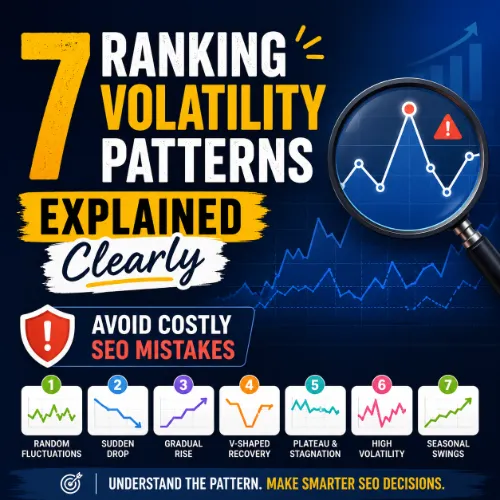
ranking volatility patterns Key Takeaways
Ranking volatility is normal in SEO, but not all fluctuations mean you have done something wrong.
- Recognizing ranking volatility patterns can prevent unnecessary site changes that hurt long-term performance.
- Seven distinct patterns — from seasonal shifts to algorithmic tremors — each require a different diagnostic approach.
- Use a structured analysis method to decide whether to act or wait out the volatility.
What Are ranking volatility patterns and Why They Matter
Every SEO professional has experienced the stomach-drop moment: you check your rankings one morning and everything looks scrambled. Pages that held top-three positions slid to page two. Keywords that never moved are suddenly everywhere. Before you panic and start stripping content, it helps to understand ranking volatility patterns — the recurring shapes that search position fluctuations take over time. For a related guide, see AI Studio Updates and Their Impact on Content Ranking Strategies.
Ranking volatility patterns refer to identifiable trends in SERP movement ranging from brief one-day dips to sustained positional shifts spanning weeks. By classifying the volatility you observe, you can decide whether to investigate a technical issue, wait out a test, or adjust your content strategy. This guide walks through the seven most common patterns and gives you a clear diagnostic workflow.
Pattern 1: The Quick Spike and Recovery
This pattern shows a sudden drop of 5–15 positions for a few hours or one day, followed by a full return to baseline. It often occurs across many keywords simultaneously and resolves without any action from the site owner.
What Causes It
Quick spikes typically stem from internal search engine tests or temporary data center issues. Google frequently runs small-scale experiments on a subset of users, which can show up as short-lived ranking drops. Another cause is a brief server timeout on your end that recovers before you notice.
How to Respond
Do nothing. Check that your server logs show no downtime, then document the event. If the recovery happens within 48 hours, it is almost certainly not a penalty. Overreacting by changing on-page content during a spike can introduce real problems.
Pattern 2: The Gradual Decline
Unlike sudden spikes, a gradual decline sees a steady loss of 1–3 positions per week over a period of a month or more. This pattern is easy to miss early on because daily movement seems normal.
What Causes It
Gradual declines usually point to structural issues: accumulating broken backlinks, competitors building stronger content, or slow degradation of page experience factors such as Core Web Vitals. A competitor publishing a superior guide with better structured data markup can also trigger this pattern.
How to Respond
Run a full site audit. Check your referring domains count over the same period — if it is dropping, prioritize link building. Analyze top pages by traffic to see which sections lost the most visibility. Update older content with new data, examples, and internal links.
Pattern 3: The Algorithmic Tremor
This pattern affects many sites in the same niche simultaneously. You see a sharp, industry-wide ranking shift that lasts 3–10 days and then settles into a new baseline. Google’s broad core updates produce this exact signature.
What Causes It
Confirmed Google algorithm updates are the primary driver. Tools like MozCast or RankRanger track volatility indexes and can confirm whether the tremor is global. Unconfirmed updates — smaller tweaks rolled out without announcement — also create similar patterns.
How to Respond
Wait for the update to finish rolling out (typically 7–14 days). Then compare your pre- and post-update rankings across your entire keyword set. Identify pages that lost significant ground and audit them for content quality, relevance, and user engagement signals. Avoid making broad site changes during the tremor itself.
Pattern 4: The Seasonal Cycle
Rankings fluctuate according to predictable calendar events: holidays, back-to-school season, tax time, or industry conferences. The same keywords drop and recover at the same time each year.
What Causes It
Search demand shifts as user intent changes. During seasonal peaks, Google may surface different result types — more shopping results, local packs, or video carousels — which push organic listings down. The pattern reverses when intent returns to informational queries after the season ends. For a related guide, see 20 Search Engine Changes Reshaping SEO in 2026 and How to Adapt.
How to Respond
Build a 12-month ranking history spreadsheet. When you observe a dip in October that matches the same dip in the previous year, you can confidently attribute it to seasonality. Plan content and promotion calendars around these predictable volatile windows.
Pattern 5: The SERP Feature Shuffle
Your page maintains its organic position, but visibility drops because a new SERP feature pushed the entire organic section lower. For instance, a featured snippet, AI Overview, or knowledge panel expanded to take more screen real estate.
What Causes It
Google constantly experiments with SERP layouts. A query that previously returned ten blue links might now show a large image carousel, local pack with three results, and a People Also Ask section, compressing organic listings to the bottom of the first page.
How to Respond
Check the SERP features present for your target queries using a tool like Ahrefs or Semrush. If a featured snippet appears, optimize your page to win that snippet with a concise, direct answer at the top of the content. If a local pack dominates, ensure your Google Business Profile is optimized and that you have local structured data.
Pattern 6: The Content Cannibalization Cascade
You publish a new article targeting a similar keyword to an existing high-performing post. Instead of both ranking well, the old page drops significantly while the new one fails to gain traction. The net result is lost traffic.
What Causes It
Google struggles to determine which page is more relevant when two pieces of content target the same intent. The search engine may alternate which version it shows — or rank neither well. This pattern often emerges after a site aggressively expands its content library without consolidating existing pages.
How to Respond
Identify the cannibalizing pair using a site:domain.com search followed by the core keyword. Merge the two articles into one comprehensive resource, implementing a 301 redirect from the weaker page to the stronger one. After consolidation, monitor the remaining page for recovery over 2–4 weeks.
Pattern 7: The Penalty Plunge
This is the most severe pattern: a sustained 30+ position drop that does not recover after weeks. It is usually accompanied by a manual action notification in Google Search Console or a sharp drop in indexed pages.
What Causes It
Google algorithmic penalties (e.g., Penguin for spammy links, Panda for thin content) or a manual action from a Google reviewer. Common triggers include unnatural link profiles, cloaking, or high volumes of low-quality automated content.
How to Respond
Check Google Search Console for manual actions. If you see one, follow the remediation steps exactly: remove or disavow toxic links, delete thin pages, or fix structured data violations. Submit a reconsideration request only after you have cleaned up all issues. If no manual action appears, run a technical SEO audit for crawl errors, redirect chains, and indexability problems.
How to Diagnose ranking volatility patterns Efficiently
When you spot movement, follow this three-step diagnostic process:
- Determine the pattern shape — Is it a spike, a gradual slide, or a steady new baseline? Look at a 30-day chart, not just a snapshot.
- Check external context — Visit Google Search Status Dashboard, MozCast, or industry forums to see if others in your niche report similar volatility.
- Correlate with your own changes — Review your content publish dates, technical updates, and link-building activity from the past four weeks. If you made no changes and the pattern matches an algorithm tremor, wait it out.
SEO Entities and Their Functions
Accurate diagnosis of ranking volatility patterns relies on data from several SEO entities. Understanding what each reveals helps you confirm or rule out causes quickly.
- Website / Domain entities: Root domain, subdomain, and URL-level analysis show whether volatility belongs to the whole site or a specific section like blog.example.com.
- Keyword entities: Search volume, keyword difficulty (KD), and SERP features indicate demand levels and result-type requirements that affect whether your page can compete.
- Backlink entities: Referring domains, new/lost backlinks, and dofollow/nofollow ratio help diagnose gradual declines caused by eroding link equity.
- Page entities: Top pages by traffic and best by links reveal which URLs are most affected by volatility and deserve immediate attention.
- Technical SEO entities: Crawl issues, redirect chains, and canonicals expose obstacles that prevent Google from reaching or evaluating your pages consistently.
- Competitor entities: Content gap opportunities and link intersect domains show where rivals gained ground during your volatility period.
Summary Table: 7 ranking volatility patterns at a Glance
| Pattern | Duration | Typical Cause | Recommended Action |
|---|---|---|---|
| Quick Spike and Recovery | Hours–2 days | Google test / brief server issue | Monitor, no changes |
| Gradual Decline | Weeks–months | Link loss or competitor improvement | Audit and update content |
| Algorithmic Tremor | 3–14 days | Core update or unconfirmed update | Wait, then audit affected pages |
| Seasonal Cycle | Annual recurrence | Shift in user intent | Plan content calendar year-round |
| SERP Feature Shuffle | Ongoing | New SERP layout | Optimize for featured snippets / local pack |
| Content Cannibalization Cascade | After publication | Duplicate target keywords | Merge and 301 redirect |
| Penalty Plunge | Weeks+ | Algorithmic or manual penalty | Fix issues, submit reconsideration |
Actionable Takeaways for SEO Practitioners
Reacting to every ranking change is not just exhausting — it is counterproductive. By classifying movement into one of these seven patterns, you gain clarity on what to do and, just as importantly, what not to do. Build a habit of checking volatility sources and your own analytics before making any content or technical modifications. Over time, you will develop an instinct for when to push forward and when to be patient.
Useful Resources
For real-time volatility monitoring, check MozCast to see the daily temperature of Google’s SERPs. For deeper competitive analysis during volatile periods, Ahrefs provides rank tracking, content gap analysis, and backlink monitoring that help pinpoint the source of ranking shifts.
Frequently Asked Questions About ranking volatility patterns
What is the most common ranking volatility pattern?
The quick spike and recovery is the most common pattern, often caused by Google running small-scale tests or temporary server hiccups on the site side.
How long should I wait before investigating a ranking drop?
Wait at least 48 hours. If the rankings do not return to baseline by then, move on to pattern identification using the diagnostic steps above.
Can multiple ranking volatility patterns happen at the same time?
Yes. A site can experience a seasonal dip overlapping with an algorithmic tremor. In those cases, focus on whichever pattern produces the larger effect first.
Do ranking volatility patterns differ by niche?
Yes. YMYL (Your Money or Your Life) niches such as finance and health experience more severe algorithmic tremors, while entertainment niches may see more seasonal cycles.
Is it possible to predict ranking volatility before it happens?
Not perfectly, but monitoring Google’s official search updates page and using volatility trackers like MozCast or RankRanger gives early signals.
What should I do if I see a penalty plunge but no manual action?
Run a comprehensive technical SEO audit. Check for crawl blocks, indexability issues, or a large increase in non-indexable pages that could trigger algorithmic filters.
How do I know if my ranking drop is from a competitor action?
Use a competitor analysis tool to see if competing pages gained new backlinks or published fresh content targeting the same keywords as your declining page.
Can changing my site structure cause ranking volatility?
Yes. Major site structure changes like moving to HTTPS or changing URL paths can produce a gradual decline pattern until Google recrawls and reassigns ranking signals.
Does internal linking affect ranking volatility?
Yes. Poor internal linking can cause content cannibalization cascades or dilute authority across many pages, leading to unpredictable ranking instability.
Are there tools that automatically detect ranking volatility patterns ?
Ahrefs Rank Tracker and Semrush Position Tracking offer charts that display movement over time, making pattern recognition easier without manual calculation.
What is the difference between ranking volatility and ranking noise?
Noise refers to day-to-day fluctuations of 1–3 positions that are random and statistically insignificant. Volatility implies a genuine shift in the SERP landscape that warrants investigation.
Can a site recover from a gradual decline without intervention?
Rarely. Gradual declines almost always require corrective action such as new backlinks, content updates, or technical fixes before rankings stabilize.
How do seasonal ranking volatility patterns affect evergreen content?
Evergreen content may still dip during seasonal peaks because Google introduces fresh, timely results. The evergreen page typically recovers after the season ends.
Should I disavow links during a ranking volatility episode?
Only if you confirm the pattern is a penalty plunge and you identify a clear set of toxic links. Disavowing during an algorithmic tremor may remove beneficial links unnecessarily.
Can Google’s AI Overviews cause ranking volatility?
Yes. When Google introduces AI Overviews for a set of queries, organic click-through rates drop, which can make it appear as though rankings fell even when the position remains unchanged.
How long does it take to recover from a content cannibalization cascade?
Recovery typically takes 2–4 weeks after merging pages and implementing 301 redirects, provided the remaining page has strong content quality and internal links.
Is ranking volatility worse for new domains?
New domains experience higher baseline volatility because Google lacks a long history of trust signals. The same pattern types apply but the movements are often larger.
Can site speed improvements cause short-term ranking volatility?
Yes. Whenever Google recrawls pages after a performance update, positions may shift temporarily while signals are reassessed. This usually resolves within a week.
Do international websites experience unique ranking volatility patterns ?
Global sites face additional volatility from country-specific algorithm updates and varying SERP feature rollouts, but the seven patterns remain the same framework.
What is the best single metric to track for ranking volatility?
Track your average position for your core set of 20–50 keywords over a 30-day rolling window. This smooths out daily noise while making patterns visible.