On-page SEO services help your website pages rank higher on Google and AI search, attract local customers, and turn more visitors into leads and sales. This guide explains on-page SEO in plain language so you can see what you are paying for and what actually moves the needle for your business.
On-page SEO means optimizing individual pages on your website so search engines and AI tools can easily understand, rank, and recommend your content (you can also explore broader SEO services).
It covers elements like title tags, meta descriptions, headings, URLs, internal links, images, content quality, and user experience, often supported by a healthy technical foundation through technical SEO services.
Good on-page SEO helps your business show up for the right keywords, including local and “near me” searches, so you get more qualified traffic and inquiries, especially when paired with local SEO services for small businesses.
On-page SEO services usually include an audit, keyword research, page-by-page optimization, content improvements, and ongoing monitoring, which align well with dedicated SEO audit services.
For local businesses, on-page SEO should be aligned with local SEO and GEO signals like city names, service areas, and location-based landing pages, as covered in this local SEO audit guide for Philippine businesses.
1. What Is On-Page SEO?
On-page SEO is the process of optimizing each page on your website so search engines and AI search systems can understand what the page is about and match it with the right search queries, starting with the on-page SEO basics.
It focuses on everything you control on the page: text, images, structure, internal links, and user experience, which are the core of most on-page SEO services.
While technical SEO looks at your site’s backend and off-page SEO looks at backlinks and external signals, on-page SEO is where your content, keywords, and UX all meet, and should be complemented by technical SEO audits that catch hidden issues.
For business owners, this is often the most visible and understandable part of SEO because you can see the changes directly on your pages, unlike behind-the-scenes technical SEO issues that may still impact performance.
On-page SEO is also increasingly important for AI search and answer engines. When your page is clearly structured, easy to read, and aligned with user intent, it is more likely to be used as a source for AI overviews, featured snippets, and “People also ask” results, especially when combined with strong content SEO services: strategy, writing, and optimization.
2. Why On-Page SEO Matters for Business Owners
If you run a local business, an online store, or a B2B service, your website is often the first place people learn about your brand, and optimized pages can make SEO services more clearly “worth it” as discussed in are SEO services worth it for small businesses?.
On-page SEO services make sure that:
- Your pages appear for the right keywords your ideal customers are typing, using solid keyword research services for lead generation.
- Your content answers real questions in a simple, helpful way, aligned with search intent optimization for better rankings.
- Your site feels trustworthy, professional, and easy to navigate, supported by a clear SEO content planning for topical authority.
Done correctly, on-page SEO supports:
- Higher rankings in organic search and local search, which directly influence key SEO KPIs every business owner should track.
- Better click-through rates from title tags and meta descriptions, especially when A/B testing within broader monthly SEO services vs one-time SEO projects.
- Improved engagement: lower bounce rate and more time on site, leading to better SEO ROI for your business.
- More leads, calls, bookings, form submissions, and sales, shifting focus from just traffic vs leads.
For local businesses, strong on-page SEO combined with GEO signals (city, region, “near me” terms, and localized content) helps you compete in your own area rather than against the entire world, which is illustrated in this local SEO success story for a Philippine business.
3. Key Elements of On-Page SEO (Explained Simply)
Here are the main components your on-page SEO services should cover, written in plain language and supported by this detailed on-page SEO checklist for service-based websites.
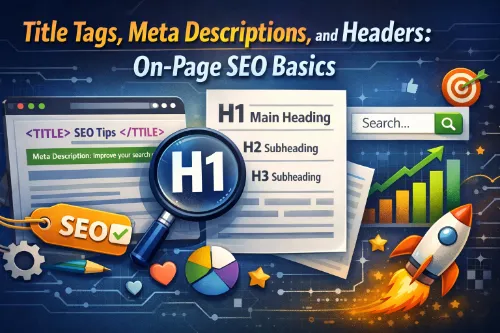
Title Tags
The title tag is the clickable headline in search results, and it’s often the first element an SEO audit service will review.
It should:
- Include your main keyword.
- Be clear and benefit-driven.
- Mention your location if you target local customers (e.g., “On-Page SEO Services for Business Owners in Davao”).
A well-written title tag improves both rankings and click-through rate, and is a common area for optimization in what’s included in SEO packages.
Meta Descriptions
The meta description is the short summary under the title in Google.
It should:
- Explain what the page is about.
- Use natural language and secondary keywords, not forced keyword stuffing.
- Include a simple call to action like “Learn more,” “Get a free audit,” or “Book a consultation.”
Meta descriptions don’t directly boost rankings, but they strongly influence clicks, which is why they are regularly reviewed in SEO reporting metrics clients actually care about.
Headings (H1, H2, H3)
Headings structure your content for both users and search engines.
A good on-page SEO service will:
- Use one clear H1 that states the main topic.
- Use H2 and H3 headings to break content into logical sections, similar to how blog clusters support SEO service pages.
- Naturally include keywords and related phrases in headings so AI systems can understand context and hierarchy.
URL Structure
Clean URLs help both humans and crawlers. For example:
- Good:
/on-page-seo-services-business-owners - Poor:
/page.php?id=1234
Clear, descriptive URLs support better indexing, higher click trust, and easier internal linking, which are vital when managing SEO for thousands of pages.
Content Quality and Keyword Use
High-quality content is the core of on-page SEO.
Your content should:
- Answer the main search intent clearly and quickly, which is central to search intent optimization.
- Use primary and secondary keywords naturally (no stuffing), as explained in content optimization vs keyword stuffing.
- Use simple language with short sentences and clear explanations.
- Cover related questions and subtopics so AI and search engines see your page as a complete answer.
NLP (Natural Language Processing)–friendly content focuses on entities, topics, and relationships, not only exact-match keywords, and this is fundamental to SEO content planning for topical authority.
Writing in a natural, conversational tone often performs better than forcing keywords into awkward sentences, especially when building content-led SEO growth.
Internal Linking
Internal links connect your pages and guide users deeper into the site.
Good internal linking:
- Helps visitors discover related services, blogs, and resources, as outlined in this guide to internal linking that improves rankings.
- Passes SEO value from strong pages to others that need support.
- Makes it easier for search engines and AI crawlers to understand your site structure.
Anchor text (the clickable text) should be descriptive, like “on-page SEO services for local businesses” rather than “click here,” which ties into broader keyword mapping for service pages and blogs.
Image Optimization
Images support user experience and SEO when they are optimized.
That includes:
- Using descriptive file names (e.g.,
on-page-seo-report.png). - Adding alt text that explains the image in simple terms.
- Compressing images so pages load fast on mobile and desktop, directly influencing page speed and SEO performance.
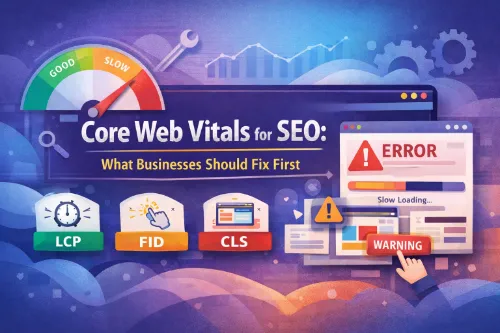
Images also help your content be more engaging, which indirectly supports rankings and AI visibility, and they play a role in core web vitals for SEO.
Schema Markup (Structured Data)
Schema markup is code that gives search engines extra context about your content, such as:
- Business type, address, and contact details.
- Reviews and ratings.
- FAQs and how-to steps.
When included as part of on-page SEO services, schema can help you win rich results and make your listing stand out, which can be highlighted in important sections of an SEO audit report.
User Experience (UX) and Mobile Friendliness
On-page SEO is not just about keywords.
It’s also about how users feel on your site. Important UX factors include:
- Mobile-friendly design that works on phones and tablets, often reviewed in technical SEO for Shopify, WooCommerce, and Magento.
- Fast loading pages, as detailed in page speed impacts SEO performance.
- Clear navigation and easy-to-find calls to action.
- Clean layout with enough white space and readable fonts.
Google and AI search systems favor sites that offer a smooth, frustration-free experience, which is part of why some SEO campaigns fail when UX is ignored.
4. How On-Page SEO Supports Local and GEO SEO
For local businesses, on-page SEO and GEO signals must work together.
Some key practices include:
- Adding your city, region, or service area to title tags, headings, and content where it feels natural, much like the strategies in local SEO helps clinics, law firms and restaurants.
- Creating location-specific service pages (e.g., “On-Page SEO Services for Business Owners in Davao City”), taking cues from local SEO strategies for property listings.
- Including your business name, address, and phone number consistently across your site, then reinforcing them with local citation building.
- Mentioning local landmarks, neighborhoods, or industries you serve in your content, and aligning it with Google Business Profile optimization services.
When AI and search engines see consistent location cues, they are more confident showing your pages for “near me” and city-based searches, especially for multi-location brands where local SEO ranking factors matter.
5. How On-Page SEO Connects With AEO (Answer Engine Optimization)
AEO (Answer Engine Optimization) focuses on making your content easy for AI search tools and answer engines to understand and reuse.
On-page SEO is the foundation of AEO because it structures information in a way that AI can easily parse, and this is crucial for AI Overview–friendly SEO content.
To make your content AEO- and AI Overview–friendly:
- Start with a short, clear summary at the top (like the one in this article).
- Use listicles (numbered or bullet lists) to break down steps, tips, or features, as shown in on-page SEO basics.
- Add concise answers near relevant headings, ideally in 1–3 sentences.
- Use natural language that sounds like how users ask questions.
When your on-page SEO is set up this way, your pages are more likely to be featured in AI-generated summaries, knowledge panels, and conversational search results, which contributes to sustainable, long-term SEO investment.
6. What’s Included in On-Page SEO Services (Typical Package)
Every agency is different, but a good on-page SEO service for business owners usually includes:
SEO Audit
- Review of your current on-page SEO, content, structure, and UX, usually beginning with a structured website SEO audit vs full SEO strategy.
- Identification of quick wins and high-impact issues, such as those seen in SEO wins from technical fixes alone.
- Analysis of existing rankings, traffic, and target keywords, guided by SEO audit services.
Keyword Research and Mapping
- Research into how your ideal customers search for your products or services, through keyword research services for lead generation.
- Grouping keywords by intent (informational, commercial, local), as explained in commercial vs informational keywords in SEO campaigns.
- Mapping keywords to specific pages to avoid duplication and cannibalization, using frameworks like keyword mapping for service pages and blogs.
On-Page Optimization
- Updating title tags and meta descriptions with better messaging and keywords, often as part of content SEO services.
- Improving headings, URLs, internal links, and image alt text, following on-page SEO checklist for service-based websites.
- Adjusting content to be clearer, more complete, and more helpful, avoiding cheap SEO services that only “add keywords.”
Content Creation and Expansion
- Creating new SEO-focused pages or blog posts where there are gaps, informed by SEO content planning for topical authority.
- Expanding thin content that currently lacks depth or value, using content refresh services for old website pages.
- Adding FAQs, checklists, and listicles to answer more questions, supporting commercial intent clusters.
Local and GEO Optimization
- Adding or refining city and region mentions in key places, using tactics from local SEO services for small businesses.
- Creating or improving location-based service pages, similar to those in local SEO helps clinics, law firms and restaurants.
- Aligning on-page content with your Google Business Profile and local citations, following Google Business Profile optimization services and local citation building.
Reporting and Iteration
- Regular reporting on rankings, traffic, and key conversions, in line with SEO reporting metrics clients actually care about.
- Adjusting pages based on performance data and user behavior, using insights from why rankings dropped even with SEO work.
- Testing new headlines, layouts, or calls to action to improve results over time, and measuring impact on SEO ROI.
Simple On-Page SEO Checklist for Business Owners
If you want a quick way to evaluate your current website or your provider’s work, use this simple checklist along with this detailed on-page SEO checklist for service-based websites.
Page-Level Checks
- Does each important page have a unique, descriptive title tag?
- Is there a clear and relevant meta description?
- Is the H1 heading aligned with the main keyword and topic?
- Are there logical H2/H3 headings to break up content?
Content and Keywords
- Does the page answer the main question or intent quickly?
- Are primary and secondary keywords used naturally, not stuffed, as outlined in content optimization vs keyword stuffing?
- Is the content written in simple, conversational language?
- Does it cover related questions your customers often ask, supporting search intent optimization?
Links and Structure
- Are there internal links to related products, services, or blogs, following internal linking best practices?
- Is the URL short, readable, and keyword-relevant?
- Is navigation clear and consistent across devices?
UX and Technical Basics
- Does the page load fast on mobile, satisfying core web vitals for SEO?
- Is the layout clean and free from intrusive pop-ups?
- Is the site mobile-friendly and easy to use with one hand?
Local and GEO
- Do local pages mention the city or region in key areas, as suggested in local SEO ranking factors for multi-location brands?
- Are your contact details easy to find?
- Are you clearly targeting the right locations and audience, aligned with your local SEO audit?
8. How On-Page SEO Services Benefit Different Types of Businesses
On-page SEO is flexible and can be tailored to your business model.
- Local service businesses (plumbers, salons, clinics) benefit from strong local landing pages, clear service descriptions, and GEO-focused content, as shown in local SEO helps clinics, law firms and restaurants.
- E-commerce stores gain from optimized product pages, category descriptions, and internal linking between products and guides, following ecommerce SEO services for online stores and product page SEO tips that improve organic sales.
- B2B companies benefit from in-depth service pages, case studies, FAQ sections, and thought leadership content, similar to SaaS SEO services for long sales cycles.
In every case, the goal is the same: align your pages with how real people search and how AI systems understand topics, so you show up in the right moments, which is the focus of many SEO case studies and guides.
9. Choosing an On-Page SEO Provider: What to Look For
When comparing on-page SEO services, look for:
- Clear deliverables: exactly which pages, elements, and content will be optimized, similar to how what’s included in SEO packages is broken down.
- Transparent process: audit, research, implementation, and reporting, as described in what small businesses should expect from SEO packages.
- Focus on both SEO and user experience, not just keywords, to avoid the traps highlighted in why some SEO campaigns fail.
- Understanding of local SEO and GEO signals if you serve specific locations, especially for affordable SEO services for small business owners.
- The ability to write simple, AI Overview–friendly content that still reflects your brand voice, like those created via content SEO services.
Avoid providers who promise instant rankings, use vague language, or focus only on “adding keywords” without talking about content quality and user experience, and watch for the red flags in SEO companies.
When in doubt, compare offers using how to compare SEO proposals from different agencies and how to choose the right SEO agency.
Frequently Asked Questions
How long does it take to see results from on-page SEO changes?
Most business websites start seeing early improvements in impressions and rankings within 4–8 weeks, with stronger gains typically appearing over 3–6 months as Google crawls and re-evaluates your updated pages.
How often should I update or refresh my on-page SEO?
Review key pages at least every 3–6 months, or whenever you launch a new service, change pricing, or see rankings and conversions drop in your analytics.
Do I need on-page SEO if I’m already running Google Ads?
Yes, because on-page SEO improves organic visibility, lowers reliance on ad spend, and often increases landing page quality scores, which can reduce your cost per click over time.
What’s the difference between on-page SEO and content marketing?
On-page SEO focuses on how each page is structured and optimized for search, while content marketing focuses on what you publish and why; the best results come when both are planned together.
Can I do on-page SEO myself, or do I need an agency?
You can handle basic tasks like updating titles, headings, and simple content, but an experienced SEO specialist or agency is usually needed for strategy, audits, and ongoing optimization at scale.
How do I know if my on-page SEO is actually working?
Track organic traffic, rankings for target keywords, click-through rates, and key conversions such as calls, form fills, or sales in tools like Google Analytics and Search Console.
What are the most common on-page SEO mistakes business owners make?
Typical problems include keyword stuffing, duplicate titles, thin content, slow pages, and missing internal links, all of which make it harder for search engines to trust and rank your site.
Is there such a thing as over-optimizing a page?
Yes; forcing keywords into every heading and paragraph, overusing exact-match anchor text, or adding unnecessary SEO plugins can make content feel spammy and may hurt rankings.
How important is page speed to on-page SEO?
Page speed is a key part of user experience and Google’s Page Experience signals, and slow pages often lead to higher bounce rates and lower rankings, especially on mobile.
Do I need different on-page SEO strategies for desktop and mobile?
The core SEO rules are the same, but you must ensure your layout, fonts, buttons, and page speed are optimized for mobile users, since most searches now happen on phones.
Should every page on my site be optimized for a keyword?
Every important page should target a clear primary topic, but not every minor or utility page needs full optimization; avoid multiple pages competing for the same main keyword.
How long should my SEO-optimized pages be?
There’s no magic word count; instead, aim to cover the topic completely and clearly, using as much detail as needed to answer the searcher’s question better than competing pages.
Will on-page SEO alone get me to page one?
On-page SEO is essential but usually not enough by itself; you also need solid technical SEO and quality backlinks to compete in more competitive markets and industries.
How does on-page SEO affect my local map pack rankings?
Strong on-page signals (location terms, service pages, consistent NAP details) help Google connect your site with your Google Business Profile, which can indirectly support better map pack visibility.
Is it okay to reuse the same content on multiple service pages?
No; duplicate or near-duplicate content can confuse search engines about which page to rank, so each location or service page should have unique, locally relevant copy.
What’s the role of FAQs in on-page SEO?
FAQs help capture long-tail questions, improve user experience, and can qualify for rich results or AI answers when marked up properly with FAQ schema.
Do images and videos really impact on-page SEO, or are they just for design?
Optimized images and videos improve engagement and time on page, and when compressed and tagged correctly, they contribute positively to both user experience and SEO performance.
How many internal links should I place on a page?
There’s no fixed number; include internal links where they naturally help users discover related content, keeping anchor text descriptive and avoiding long, distracting link lists.
What tools can help me check my on-page SEO?
Popular options include Google Search Console, Screaming Frog, Sitebulb, and various on-page checkers from SEO platforms that flag missing tags, slow pages, and content issues.
How often should I run a full on-page SEO audit of my site?
Most small and mid-sized businesses benefit from a thorough SEO audit once or twice a year, plus lighter quarterly reviews focused on their highest-value pages.